

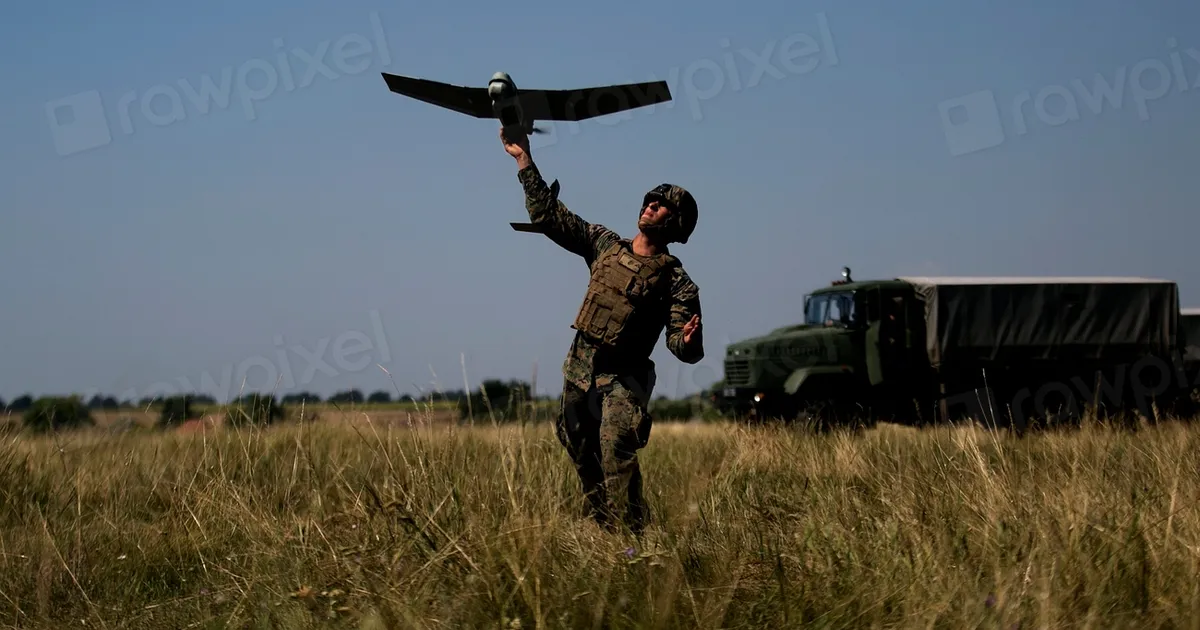
The New Zealand Defence Force is going shopping for long-range kamikaze drones with up to $300 million through to 2029, and it says it would prefer to buy them from New Zealand companies. That preference is the right instinct. Whether the process as designed can deliver it is another matter.
Project Longreach is not a niche experiment. It sits inside the 2025 Defence Capability Plan, a $12 billion, four-year commitment with $9 billion of new money, and it is being pitched as part of a wider push to modernise the force. For local tech and manufacturing firms, this is the biggest live signal yet that defence spending could become a genuine industrial market rather than a catalogue order from overseas primes.
Cheap weapons, expensive questions
The concept is “shoot and scoot”. Small teams fire cheap, precise, expendable drones from a truck on a Pacific island, delivered by ship, landing craft or Hercules. Victoria University’s David Capie says “long-range” in this context usually means 500km to 800km, and that Ukraine has shown how cheap one-way drones can impose brutal costs on a far larger opponent.
The Request for Proposals covers far more than an airframe: launchers, control systems, transit containers for air, sea and road, integration, training, technical publications and through-life support. That breadth matters. The money in defence rarely sits in the hardware alone. It sits in sustainment, integration and the decades of support that follow.
A local preference on a foreign timeline
Here is where the tension starts. NZDF opened an advance notice on GETS on 5 November, launched the full RFP on 23 November, and closes it on 18 December 2026. A shortlist shoot-off follows in April 2027, with troop training through the September quarter and the capability in service by October 2027. NZDF itself calls this an interim solution.
That is a sprint, not an industrial strategy. A small domestic firm with a promising prototype has weeks to assemble a bid covering launchers, logistics and training packages that established overseas manufacturers already have on the shelf. NZDF has said that if no viable domestic pathway emerges, it will look offshore. On this schedule, the overseas option has a structural head start.
There is a base to work with. NZDF has already trialled air, land and sea drones from Mount Maunganui’s SYOS Aerospace. The question is whether firms like it are being given a real shot or a box to tick.
In June, Line of Defence argued procurement should be treated as economic strategy, warning that “a drone is not a capability” and that buying one should be the start of capability development, not the end of procurement. Its sharper point: local industry “does not need preferential treatment. It needs visibility, opportunity and a role in solving Defence problems”. That is a pro-market argument, and it is exactly what a compressed tender risks undermining.
Sovereignty with a US plug
The second tension is architectural. The drones must integrate with the US Global Command and Control System – Joint, the Pentagon’s system of record for coalition forces. Asked whether New Zealand would retain sovereign command of the weapons, NZDF said only that their use would be “subject to government direction and conducted in accordance with New Zealand law” and international obligations. That is not a yes.
Interoperability with allies is sensible for a small military. But building sovereign industrial capability around a system whose software, standards and upgrade path are set in Washington limits how much of the value chain local firms can actually own. Suppliers should read the integration requirements closely before assuming the IP stays here.
The money is not as fat as it looks
Budget 2026 estimates show the Defence Capabilities line in Vote Defence falling from $385 million in 2025/26 to $280 million in 2026/27. Headline commitments are large, but annual appropriations are what pay invoices, and a programme worth up to $300m over three years will compete hard for them.
The critics get their test
In May, before the funding was announced, retired major general Doull complained that NZDF’s drone work offered no low-cost long-range strike and nothing that could be fielded in mass volumes, while Obsidian Systems’ Philip Solaris said the issue was how wisely money was spent, because if not, “it will never be enough”.
Project Longreach answers the first complaint on paper. The second is now the real test. If the April shoot-off ends with an imported system and a token local subcontract, New Zealand will have bought a capability and skipped the industry. If a domestic firm makes the cut, Defence will have proved it can be a customer that builds something. Bids close in three weeks. Local firms should treat that deadline as the start of the fight, not the end of it.
Sources
- RNZ: ‘Shoot and scoot’: The new NZDF strategy for latest kamikaze drones (2026-11-26)
- The Post: Defence Force advancing plans to buy kamikaze drones (2026-11-25)
- Stuff: Defence Force ‘modernising’ with one way strike drones (2026-11-25)
- GETS: Long Range One Way Effector (LROWE) tender (2026-11-23)
- GETS: Long Range One Way Effector – Advance Notice (2026-11-05)
- Budget 2026: Vote Defence Estimates of Appropriations 2026/27 (2026)
- Line of Defence: Defence procurement as economic and industrial strategy (2026-06-29)
- RNZ: Is New Zealand falling behind in the drone arms race? (2026-05-21)
Join the discussion
Add useful context, ask a good question, or challenge an idea — keep it specific and respectful.