

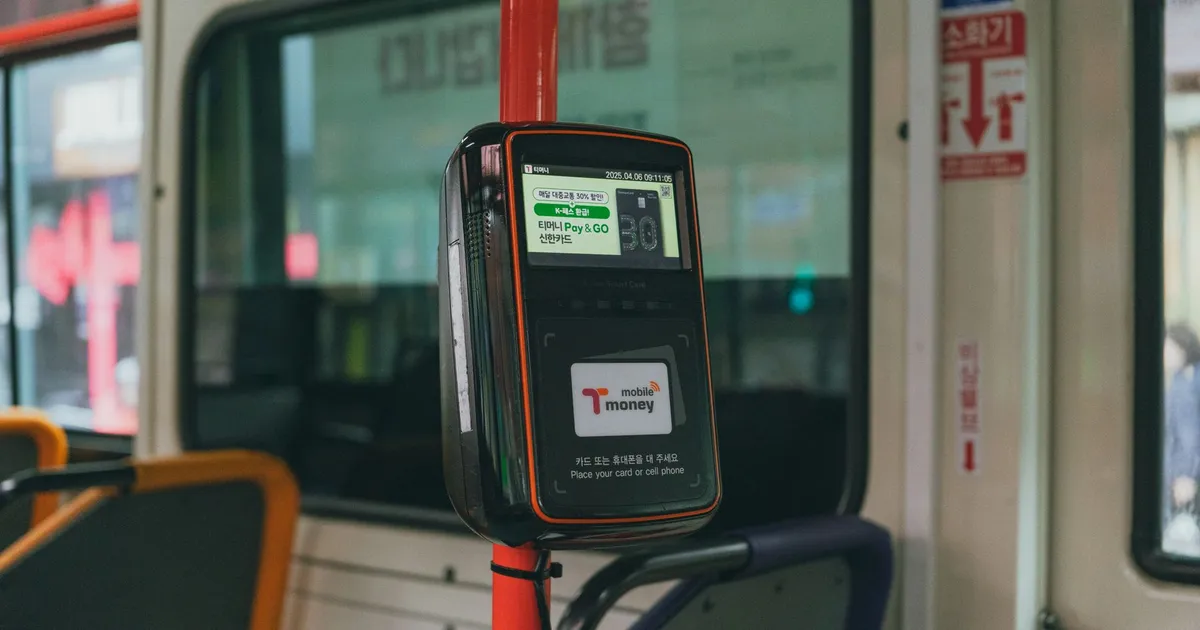
Auckland Transport has spent $91,000 on legal advice and $444,000 on technical advice assessing its move onto Motu Move, NZTA’s national ticketing system, while committing roughly $11 million in vendor contracts to prepare. Closed board meetings in late July, one with NZTA officials and another six days later with AT’s own lawyers, weighed a “decision on transition”. The same 1News reporting shows NZTA has quietly softened its promise. Motu Move was meant to be fully operational nationwide by the end of 2027. Now NZTA only expects every authority to have completed or ‘begun’ its transition by then, and it won’t say what ‘begun’ means. Auckland, which carries most of the country’s public transport trips, still has no go-live date.
That is the real story. A programme sold as the simple option is generating its own layer of complexity, and ratepayers are paying for it twice.
One card, one contract, endless reviews
The logic was sound on paper. Replace Auckland’s HOP, Wellington’s Snapper, Canterbury’s Metrocard and the Bee Card with one system run by one vendor, US multinational Cubic. The original plan had Canterbury live by 2024 and the whole country by the end of 2026. By May 2026, only $271 million of the $1.36 billion budget had been spent, with most of the remainder earmarked for operations out to 2037.
In 2025, an independent review found NZTA’s timings “overly ambitious”, pushing the deadline out a year and triggering a new programme director. Credit where due, Christchurch did go live in November 2025, with passengers tapping credit and debit cards on buses and ferries.
But the reviews kept coming. A 2025 LEK Consulting report warned of “a very high likelihood of further significant delays” and said the scope was “not locked down” five years into development. Another review that year found deficiencies across programme management, governance and scheduling, and noted the economic case had weakened. Trade press reported the government was in commercial talks with Cubic. When a vendor on a large fixed contract is renegotiating, the taxpayer is rarely the party gaining leverage.
Delay has a price tag
Official Information Act documents released in May 2026 put core delay costs at $23.56 million to $27.36 million, with Cubic’s monthly charges redacted. The same papers costed a possible rebrand at $6.26 million, complicated by roughly half a million travel cards already printed or on order.
Meanwhile, councils keep legacy systems running in parallel. Back in 2025, Auckland councillor Andy Baker, then chair of the transport committee, compared the project to the failed INCIS police IT system and asked: “Have we bitten off too much?” He warned Auckland could pay heavily to keep HOP alive longer than planned. That warning is now playing out.
The regions solved it cheaper
Here is the awkward comparison. Auckland’s own contactless system cost $25.6 million, and Greater Wellington’s Snapper-based fix $5.3 million. Wellington built its version precisely because it got sick of waiting.
Defenders point out that running four legacy systems would cost about $784 million over 14 years without ever delivering national integration. That is a fair argument, and a single national platform remains the right ambition. But the counterfactual only holds if the central system actually arrives on something close to budget and schedule.
In 2025, one independent transport analyst traced the problem to councils demanding bespoke concessions in a single system and governance that moved slowly on consensus. That diagnosis looks prescient. Centralisation without central authority is just a committee with a bigger invoice.
SuperGold is the next flashpoint
National consistency also means national concessions, and that is where politics bites. A 2025 governance paper suggested AT might need to drop free SuperGold afternoon peak travel. Cardholders made about 1.9 million free weekday peak trips in Auckland, worth $5.6 million in forgone fares. The final call sits with Auckland Council and AT, not NZTA, which tells you exactly how much control the national programme really has.
Fix the governance before the next go-live
For business, the lesson extends well beyond bus fares. Large government technology projects fail less on code than on undefined scope, diffuse accountability and customers who can opt to stall. NZTA needs to lock down requirements, set a hard Auckland date and force concession decisions early, or Motu Move becomes the platform fight it was meant to end. The next test is simple. If Auckland’s lawyers are still advising on a “decision on transition” this time next year, the $1.4 billion simplicity project will have delivered the opposite.
Sources
- The Post: The long, winding road to the $1.36 billion National Ticketing Solution (2026-06-27)
- RNZ: $1.4 billion nationwide public transport ticketing system delayed by a year (2025-09-09)
- 1News: ‘Under pressure’: National transit ticketing system’s budgets at risk (2025-10-02)
- NZ Herald: NZTA’s $1.4b contactless ticketing rollout faces value drop amid major delays (2025-10-20)
- fyi.org.nz: OIA26 CB146 Documents for release – National Ticketing Solution Brand (2026-05-04)
- RNZ: Auckland councillors raise concerns about national ticketing project (2025-04-09)
- The Post: Labour to Chris Bishop: Own your role in the $1.36b national ticketing system fiasco (2026-06-29)
- Rational Transport Policy: The National Ticketing Solution – a looming debacle or some minor hiccups? (2025-07-21)
Join the discussion
Add useful context, ask a good question, or challenge an idea — keep it specific and respectful.