

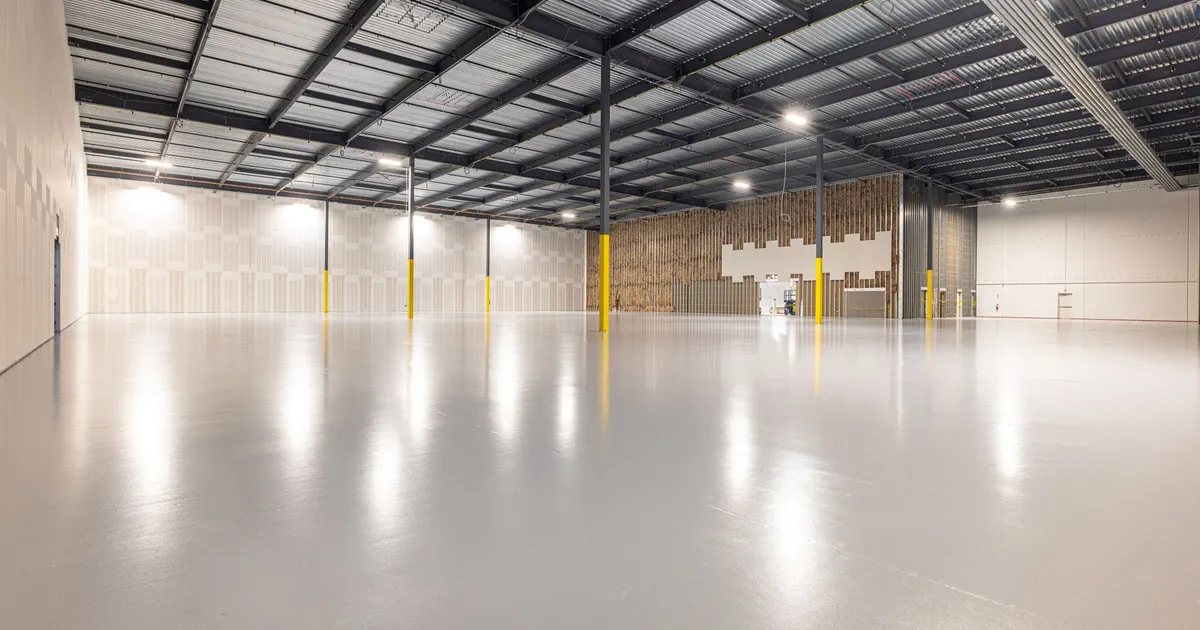
Microsoft has started building a second hyperscale data centre at Westgate, in Auckland’s northwest, and it is likely to cost close to $1 billion. The NZ Herald learned about it because one of its journalists lives nearby and drove past the site. There was no prime minister at a podium and no ribbon. Icon Construction crews are simply putting up a second facility at 7 Kakano Rd, directly in front of the first.
The investment itself is good news. A global tech giant is doubling down on New Zealand while plenty of offshore capital is sitting on its hands. The problem is not that Microsoft moved quietly. It is that the country still has no coherent framework for the power, water and land these buildings demand, and Westgate is showing how fast investment can outrun policy.
A billion-dollar bet, placed twice
Companies Office accounts for the year to June 2025 show the first Westgate facility involved $800.2 million in direct capital spending, with the largest single slice going on servers and network equipment. Consent documents put the new building at 10,879.8 sq m over two storeys, barely smaller than the first facility’s 11,600 sq m, with completion due in 2028 and its own independent power supply and back-up.
Work started in September, and Microsoft did post a low-key project overview, so this is not a secret so much as a deliberate absence of fanfare. Compare that with 2020, when then-Prime Minister Jacinda Ardern championed the original cloud region investment. The Herald puts the change partly down to shifting public attitudes, and the timing supports that. By August an organised movement was targeting a Data Centre Leaders Summit in Auckland and planning nationwide action against “AI factories”. The same month, Microsoft let its Overseas Investment Office permission for a separate Whenuapai site lapse. The pipeline is real, but it is not a one-way street.
Bring your own electrons
To Microsoft’s credit, the first facility arrived with its power sorted. It opened in December 2024 with 51MW of capacity backed by a ten-year geothermal deal with Contact Energy for the Te Huka 3 station. That is exactly the model the country should want.
The issue is scale across the sector. A July 2026 memorandum from the government’s Chief Advisor on Climate Change estimates current data centre electricity use at between 8MW and 104MW, against roughly 1,140MW of data centre projects already in Transpower’s connection pipeline. The generation lining up to meet demand is overwhelmingly wind and solar, which is fine for annual averages but harder for facilities that run flat out around the clock. The memo singles out the proposed Datagrid project, which has signalled demand of up to 280MW and holds consents to draw 220 million litres of groundwater a year, equivalent to seven Southland dairy farms.
Local costs, national benefits
The memo is blunt about jobs. Data centres employ people mainly during construction and run with modest ongoing workforces. Back in 2024, Microsoft’s own planning estimated its New Zealand build would need about 120 construction roles and 756,000 work hours, a small number against a billion-dollar asset.
That matters because the official advice frames the core tension as geographic. Water, land-use and local infrastructure costs land on one community, while the economic benefits, cheaper cloud latency, data sovereignty for banks and government, AI capacity for exporters, flow nationally. Selling data centres as a jobs story is a losing argument. They are infrastructure, and should be argued for as infrastructure.
The rulebook nobody has written
In 2025, Dentons lawyer Oliver Hobbs warned that New Zealand was behind Australia: “There’s no clear consenting pathway under our resource management system, and no clear strategy for balancing power and water demand with growth.” He pointed to Sydney, which capped new approvals to protect its grid, with projections that up to 25% of the city’s water could go to cooling data centres by 2035.
A year on, little has changed. DLA Piper’s July analysis notes that without data centre-specific national direction, regional and district plans remain the key determinants of consenting risk, and advises developers to engage communities before lodging because the system will not do it for them.
The answer is not a moratorium or more red tape. Uncertainty is itself a cost, and it is the kind that drives capital to Sydney or Singapore. What investors and communities both need is clear national direction on grid connection priority, water allocation and where these facilities belong, set once rather than relitigated site by site.
What happens next
Microsoft’s second building will be finished by 2028 regardless. The question is whether the next 1,000MW in Transpower’s queue arrives under a plan or under a protest banner. Microsoft has shown how to do it properly at Westgate, contracted renewable power and an industrial site. Wellington’s job is to turn that from good corporate behaviour into the rule, before a backlash makes the decision for it.
Sources
- NZ Herald: Microsoft building a second massive data centre at Auckland’s Westgate – Tech Insider (2026-11-24)
- DataCenterDynamics: Microsoft begins work on Westgate data center in New Zealand (2026-11-19)
- Microsoft: Westgate datacentre project overview (2026-09-01)
- NZ Herald: Protesters target Data Centre Leaders Summit in Auckland, plan nationwide action against ‘AI factories’ (2026-08-12)
- PSGR: Data centres in NZ – Memorandum to Executive Leadership (2026-07-23)
- Microsoft: Microsoft datacenters in New Zealand (2024-04)
Join the discussion
Add useful context, ask a good question, or challenge an idea — keep it specific and respectful.