

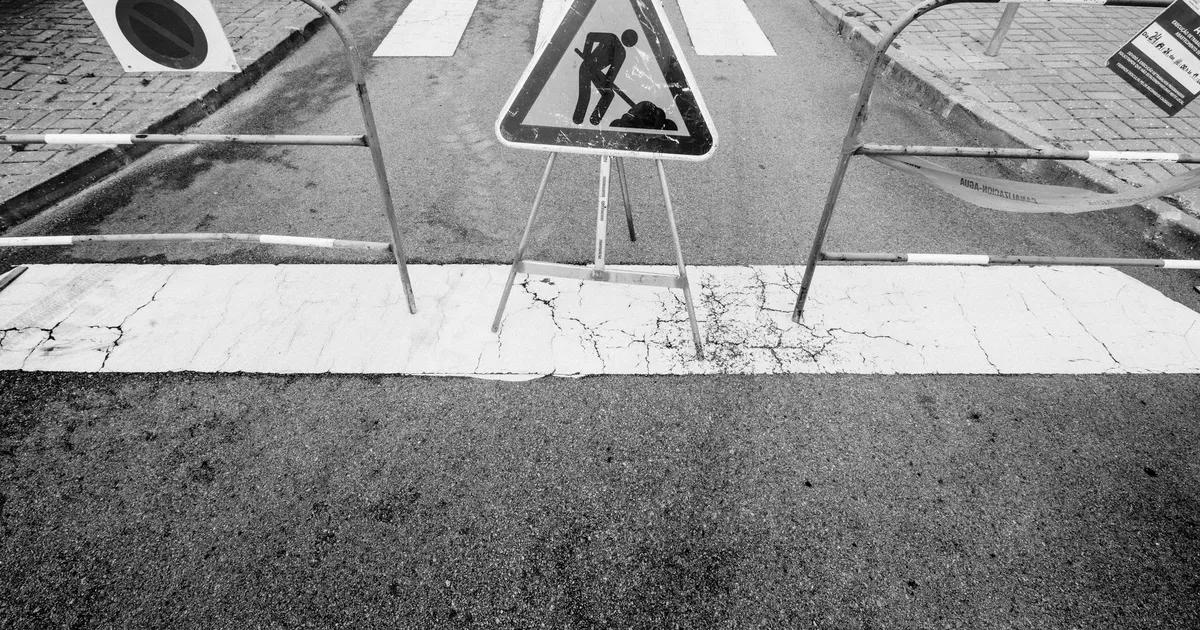
Traffic Management Services Central Otago, a family-run firm based in Alexandra, has collapsed owing $400,000, the Otago Daily Times reported today. The creditor list, the liquidator’s findings and the cause of failure are not yet public, and they should not be guessed at. The pattern around it, though, is already well documented, and it should worry anyone running a labour-heavy subcontracting business.
Traffic management is the purest test case for the contractor cash squeeze. There is almost nothing to cut except people, and the people expect to be paid every week.
The same town has seen this film before
TMSCO is not the first Central Otago traffic operator to fall over this year. TK Logistics, a separate Alexandra-based logistics and traffic management company, is no longer trading and Inland Revenue is seeking to liquidate it.
An Employment Relations Authority decision set out exactly how that collapse unfolded. Traffic management worker Shay Braden, on $28.50 an hour by August 2024, began experiencing pay delays in November 2024. Over the 2024/25 Christmas break she went unpaid for two pay periods worth more than $3,600 and borrowed to cover living costs. In February 2025 the director told staff by group chat the company had “ran out of money”. She resigned days later. The Authority found she had been unjustifiably constructively dismissed and ordered $10,156 in compensation, lost wages and holiday pay.
The sequence is the lesson. Wages slip first, then an admission, then the doors close, then IRD moves in.
A cost base with nowhere to hide
A builder under pressure can delay a materials order or push a supplier. A traffic control firm cannot. Its product is people standing on a road with a stop/go sign, paid by the hour, usually weekly or fortnightly. It also tends to sit several tiers below the principal contractor on civil, council and event jobs, which means little leverage over when it gets paid.
That is the worst possible position in a market where payment terms are lengthening. Shane Laurence, head of growth at invoice-financing provider FundTap, says “larger businesses are dictating extended terms of trade to smaller businesses, payment terms of up to 45-60 days”, leaving SMEs to fund two months of wages before the cheque arrives. Research from Manukau Institute of Technology published in 2025 found construction payment cycles sometimes stretched to 60, 90, or even 120 days.
Official guidance tells contractors to hold a cash buffer against payment gaps. Sound advice, but a two-month float of hourly wages is serious money for a family firm, and few small operators have it.
Construction failures are running at records
The regional story sits inside a national one. Deloitte’s insolvency report, released in February 2026, found formal appointments hit 3,080 in 2025, a 15-year high. Construction accounted for 747 of them, 24% of the total and up 14% on 2024, with Deloitte warning that smaller, less capitalised contractors carried the highest risk.
The pain has not eased. 768 construction firms were liquidated in the year to March 2026. Builder John Kaiser of Kaiser Construction spent $11,000 in legal fees chasing a $37,000 debt, and his advice is blunt: “you’ve got to have massive cash reserves.”
The tax department as lender of last resort
In its November 2025 Financial Stability Report, the Reserve Bank noted that around 70% of recent liquidations were initiated by Inland Revenue, a sign firms were using unpaid tax as informal credit. It also found small-firm deposits relative to GDP were still falling as pandemic buffers ran dry.
That is the quiet trap. When wages cannot slip without legal consequences, PAYE and GST become the overdraft. It works until IRD stops waiting, and IRD is usually the creditor that pulls the trigger.
Scale and discipline are the survival kit
BDO’s construction specialists are clear about who is coming through. “The businesses faring best are those with strong forward work, the scale to operate efficiently, and the discipline to manage or pass through cost increases,” says Bjorn De Nijs, construction partner at BDO Southern Lakes & Otago. Ruth McGregor of BDO Wellington adds that work is “being won on price”, squeezing profitability.
For small subcontractors the practical checklist is unglamorous. Price for the payment terms, not just the job. Refuse 60-day terms you cannot fund, or use invoice finance deliberately rather than in a panic. Chase debts early, as Kaiser does. And treat a missed PAYE payment as the red flag it is.
The full TMSCO picture will emerge when the liquidator reports. Until head contractors and councils pay their bottom tier faster, expect more family firms in labour-heavy trades to discover that a $400,000 hole can open in a business that never stopped having work.
Sources
- ODT: ‘I’m pretty much screwed’: Family-run Otago traffic control firm collapses owing $400,000 (2026-11-23)
- HCAmag: ‘Ran out of money’ group text sinks employer’s dismissal defence (2026-10-19)
- The Post: Dollar bill blues – why more small businesses are struggling under the weight of late payment (2026-06-13)
- Manukau Institute of Technology: Pathways to successful SMEs in construction and infrastructure (2025-10-01)
- Deloitte: New Zealand Insolvency Trends 2025 (2026-02)
- BDO NZ: Managing risk, cash flow and margin in construction and real estate (2026-08-02)
Join the discussion
Add useful context, ask a good question, or challenge an idea — keep it specific and respectful.