

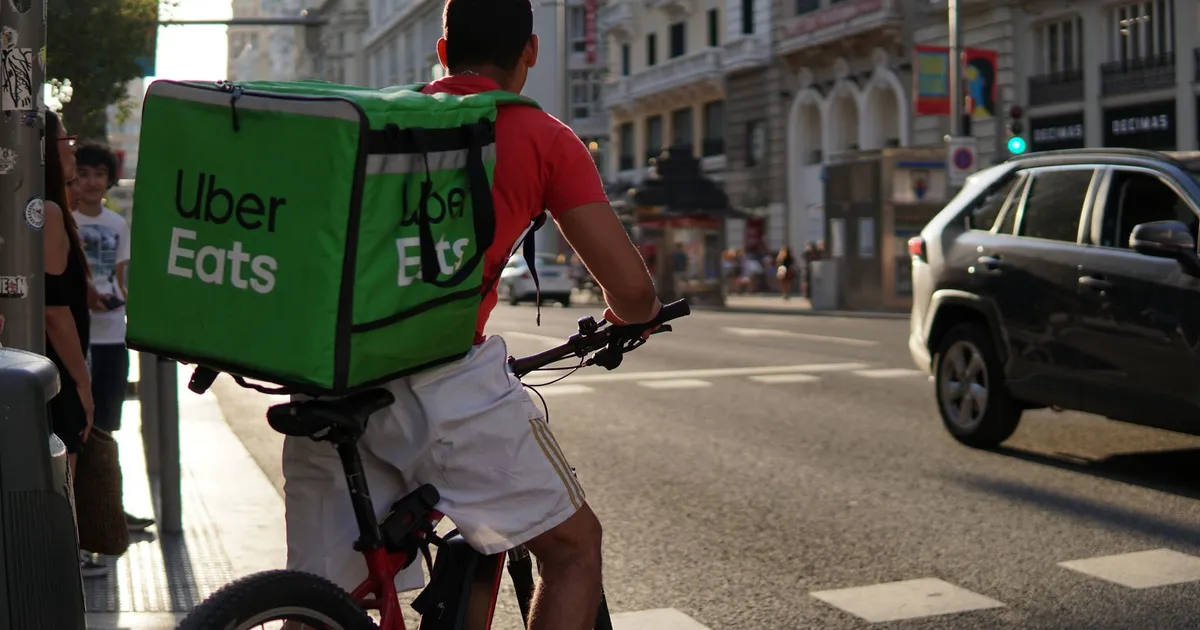
DeliverEasy paid more than $4 million in tax on $118 million in revenue over four years. Over the same period, Portier New Zealand, the entity that runs Uber Eats here, turned over $1.16 billion and recorded just $945,000 in net income tax expense.
Most coverage is treating this as a story about fairness. For business owners, it is a story about competition. A local operator and a multinational are fighting for the same restaurants, the same drivers and the same customers, and one of them is carrying a tax load the other has legally engineered away.
Ten times the revenue, a quarter of the tax
DeliverEasy co-founder and chief executive Tim Robinson calls the system “fundamentally broken”. He is careful to say Uber has done nothing illegal, and he is right. That is precisely the problem. When a compliance failure shows up, IRD can chase it. When the rules themselves produce this outcome, only Parliament can fix it.
Robinson took the argument to RNZ’s Midday Report and Newstalk ZB this week, and the numbers have not been disputed.
How $143 million of profit becomes $2.6 million
The mechanism is the intercompany service fee. In 2025, Portier’s accounts showed gross profit of $143.7 million. It then paid $140.2 million to related Uber entities for use of the group’s technology and brand, leaving profit before tax of $2.6 million. Robinson says the parent [“effectively decide[s] what its fees are, and send[s] that to other countries where the tax rate is lower than New Zealand”](https://www.rnz.co.nz/news/business/2750054/fundamentally-broken-ceo-says-tax-rules-favour-multinationals-over-locals).
None of this escapes the rulebook. New Zealand’s corporate rate is 28 percent, and transfer pricing rules follow the OECD’s 2022 guidelines requiring arm’s length pricing between related parties. IRD guidance even offers a simplification option letting low-value-adding services be charged at cost plus 5 percent. The test is whether the fee is defensible, not whether it leaves any taxable profit in the country where the customers live.
The group architecture runs deeper than fees. In 2025, the NZ Herald reported that Uber Eats’ local cash balances were swept into a single account owned by Uber BV, with money sent back for working capital.
Untaxed margin is a pricing weapon
This is where it stops being an accounting curiosity. Every dollar not paid in tax is a dollar available for lower commissions, customer promotions or driver incentives. A domestic firm paying 28 percent on genuine profit has to fund those same levers out of a thinner wallet.
DeliverEasy isn’t asking for a subsidy, a local-content quota or protection. It is asking to compete under the same effective rules. Robinson’s proposed fix is modest: tighten the rules on intercompany transfer fees and be explicit about what can legitimately be charged back to a New Zealand entity. That is a free-market argument, not an anti-business one.
Scrapping the digital tax left a gap nobody filled
The coalition was entitled to bin Labour’s digital services tax, which was projected to raise $146 million a year by taxing revenue rather than profit. Revenue taxes are blunt and invite trade retaliation. But it replaced the DST with nothing. The government leaned on the OECD’s Pillar Two global minimum tax, yet in 2025 experts noted that because New Zealand’s 28 percent rate already sits well above the 15 percent floor, Pillar Two was unlikely to raise extra revenue from Big Tech here. Rejecting a bad answer is not the same as having a good one.
IRD’s own rulebook tilts the field too
The distortion isn’t limited to multinationals. In February 2026, The Press reported that YUMMi founder George Evans had been classified by Inland Revenue as a “direct service”, paying full 15 percent GST, while Uber Eats and DeliverEasy were treated as marketplaces paying an effective 6.5 percent after an 8.5 percent driver credit. Evans said he had copied his terms from a marketplace-classified competitor. “We’re like Uber Eats. The only difference is that I am a local, hands-on owner who also delivers food myself,” he said. The ruling cost him roughly a third of his profit.
So the smallest player faced the worst treatment of all three. That is not a tax system rewarding efficiency. It is one rewarding legal resources and offshore structure.
The fix doesn’t need a new tax
Nothing here requires a revenue grab. Tighter safe harbours on service fees, a requirement to evidence brand and technology charges against local profitability, and consistent GST classification for platforms that operate the same way would go most of the distance. Any business owner competing against a global platform, whether in delivery, accommodation, software or retail, has a stake in the outcome.
The government has spent two years talking up competition and cutting red tape for local firms. Here is a case where the cheapest pro-competition reform on the table is simply making the rules mean what they say. If ministers leave it alone, the message to every Kiwi founder is clear enough: build it here, but book the profit somewhere else.
Sources
- Newstalk ZB: Kiwi delivery company with lower revenue paying four times the tax of Uber Eats (2026-11-24)
- RNZ: ‘Fundamentally broken’: CEO says tax rules favour multinationals over locals (2026-11-23)
- RNZ Midday Report: DeliverEasy is calling on Uber Eats to pay their fare share (2026-11-23)
- Economic News: Delivereasy paid four times Uber Eats tax on fraction of revenue (2026-11-23)
- NZ Herald: Uber and Uber Eats earn $402m revenue in NZ, pay less than $1m tax (2025-09-06)
- The Press: He was building a local alternative to Uber Eats. Then tax rules changed (2026-02-02)
Join the discussion
Add useful context, ask a good question, or challenge an idea — keep it specific and respectful.