

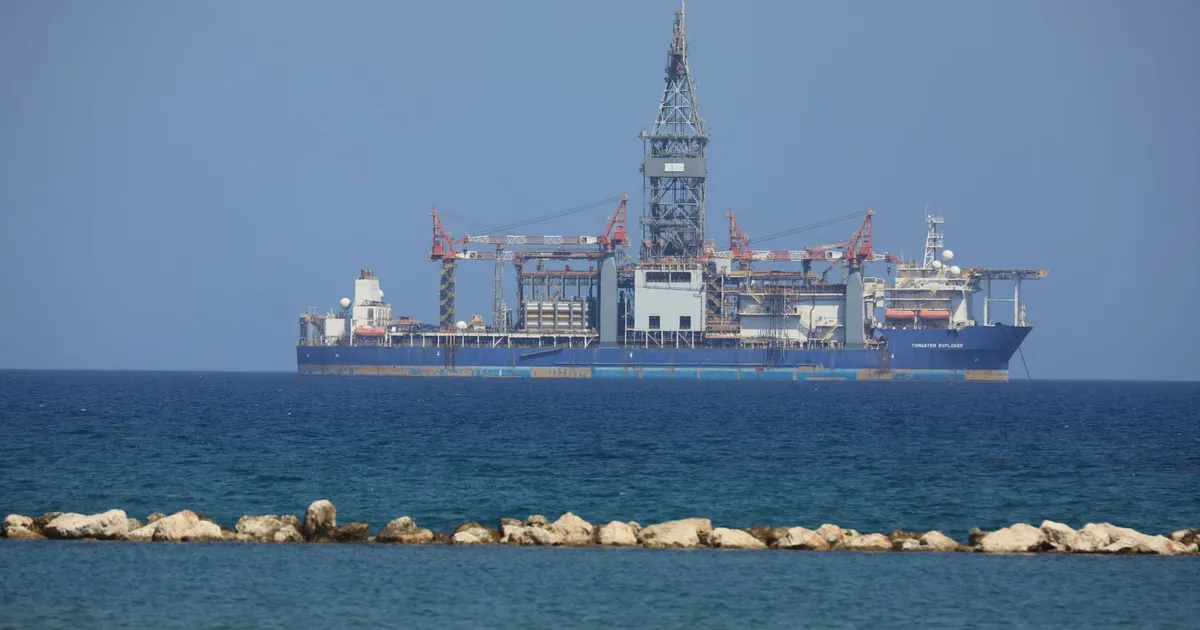
The Ministry of Foreign Affairs and Trade has assessed the Gas Security Fund’s loans to Todd Energy and its equity stake in EnZed Energy as ‘likely subsidies’, and has informally notified a handful of trade partners. Natural Resources Minister Shane Jones says he was ‘blindsided’ and has promised to ‘pause and review’ the fund.
That is a remarkable admission for a policy whose whole defence rested on one word. Cabinet agreed the fund’s investments would be commercial and expected to generate a return, with guardrails including legal advice on international obligations. Treasury’s Pre-election Economic and Fiscal Update had already called the investments concessionary and estimated they could cost taxpayers between $100 million and $200 million. On a $200 million fund, that is not a rounding error. It is most of the money.
The commercial label was always thin
The first deal gave Todd Energy up to $23.5 million, $16.2 million for a new McKee well and $7.3 million to reach the deeper Tariki reservoir, with Todd putting in about 30% of project costs and covering overruns. The Crown carries the other 70% of one of the country’s best-capitalised private energy companies’ drilling programme. The terms remain secret, because release ‘could prejudice current and future negotiations’, according to Jones’ office.
Then came $21.5 million for EnZed Energy’s offshore Kaheru prospect, alongside $14.5 million for Schlumberger seismic data handed to explorers free for two years. The Herald describes EnZed as tiny and Australia-based, with a ‘purportedly time-limited’ government equity position. Free data, majority-funded wells and equity in a small offshore explorer is a support package. Calling it commercial does not change what it is.
The warning lights were on for months
None of this should surprise anyone in government. In May 2026 the Ombudsman found MFAT ‘was not entitled’ to double the deadline on a request for its advice on the fund, and the sections on risks and international obligations were redacted. The same reporting revealed the supporting Cabinet paper cited a 58% rise in commercial gas costs when the true figure was 8%, and that Green Party-commissioned legal advice called the co-investment a ‘clear breach’ of trade commitments, which the government disputed.
In September, Labour leader Chris Hipkins said that without the terms it was hard to tell whether the loans breached the EU and UK free trade agreements. Jones, meanwhile, was eyeing the full $200 million spend before the election. If the minister was blindsided, it was not for lack of signals. It was a choice not to read them.
Exporters pay for trade credibility
This is where it stops being an energy squabble. New Zealand has signed fossil fuel subsidy disciplines into its trade agreements, and a small exporting nation’s leverage depends on being seen to keep its word. Once MFAT itself flags a measure to partners, Wellington loses the ability to argue the point quietly. Every future complaint we make about farm subsidies or dumping abroad gets a ready reply.
The fiscal side is no prettier. The Crown posted an $8.7 billion OBEGALx deficit for the year to June 2026. Writing off up to $200 million on wells expected to deliver up to 19.9 petajoules over five to nine years is a hard sell to any fiscal conservative.
Gas security deserves an honest instrument
The underlying problem is real. In April 2026, BusinessNZ’s Catherine Beard said successive governments had pursued net zero ‘without a workable transition plan’ that keeps businesses intact, and energy consultant Martin Gummer urged people to ‘think about strategy, not ideology’. Energy Resources Aotearoa chief executive John Carnegie welcomed the loans but said progress on regulatory and sovereign risk was needed to attract private capital. Climate Action Tracker warns the fund risks locking in fossil fuel infrastructure.
Carnegie has the more useful point. Investors stay away because they doubt the rules will hold, and a fund that dresses support up as commerce, then gets reported offshore, adds to that sovereign risk rather than fixing it.
What the next government inherits
Whoever forms the next government gets a paused fund, a live trade exposure and a Treasury estimate that most of the money may not come back. The fix is not complicated. Publish the loan terms, have the trade lawyers test them in daylight, and if gas security warrants support, call it support, price it in the Budget and design it to survive scrutiny from Brussels and London. Pretending it was commercial has already cost the government its argument. It should not also cost exporters their credibility.
Sources
- NZ Herald: Gas Security Fund: MFAT flags Todd Energy and EnZed Energy loans as ‘likely subsidies’ and notifies trade partners (2026-11-23)
- Kānoa: Gas Security Fund
- Kānoa: First Gas Security Fund projects announced (2026-09-15)
- The Post: Chris Hipkins says terms of $23.5m government loan to Todd Energy should be disclosed (2026-09-06)
- RNZ: Government puts $40.5 million towards two gas exploration projects (2026-09-24)
- RNZ: Ombudsman rebukes MFAT for doubling OIA response time (2026-05-26)
- BusinessDesk: First gas loans announced as Jones eyes full $200m spend before election (2026-09-06)
- BusinessDesk: The gas trap: The politics of a crisis in slow motion (2026-04-30)
- Energy Resources Aotearoa: First Gas Security Fund loans back new domestic gas supply (2026-09-07)
- Climate Action Tracker: New Zealand, three years of systematic climate policy rollbacks (2026-10-28)
Join the discussion
Add useful context, ask a good question, or challenge an idea — keep it specific and respectful.