

New Zealand’s organic exporters have found that their biggest certification risk may be a trial they were never told about. An Official Information Act request by Organics Aotearoa New Zealand (OANZ) revealed the Environmental Protection Authority had permitted 102 experimental gene-tech pesticides for glasshouse and field trials, some already in the ground. The figure has since been updated to 104.
This is not really an argument about whether gene technology is good or bad. It is about who carries the commercial risk when the rules are opaque. Right now, the answer is the grower with the export certificate.
One classification call, zero notification
Most of the products are replicates of just two active ingredients, and are suspected to be based on synthetic double-stranded RNA (dsRNA), a gene-silencing technology. The EPA classifies dsRNA products as hazardous substances rather than new organisms. That one decision sends them down a pathway where trials are not publicly notified and results stay commercially confidential, according to a detailed write-up by Luke Nicholas.
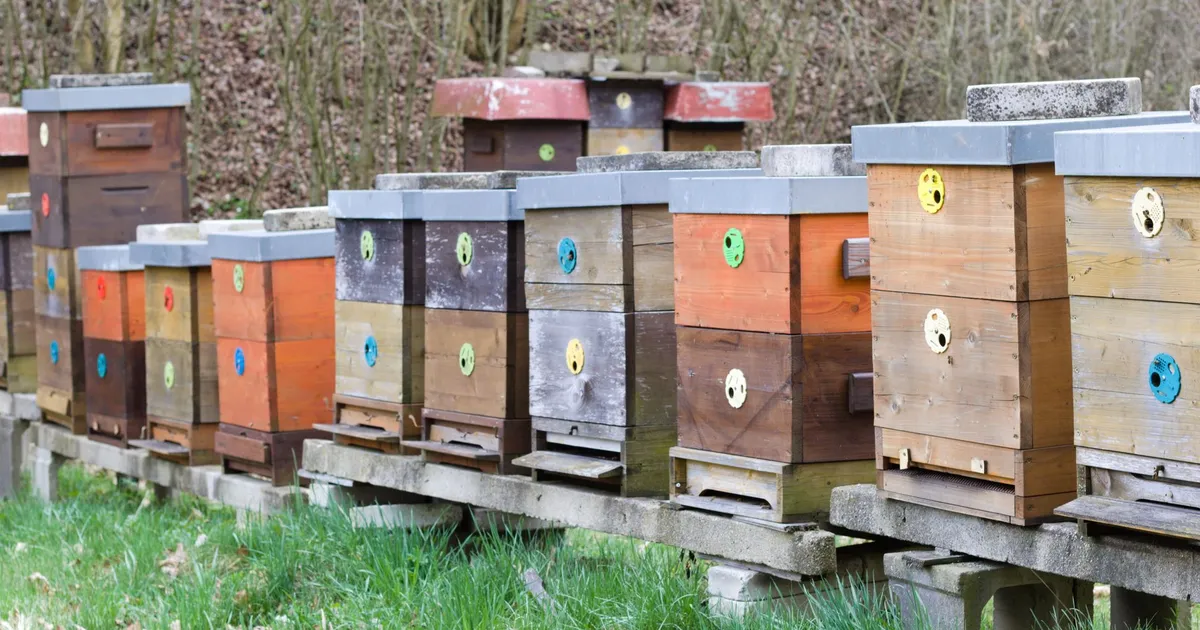
One identified product, Norroa, is a dsRNA treatment for varroa mite that was field-tested in beehives across both islands between 2022 and 2024, part-funded by US biotech GreenLight Biosciences. OANZ says it located trial sites near Ashburton and in Manawatu, both regions where its members run certified organic operations. A separate dsRNA product for grapevines is held by the Bragato Research Institute. OANZ has been briefing members on what this means for certification and export access, and the stakes for wine are obvious.
The organic rulebook already says no
Clause 1.2(1)(c) of the Organic Notice explicitly lists gene silencing as a prohibited technology. So a certified grower can lose standing through contamination they had no way to anticipate, because the system does not tell them where the risk is. They are being asked to prove a negative inside a framework that withholds the information they would need to do it. No buffer zone can be planned around a trial location that is confidential.
For exporters, this is the worst kind of risk. It is not priced, not insurable in any practical sense, and not within their control.
What sits on the line
The sector is not a lifestyle niche. OANZ’s market report put the organic sector at a record $1.18 billion in 2024, with exports of $606.7 million growing at nearly twice the rate of total primary exports. Fruit and vegetables made up 40.3% of organic exports, dairy 35.3% and wine 12.2%.
The exposure also runs beyond organics. In 2025, the Dairy Companies Association’s then-executive director Kimberly Crewther told RNZ that markets taking 49% of New Zealand’s dairy exports, worth $11.7 billion, required approval or labelling for products from gene-edited animals, including the EU, Japan and China. In the same piece, OANZ’s Scott Wilson noted New Zealand produce could claim GMO-free status without the costly traceability schemes competitors need.
The headline numbers are contested. A 2024 NZIER study commissioned by OANZ estimated environmental release of GMOs could cut primary exports by $10 billion to $20 billion a year. Readers can discount a lobby-funded figure. The problem is there is no official number to weigh it against.
Two reform tracks, no price tag
In October 2025, the Health Committee recommended the Gene Technology Bill pass, replacing the HSNO Act with a risk-tiered regime and a Gene Technology Regulator inside the EPA. The Regulatory Impact Statement, published in December 2024, contained no substantive economic analysis of what New Zealand’s non-GMO status is worth or what losing it would cost.
Meanwhile the dsRNA trials have proceeded under existing hazardous substances rules. OANZ argues the Gene Technology Bill, alongside the HSNO and ACVM amendment bills, creates layered, compounding risk for non-GE farmers. A genetics expert quoted by Newsroom wants the bill sent back for a review of processes and definitions.
A pro-innovation government can reasonably want faster access to new tools for pests such as varroa. But liberalising through two uncoordinated channels, one with no disclosure requirement at all, without costing the downside, is not deregulation done well. It is regulatory risk shifted onto exporters who never got a vote.
Certainty is the fix, not a ban
The most useful prescription came from a December 2025 Kellogg Rural Leadership report by Matthew Scarf. It found regulatory uncertainty over coexistence would raise costs and deter new entrants, and recommended clear rules on buffer zones, liability, compensation and labelling, plus fast-tracking organic standards to secure more equivalency deals.
That is a business agenda, not an activist one. Trial locations near certified farms should be disclosed. Liability for contamination should sit with the party running the trial. And before Parliament votes the Gene Technology Bill through, someone in government should put a number on the GE-free premium it is about to test. Exporters can manage almost any rule they can see. What they cannot manage is a risk the regulator keeps confidential.
Sources
- Newsroom: Organics sector fears for exports after discovery of 102 gene-tech pesticides (2026-11-23)
- Organic Food Together: dsRNA Pesticide Trials in New Zealand – What We Know (2026-11-23)
- OANZ: Three Bills, One Big Picture. What the HSNO and ACVM Amendment Bills Mean for Organic (2026-06-09)
- OANZ: 2025 Organic Market Report (2025)
- RNZ: Why some of our biggest exporters are worried about the Gene Technology Bill (2025-04-23)
- OANZ: NZ exports risk multi-billion dollar hit if GMO rules deregulated – NZIER Study (2024-11-26)
- MBIE: Regulatory Impact Statement – Reform of Gene Technology Regulation (2024-12-20)
- Rural Leaders: The Organic Sector With No More GE Free (2025-12)
Join the discussion
Add useful context, ask a good question, or challenge an idea — keep it specific and respectful.