

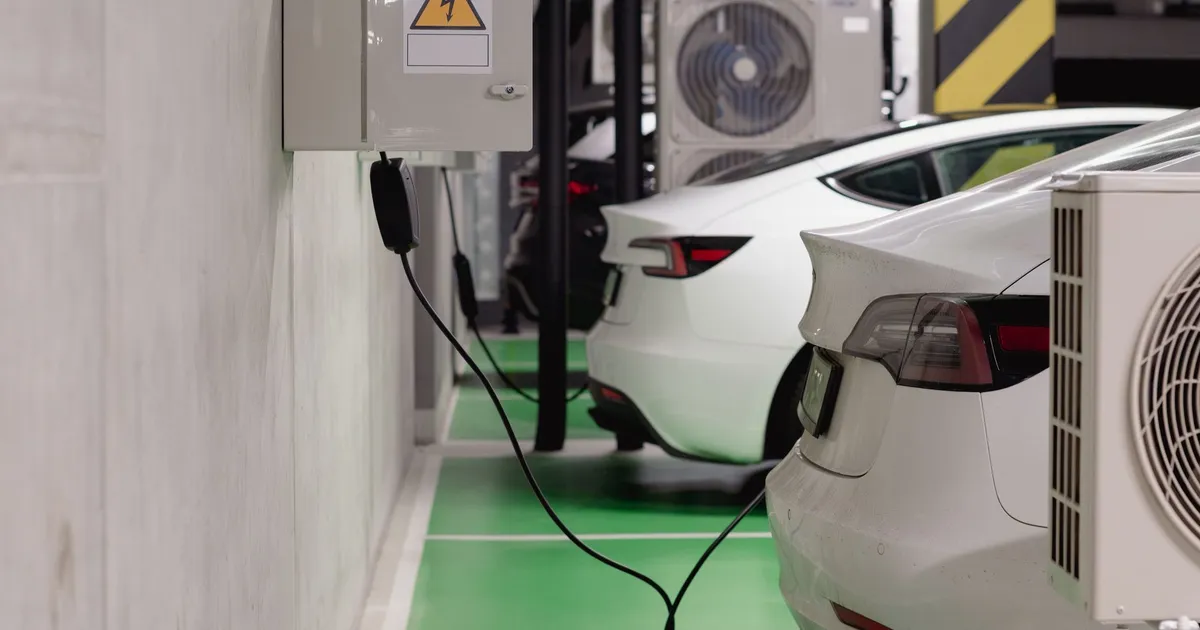
A cut EV charging cable is worth about $6 in scrap, according to the Association of Metal Recyclers. Replacing one costs an average of $4,000. That mismatch is why charging networks from Island Bay to Hobsonville are being stripped. It is also why this has stopped being a policing curiosity and become a cost line for any business that hosts, owns or depends on public charging.
Auckland is the latest stop on a national run
This week vandals sliced cables from public chargers across Hobsonville, Westgate and Henderson, including four cables from two ChargeNet stations in a single supermarket carpark. Locals and industry point to scrap copper prices up 40 percent year-on-year, pushed up by the data centre boom’s appetite for the metal.
A ChargeNet spokesman told the Herald that “each incident can cost tens of thousands in parts and labour, and with the frequency of the incidents that is starting to add up across the industry”.
Auckland is late to this. In May, Hutt Valley police logged 16 reports of charger theft in a single month, and by June 15 Wellington locations had been hit. Canterbury has recorded at least 23 thefts and 62 cables stolen since mid-September, with a minimum $248,000 in losses to businesses and insurers. Police now describe a broader pattern of copper theft targeting EV infrastructure nationwide.
The damage bill dwarfs the loot
The Christchurch case of Gabriel Verry shows the unit economics. Armed with garden loppers, he took cables valued at $57,500 from five sites in ten days. But the stolen value understates the hit. At BP Redcliffs the damage forced an order for an entirely new station costing up to $50,000. Insurance covered it this time. Nobody should assume premiums and excesses stay where they are if claims like that keep landing.
This is not all opportunistic either. A Naenae raid turned up six stolen chargers and equipment consistent with an operation to break chargers down for on-sale. Organised crews pick targets methodically, and unmonitored carparks are easy pickings.
The UK shows where this ends up
This is a commodity price story, not a uniquely Kiwi crime wave. In 2025, The Telegraph tied the UK’s cable theft surge to copper reaching US$11,000 a tonne, up from about US$7,500 three years earlier. Network operator Osprey estimated that at the 2025 peak, one in 10 of the UK’s 17,000 rapid chargers was out of action. Evyve’s then chief executive James Moat said about 100 of its 300 chargers had been hit in a year, with each replacement costing around £30,000. Across the Tasman, 28 Tesla Supercharger bays were attacked in Victoria last month.
The UK experience also counsels against panic. Networks kept growing. But they absorbed real security costs and lost revenue on dead bays, which is precisely the bill now arriving here.
Fleets carry the sharpest exposure
Rewiring Aotearoa chief executive Mike Casey points out that about 80 percent of charging happens at home, so for most drivers a cut cable is an inconvenience. That reassurance does not extend to commercial operators running vans on fixed routes, or regional businesses whose staff depend on one fast charger. Inspector Peter Cooper warned that in rural areas drivers “could end up stranded” where the next station may be too far away. Four State Highway 73 sites were hit in a single month.
For a fleet manager, a dead charger is a missed delivery, an idle driver and a vehicle off the road. Any fleet electrification plan that assumes public charging is always available should be stress-tested now, with depot charging, route redundancy and contingency time built in.
Choke the buyers, harden the hardware
The smartest lever is the resale market. Selling scrap copper already requires verified ID, a signature and a description of the metal, and Canterbury police have been running compliance checks on scrap yards with the industry. That is the right approach. Enforcing existing rules beats inventing new bureaucracy, and it targets the only point where the $6 ever becomes cash.
Operators are moving too. Meridian says it is developing longer-term security plans for its machines. Supermarkets, service stations and councils hosting chargers should be asking networks the same question, along with who pays when a site is repeatedly hit.
Copper is not getting cheaper while data centres keep building. Until the scrap trade stops paying out on cut cables, expect the theft map to keep spreading, and expect the cost to show up in security budgets, insurance renewals and, eventually, the price per kilowatt-hour.
Sources
- NZ Herald: EV charger cables cut at multiple Auckland sites as scrap copper prices rise 40% on a year ago (2026-11-19)
- The Press: Thief admits using garden loppers to steal EV charging cables worth $57,000 (2026-11-17)
- RNZ: Man in court charged with stealing EV charging cables worth more than $57,000 (2026-10-13)
- RNZ: Wave of copper cable thefts from Wellington EV chargers leaves drivers stranded (2026-06-11)
- NZ Police: Man charged following series of EV charger thefts, Christchurch (2026-10-12)
- NZ Police: Hutt Valley Police received 16 reports of EV charger theft in May alone (2026-06-12)
- NZ Herald: Canterbury police work with scrap metal industry to curb copper theft profits (2026-09-30)
- The Press: Concern grows for EV users as Canterbury police crack down on copper cable thieves targeting charging stations (2026-10-11)
- The Telegraph: The crime wave threatening electric car sales (2025-10-11)
Join the discussion
Add useful context, ask a good question, or challenge an idea — keep it specific and respectful.