

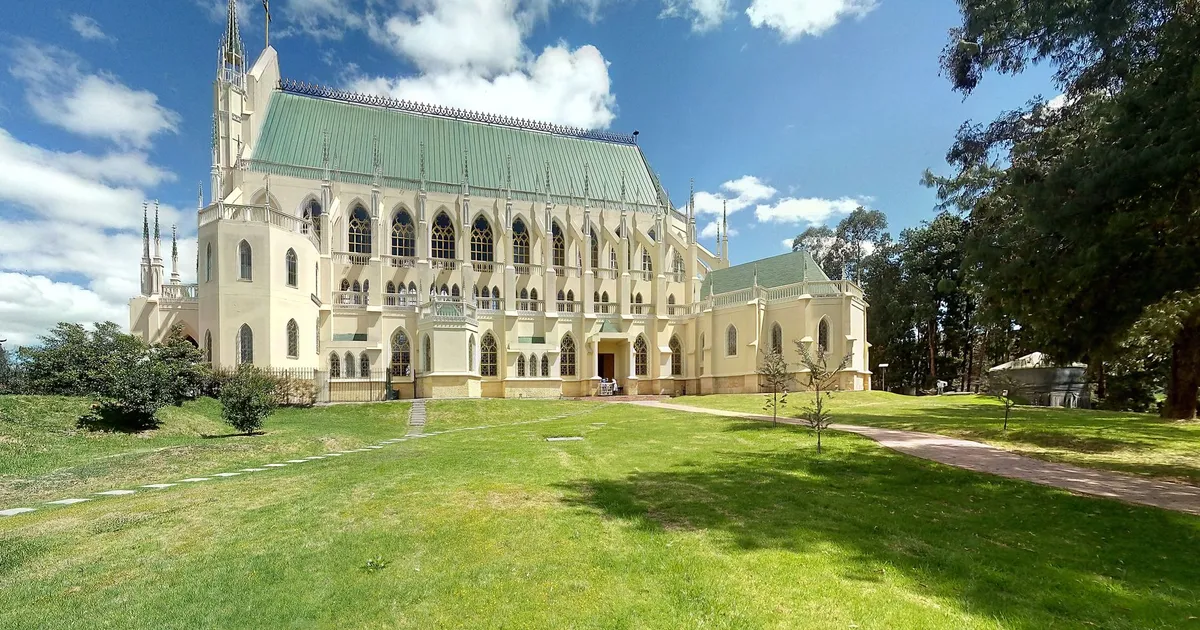
Whanganui Collegiate’s optional $10,840 day-student fee has survived both a district court challenge and an Ombudsman investigation. The court case was struck out at the end of October, and the Ombudsman concluded the practice did not appear to be unlawful.
This matters well beyond one Anglican school in Whanganui. The school has pressure-tested a legal structure that lets an organisation charge a high-value fee for access to services that feel like part of normal life, while staying technically compliant with rules written to prevent exactly that kind of compulsion. Other boards are watching.
Optional on paper, standard in practice
The only legally mandatory charge is $2,760 a year in attendance dues, according to the school’s 2026 fee summary. Stack the optional extras on top (meals, insurance and the Non-Integrated Facilities for Day Students fee) and a family opting into everything pays $16,299 a year.
What the $10,840 buys is the crux. It covers access to boarding houses, prep spaces, tutor support, pastoral care, chaplaincy, and participation in Inter-House swimming, athletics, cross country, House Music and Tikanga. Those are not luxury add-ons. In most schools they are simply what school is.
The uptake numbers tell the same story. In 2025, then-headmaster Wayne Brown said only one family at the school did not opt into the fee, which he defended as linked to the ‘provision of defined services’. That same 2025 reporting showed the charge had nearly doubled since 2020, when the fee plus a board donation came to $5,585 and $900.
The fee versus donation trick
The legal architecture is clever. Under section 30 of the Education and Training Act 2020, integrated schools can levy compulsory attendance dues only for specified property purposes, and every other contribution must be voluntary. No child can be refused enrolment because a parent won’t pay.
Collegiate’s move was to classify the charge as a fee for goods and services from proprietor-owned, non-integrated facilities, not a donation. That distinction does two things. It lets the school exclude non-payers from the facilities and activities in question, which a donation request cannot do. And it strips families of the donation tax credit. Campaigner Guy Gifford, who lodged the Ombudsman complaint, says that costs parents ‘tax credits worth thousands of dollars’.
Parent Craig Sinclair, who brought the court case, is blunter, calling Collegiate a school that is ‘half state, half private’ and dismissing the ministry’s description of the services as a premium after-school programme as ‘a load of nonsense’, since swimming and cross country happen during school hours. He is preparing an appeal.
Why boards will copy it
The money explains the fight. The school’s 2024 audited financial statements show locally raised funds of $2.80 million, down from $5.29 million in 2023. When that line swings by millions, reclassifying a fee as a donation is not a technicality, it is a funding model.
Kevin Shore, chief executive of the Association of Proprietors of Integrated Schools, confirms financial pressure is pushing more schools toward fee-based models for optional services, and agrees the case sets a precedent ‘for state schools as well as state integrated schools’. Sinclair’s fear is the mirror image, that any school could start charging for activities most parents assume are covered by the free-education guarantee.
There is a fair pro-choice argument here. Families who want a richer, house-based school experience are paying for it transparently, and those who don’t can still enrol. Forcing every enhancement into the donation box arguably makes funding less predictable, not more. But the compliance record isn’t spotless. Earlier this year, RNZ reported the school was facing an Ombudsman investigation, a court case and Ministry scrutiny at once, and a separate hockey turf lease breach has since had to be fixed.
The lesson for anyone selling tiered access
For business owners running clubs, membership bodies, private training providers or any ‘pay for more’ model, the takeaway is sharper than the education debate. Courts and ombudsmen look at legal form: was entry refused, was the charge clearly tied to defined services? Collegiate passed that test. But the public, and politicians, look at function. When nearly every customer pays and the few who don’t are visibly shut out of core activities, ‘optional’ starts reading as compulsory with extra paperwork.
That gap is where reputational and regulatory risk lives. Collegiate has won round one, and boards will treat that as permission. The appeal, and any ministry appetite to tighten the rules, will decide whether it is a durable blueprint or a loophole with a short shelf life.
Sources
- 1News: Whanganui Collegiate sees off challenges to optional fee of nearly $11,000 (2026-11-19)
- RNZ: Whanganui Collegiate sees off challenges to optional fee of nearly $11,000 (2026-11-20)
- RNZ: Whanganui Collegiate facing investigation, court case and scrutiny from Education Ministry (2026-03-05)
- RNZ: State-integrated school’s optional $10,000 fee shocks parent (2025-03-10)
- Whanganui Collegiate School: 2026 Summary of Annual Attendance Dues, Boarding Charges, Purchase of Goods and Services (2026-08)
- Whanganui Collegiate School: Audited Financial Statements 2024 (2024)
Join the discussion
Add useful context, ask a good question, or challenge an idea — keep it specific and respectful.