

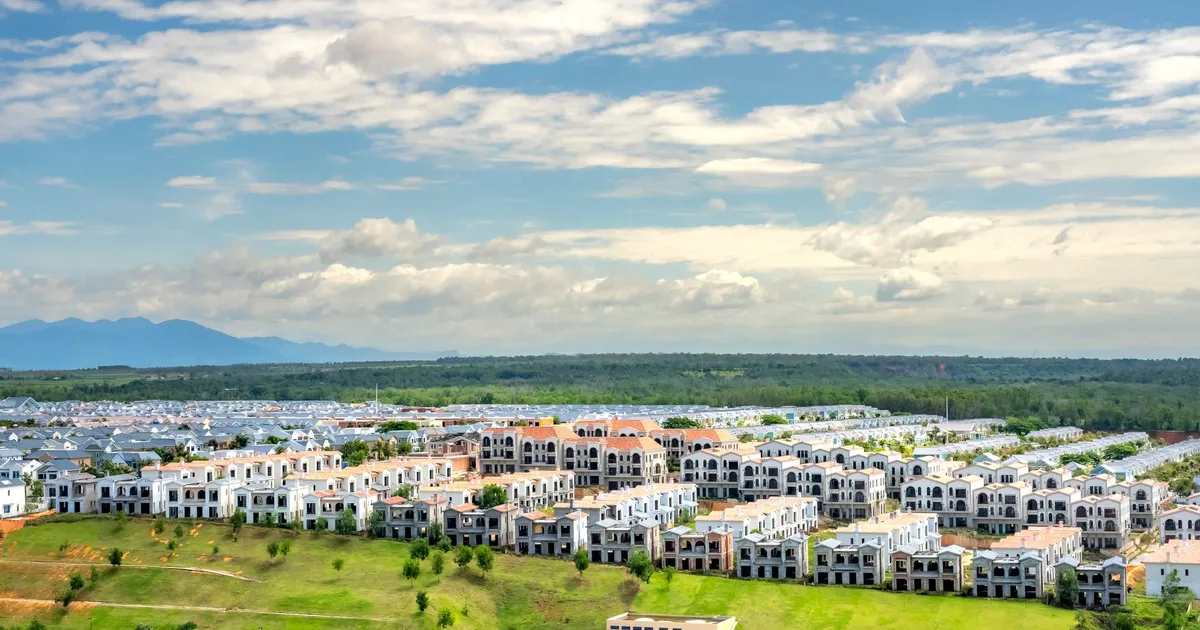
Wānaka’s planning rules now allow for up to 50,000 new houses, and the town’s own deputy mayor thinks that is a mistake. “We’ve gone too far,” Quentin Smith told the Otago Daily Times, warning of unintended consequences from a change that was supposed to help fix housing affordability.
He is right, though not for the reason anti-density campaigners will seize on. The problem is not that Queenstown Lakes District Council zoned for growth. It is that the headline capacity bears little relation to what the council’s own modelling says is coming, or to the pipes and roads needed to serve it. A number that big, with no infrastructure plan behind it, is not pro-growth. It is a planning fiction.
Upzoning was the right instinct
The council adopted its Urban Intensification Variation in February 2026. The legal mechanics lifted Wānaka town centre heights from 8m to 16.5m, pulled density back near the centre, and pushed most new height and density into greenfield Three Parks and Wānaka South.
The case for doing something was strong. At the time, councillor Cody Tucker said the district had “the least affordable housing in the country”, and that part of the answer was more variety. Back in 2024, economist Eric Crampton pointed to Infrastructure Commission work showing restrictive zoning had more than tripled land prices in Queenstown. Under-zoning has been New Zealand’s chronic sin. Nobody should pretend otherwise.
Capacity that exists only on paper
But zoning is only the permission slip. The council’s 2025 capacity assessment found just 4% of short-term capacity district-wide was backed by residual infrastructure capacity. The same report found planning framework changes alone had inflated modelled medium-term capacity by 54%, with Spatial Plan additions adding a further 20% on top. Local coverage in 2025 called the infrastructure shortfall “staggering”.
Then look at demand. The council’s latest projections model the district’s resident population rising from 58,700 in 2027 to 114,261 by 2057, with roughly 40% of growth heading to Wānaka. Even after three decades of 2.2% annual growth, demand uses only about 60% of capacity, leaving around 25,000 lots district-wide untouched.
Do the maths. Forty per cent of 55,561 new residents is about 22,000 people in Wānaka over 30 years. At typical household sizes, that is a fraction of 50,000 homes.
The overshoot was flagged in advance
This was not a surprise. In 2025, the council’s own economic witness, Susan Fairgray, conceded in hearing evidence that the capacity required “may exceed that needed only to accommodate projected growth” in each location.
Crampton saw the same pattern in Wellington in 2024, where the plan enabled roughly 50,000 dwellings against expert evidence of 36,000 needed by 2051. The National Policy Statement on Urban Development requires councils to zone at least 20% above expected demand. Combine that buffer with generous whole-of-town modelling and you get a figure that looks bold in a press release and means very little on a building site.
Who pays for the gap
For developers, a 50,000-home allowance says almost nothing about which sites can get water, wastewater and roading connected in the next five years. Land bankers holding paper entitlements may do nicely. Builders face the same bottleneck they had before, with a bigger number attached.
For ratepayers, the risk is worse. In 2026, council planning manager David Wallace argued density could deliver infrastructure “in a more efficient and affordable manner to the ratepayer”. That logic holds only if investment is sized to growth that is actually coming and sequenced to where it will land. Smith himself acknowledged at adoption that the council was deciding with “unknown implications around infrastructure”. Nine months on, those unknowns are still the story.
Price the growth honestly
The fix is not to rezone Wānaka back down. That would repeat the mistake that made the district unaffordable. The fix is for councils and ministers to stop treating zoned capacity as a success metric and start reporting serviced, financeable capacity alongside it.
Wellington policymakers pushing intensification nationally should treat Wānaka as a warning. If the demand buffer produces headline numbers this detached from infrastructure reality, the credibility of every council’s capacity claims erodes. Growth is welcome. Pretending a pipe network sized for a small town can carry 50,000 homes is not.
Sources
- Otago Daily Times: ‘We’ve gone too far’: Rule change allows 50,000 new houses in Wānaka (2026-11-19)
- al.nz: Queenstown’s Urban Intensification Variation – What the Variation Decision Really Does (2026-02-20)
- NZ Herald: The incapacity of development capacity – Eric Crampton (2024-02-07)
- QLDC: Housing and Business Development Capacity Assessment 2025 (2025-09-23)
- QLDC: Queenstown Lakes District Demand Projections 2027 to 2057 (2026-05-29)
- QLDC: Statement of Evidence of Susan Michelle Fairgray (Economics), Urban Intensification Variation (2025-06-06)
- Crux: QLDC’s new building intensification rules – in detail (2026-02-09)
Join the discussion
Add useful context, ask a good question, or challenge an idea — keep it specific and respectful.