

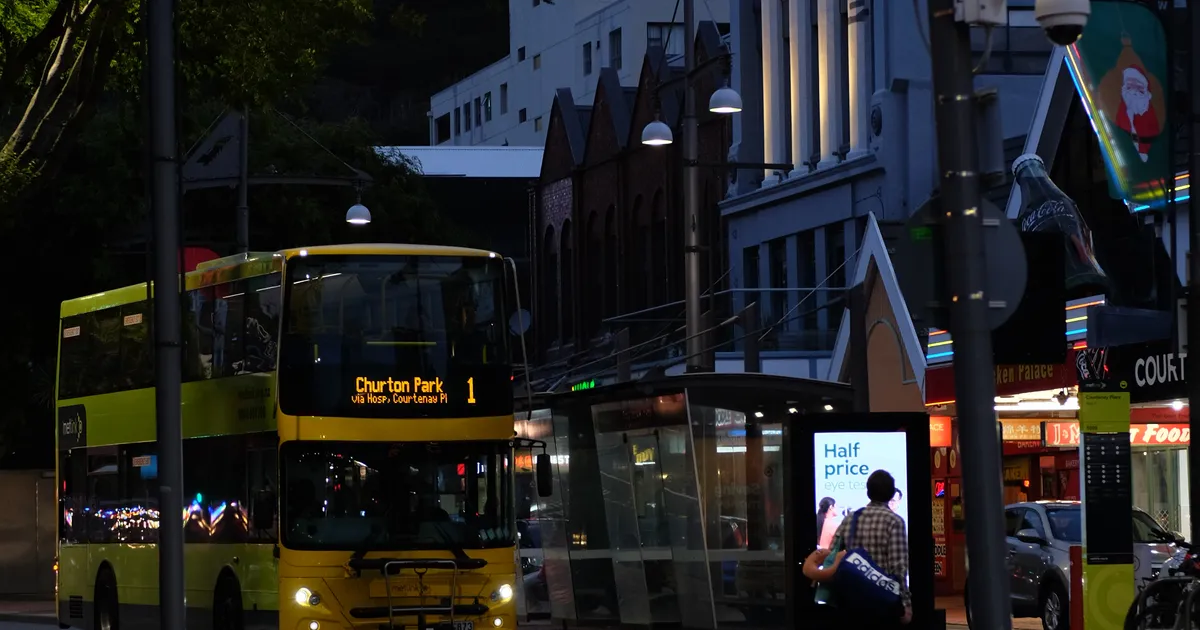
Wellington City Council says it wants a revitalised city. Its proposed rates overhaul would pursue that goal by charging the cinemas and bars that generate street life tens of thousands of dollars more a year, while the owners of its biggest office towers pocket six and seven-figure savings. Consultation closes on 15 November, which gives affected businesses five days to make the point.
Who wins when you tax the dirt
The council is consulting on two linked changes for the 2027-37 Long-term Plan. The first moves rating from capital value (land plus buildings) to land value alone. The second trims the commercial differential from 3.7 times residential rates to 3.0. Under land value, a tall tower on a small footprint gets cheaper. A low-rise venue on a big site gets hammered.
The council’s own figures make the asymmetry plain. Penthouse Brooklyn Cinema and its adjoining carpark, on a combined 2164 square metres, face a rise of more than $77,000 a year, a hit general manager Fergus Kisby-MacLeod called the potential “final nail in the coffin” for a family-run business open since 1975. Jeremy Smith’s Courtenay Place bar Lulu goes from $68,000 to $170,000. The Majestic Centre saves over $700,000 and the Deloitte high-rise more than $1 million. Some central businesses could face increases of up to $800,000 a year.
That is not a rounding exercise. It is a transfer from the operators who fill footpaths at night to the landlords whose buildings empty at 5pm.
A consultation run on half a calculator
Here is the detail that should worry anyone who has already made a submission. The public rates calculator, the tool ratepayers were pointed to, did not include the effect of the differential cut. Smith, a Trinity Group director and Hospitality NZ board member, has said it should have been factored in, because the headline numbers caused shock across the business community. Some of those figures may overstate the damage once the lower differential is applied. Others may not. Either way, ratepayers have been asked to respond to a proposal they could not fully model, and that undermines the legitimacy of whatever the council decides.
The change is not free to make either. Implementation is estimated at between $600,000 and $2 million, and councillor Diane Calvert has called the timing terrible with amalgamation on the horizon. In the same report, Property Council’s Edith Boettcher warned high rates and insurance were already pushing businesses to downsize or send staff home.
The theory is fine, the tenants are not
The case for land-value rating is respectable economics. Taxing land rather than improvements punishes land-banking and rewards development. Greens councillor Rebecca Matthews, who has pushed the shift for six years, argues that “productive businesses, don’t have nearly as much to be concerned about as unproductive major commercial land-holdings”, pointing to Australian cities with livelier hospitality. Mayor Andrew Little cites Auckland modelling suggesting roughly 60% of owners would pay less and 40% more, though he concedes the scale either way is unclear.
The problem is that a cinema and a bar are productive. They are exactly the land use the theory is meant to protect, yet large sites with modest buildings are precisely what land-value rating targets. An aggregate 60/40 split says nothing about whether the 40% includes the venues holding the CBD together. Smith says he would pay 50% less to operate in Auckland, and Dakota’s has already shut on Courtenay Place.
Starting from the most expensive base in the country
This reshuffle lands on ratepayers already paying the most. Council-commissioned Infometrics research in March 2026 found Wellington commercial ratepayers pay 2.4% of capital value in rates, against 1.8% in Porirua and 0.9% in Auckland and Christchurch. Median commercial rates were $13,000, versus $8,000 in Christchurch.
The council deserves credit for finding $31.7 million in savings and delivering its lowest average rates rise in six years in June. But it greenlit this consultation in the same breath, and the problem is not new. Back in 2021, Hospitality NZ’s then-chief executive Julie White warned that Wellington’s differential was pushing some commercial increases to 44%, and that hospitality margins meant such costs “are not easily passed on to consumers”.
Five days to change the numbers
Commercial property is only worth owning if someone wants to lease it. Push the tenants out and the towers saving $1 million will eventually look out over darker streets. If Wellington is serious about this reform, it should republish the calculator with the differential included, extend consultation, and build transition relief for small-footprint operators before a single rates bill changes. Until then, every hospitality owner in the city should be filing a submission before Sunday.
Sources
- RNZ: ‘Nail in the coffin’: Wellington’s Penthouse Cinema could face closure if council rates change (2026-11-10)
- Newstalk ZB: Wellington hospitality sector concerned over impact of rates increases (2026-11-09)
- RNZ: Proposed rating changes divide Wellington city councillors (2026-10-30)
- Hospitality NZ: Commercial Ratepayers are not a Cash Cow (2021-07)
Join the discussion
Add useful context, ask a good question, or challenge an idea — keep it specific and respectful.