

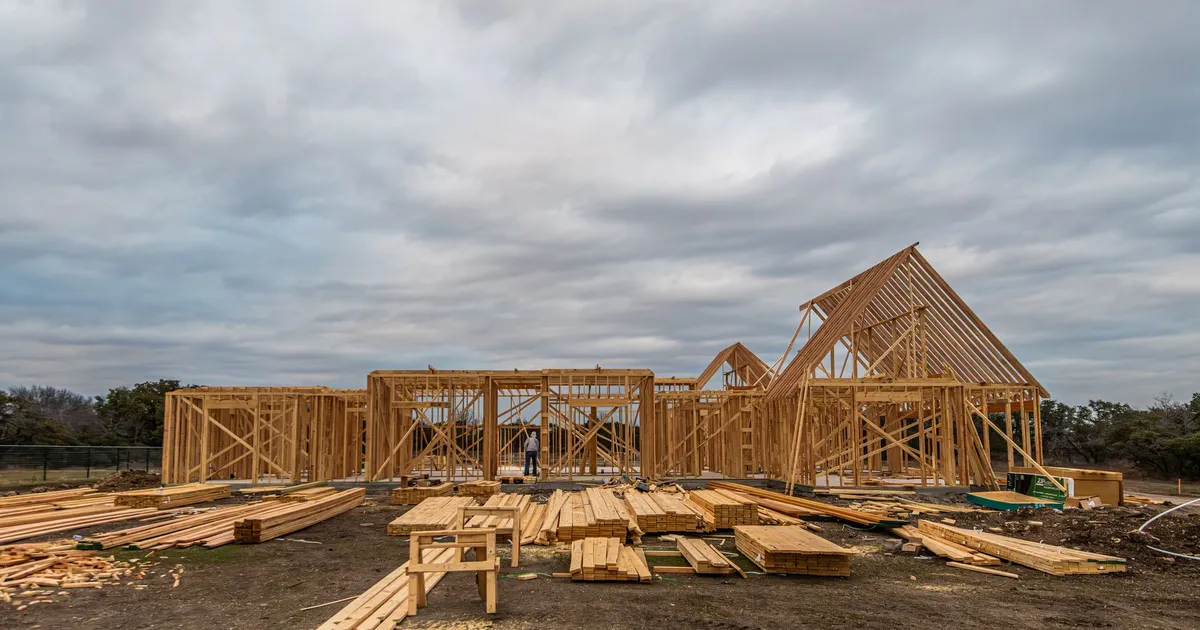
A Mosgiel building company has failed owing unsecured creditors close to $408,000. The company’s name will matter to the people chasing that money. The pattern matters to everyone else. When a small builder fails, the bill lands on the electricians, plumbers, scaffolders and merchants who gave it credit, and most of them will be lucky to see cents in the dollar.
This is not bad luck. It is how the system is built, and it keeps happening because the risk sits with the people least able to carry it.
One small failure inside a record wave
Mosgiel is a local data point in a national trend. Deloitte’s insolvency report, published in February 2026, counted 3,080 corporate formal appointments in 2025, the highest in 15 years. Construction made up 747 of them, about a quarter of the total, and the December 2025 quarter produced 197 construction failures, the worst quarter since Deloitte began tracking the sector in 2022. Deloitte also flagged Inland Revenue arrears enforcement as a key driver.
BWA Insolvency’s Q4 2025 report told the same story, recording 3,132 insolvencies across 2025, up 11.3%, with construction the biggest contributor by volume. Its diagnosis was blunt: the wave was “rooted in past events including old debt, thin margins, stalled projects, and delayed payments”. Translation: many of the firms failing now were broken long ago and kept trading while the debt piled up downstream.
In 2025, RNZ reported 187 construction insolvencies in the June quarter alone, observing that when one job fails on razor-thin margins it “triggers a domino effect across the supply chain.”
The queue was decided before the collapse
The creditor waterfall is brutal and entirely predictable. When Hanmer Building Solutions was liquidated in 2024, it left $833,000 owed to unsecured creditors. Kaiapoi Building Supplies and Rangiora Building Supplies held security and stood ahead of the line. Scaffolder Nathan Applegarth, owed $50,000, and a two-person family plumbing business owed $17,000 did not.
When Christchurch’s Green Builders collapsed in 2023 owing nearly $700,000, seven creditors registered on the Personal Property Securities Register, including Steel Building Products and United Timber Merchants, ranked ahead of Bunnings, Ace Heat Pumps, Luminate Electrical and Inland Revenue.
The closest parallel to Mosgiel is New Plymouth. In 2024 JT Construction, trading as Level Build, went under owing unsecured creditors $400,000 and Inland Revenue $250,000. One family lost about $140,000, including a $120,000 design and consent fee paid upfront. An electrician’s business was down $30,000.
The lesson is uncomfortable but simple. The creditors who get paid are the ones who did the paperwork while the builder still looked healthy.
Seven years of reform, same result
Retention money was supposed to be the fix. Yet in 2018 a BDO survey found a third of construction firms would not confirm compliance with the trust rules, and Ebert failed $1 million short of what it should have held. In 2023, commentary on the amendment bill noted Armstrong Downes had left 320 unsecured trade creditors owed $9.2 million.
Then in March 2026, Teak Construction’s liquidation left around 12 subcontractors chasing payment, some for more than a year, with a creditor publicly questioning whether retentions had been held in separate trust accounts at all.
Back in 2019, Site Safe’s then-chief executive Brett Murray said subcontractors “have little influence on the supply chain but are the ones who are hardest hit when the supply chain fails.” Nothing in the numbers since suggests he was wrong.
The answer is not another layer of rules. The trust obligations already exist. What is missing is enforcement with teeth for directors who ignore them, and that is a job for regulators who are currently far quicker to chase tax arrears than misused retentions.
Protect yourself before the next one
Until that changes, trade businesses have to price and manage the risk themselves:
- Register on the PPSR for materials and goods you supply. Secured suppliers in Hanmer and Green Builders got to the front of the queue for a reason.
- Ask about retentions in writing. Which account, held on trust, reported how often. Hesitation is an answer.
- Watch payment drift. Old debt and delayed payments are what BWA says drove 2025’s failures. A client stretching from 20 days to 60 is telling you something.
- Cap upfront exposure. Large prepaid design, consent or fit-out amounts carry some of the heaviest losses when a firm folds.
The insolvency pipeline BWA and Deloitte described does not empty quickly. There will be more Mosgiels. The subcontractors who survive them will be the ones who stopped treating credit to builders as a courtesy and started treating it as a loan.
Sources
- Otago Daily Times: Failed Mosgiel building business owes more than $400,000 (2026-11-09)
- Deloitte: New Zealand Insolvency Trends 2025 (2026-02)
- BWA Insolvency: Quarterly Market Report Q4 2025 (2026-02)
- RNZ: Construction insolvencies remain high in NZ, report shows (2025-09-10)
- The Press: Dream shattered as builder goes bust with unfinished homes, stream of debt (2024-09-17)
- NZ Herald: Delays, cost overruns, no supplier credit: builder downfall costs $698,000 (2023-01-24)
- RNZ: Families suffer as building company goes bust (2024-11-14)
- RNZ: Measures to protect subcontractors’ money ‘needs to go further’ (2018-12-18)
- NZ Herald: Sasha Borissenko: Will a draft law end up protecting subbies if the construction sector dives? (2023-02-05)
- NZ Herald: Teak Construction liquidation: Subcontractors chase unpaid retentions and bills (2026-03-02)
- Scoop: Subcontractors need to be protected when companies fail (2019-09-12)
Join the discussion
Add useful context, ask a good question, or challenge an idea — keep it specific and respectful.