

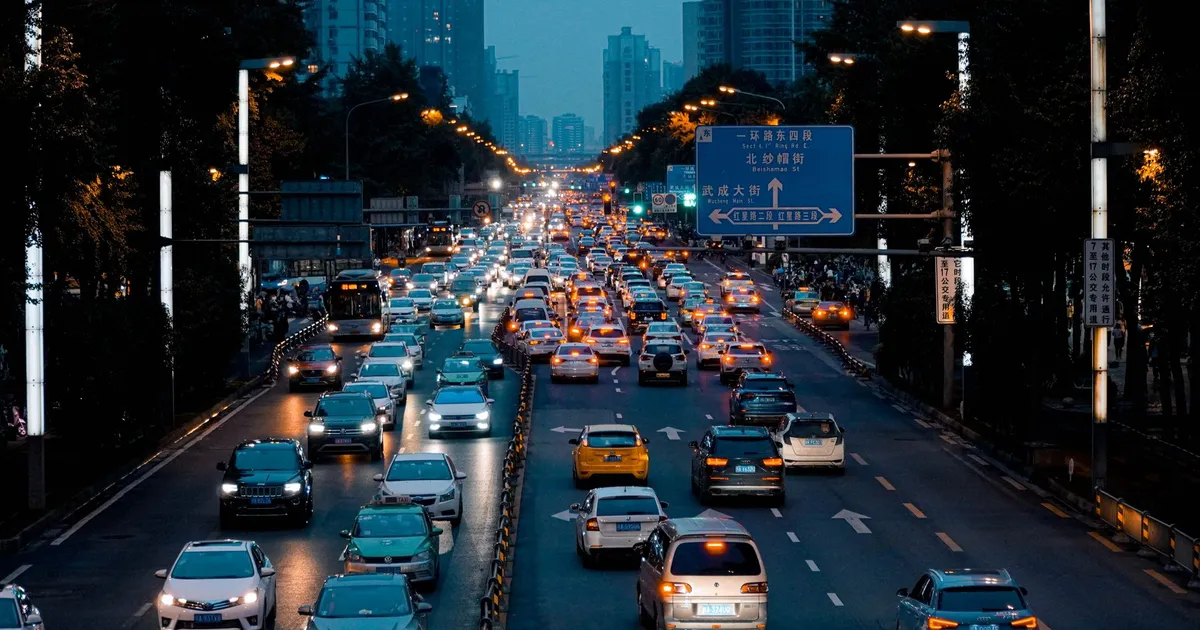
Queenstown’s growth story has hit something that marketing, private capital and fast-track consents cannot fix: geography. The basin is served by two vulnerable roads, one squeezed between lake and hill, the other running beneath a rockfall-prone bluff. Neither can be widened cheaply, and the funding to build alternatives is not there.
This week’s reminder came from the Kawarau Gorge, where crews spent three weeks abseiling to clear unstable rock from Nevis Bluff, around 100 metres above SH6 between Queenstown and Cromwell. The Otago Daily Times framed it as a case for a national transport rethink. That is the right frame. A resort that earns a large slice of New Zealand’s tourism income is running on infrastructure financed like a small provincial town.
The numbers say the network is already full
The Otago Regional Council’s Queenstown Strategic Network Plan, released in July, is blunt. The Kawarau Falls Bridge carries 23,000 vehicles a day. Traffic on SH6 and SH6A has grown 84% since 2012. Peak travel time on SH6A now exceeds 80 minutes, roughly ten times free-flow. In 2025 the network ran above 85% capacity for up to 6.5 hours a day.
The forecasts are worse. By 2055, demand on the Kawarau Falls Bridge is projected at 2.6 times capacity, and the Shotover Bridge, the only alternative to SH6A, at 2.5 times. Across key corridors, demand is forecast to exceed capacity by 250-300%.
None of this was a surprise. Back in 2024, Crux reported council modelling showing the two-lane bridge, opened only in 2018, handling peak demand of 1,200 vehicles per lane per hour against a ceiling of 1,500, with just 600-900 more homes south of the river enough to exhaust it. The trajectory was visible. The money to change it was not.
Spending $250 million to slow the decline
The current fix is a $250 million upgrade around the BP roundabout, running to mid-2028. In March 2026, deputy mayor Quentin Smith told Newsroom that “things will get worse in Queenstown before they get better”, put the funding gap at “probably close to half a billion dollars short today”, and said a 40% shift away from private cars was needed for a functional network.
The regional plan’s own timeline underlines the problem. Phase 1, from 2027 to 2033, holds spending at tens to low hundreds of millions. Only in Phase 3 does it reach the high hundreds of millions needed for a new Kawarau crossing and off-line public transport. In other words, the structural fix is a 2030s project for a problem that exists now.
Demand is not waiting for the roads
Meanwhile the visitors keep coming. RNZ reported in August that international arrivals at Queenstown Airport hit 247,820 in the first half of 2026, almost 100,000 more than the same period in 2019. The permanent population topped 35,000 in 2025, having grown more than twice as fast as the rest of the country since 2018.
Destination Queenstown & Lake Wānaka chief executive Mat Woods does not mince words. “The last long weekend we had, Queenstown was gridlock, and no one comes on holiday to go to gridlock,” he told RNZ, warning the resort risks becoming “the next Barcelona” as residents sour on tourism.
The pressure is showing up in the property market too. Real estate figure Hamish Walker writes in the ODT that he is “selling around two houses every month where people are leaving because of traffic issues”. That is the workforce, and the customer base, voting with their feet.
The ratepayer base was never built for this
The deeper problem is who pays. In 2024, the council told the Ministry of Transport that tourism accounted for 39% of local GDP and 55% of local employment, and that the population had grown 74% in the decade to June 2022. Yet roads are funded from a small resident rating base and a national transport programme that treats Queenstown like any other district.
In 2025, economist Benje Patterson told The Press that “the region is growing faster than it can pay for”, pointing to 47 visitor bed-nights per resident per year against a national average of 2.5. He favoured redirecting a share of GST from international visitor spending, or a slice of the national visitor levy, through a negotiated regional deal.
Walker argues for a local visitor levy or bed tax so that visitors contribute to the roads they use “rather than leaving a relatively small ratepayer base to carry the cost”. For a centre-right reader wary of new taxes, this is the defensible kind: user pays, targeted, and common in resort destinations worldwide. The alternative is ratepayers subsidising international tourists, or nobody paying and everyone sitting in traffic.
What happens next
The incoming government should treat Queenstown as a test of whether regional deals mean anything. The case is unusually clean. The demand is proven, the bottleneck is physical, and the beneficiaries, visitors and the Crown’s GST take, are identifiable.
Until a funding mechanism is agreed, every new hotel room, subdivision and added flight lands on a bridge already at its limit and a gorge road that needs abseilers to keep it open. Investors should price that in. The growth model has not failed, but it has run out of road, and only Wellington can pave the next stretch.
Sources
- Otago Daily Times: Queenstown highlights need for national transport rethink (2026-11-07)
- Otago Regional Council: Queenstown Strategic Network Plan (2026-07-15)
- Crux: Prepare for gridlock as Kawarau Falls Bridge heads for capacity (2024-09-04)
- Newsroom: Queenstown’s notorious traffic ‘will get worse’ despite ¼ billion dollar spend (2026-03-04)
- RNZ: ‘We just can’t handle any more’: Queenstown congestion concerns keep building (2026-08-03)
- Otago Daily Times: Has Queenstown reached a traffic tipping point? (2026-09-02)
- QLDC: Submission to the Ministry of Transport on the draft GPS on Land Transport 2024 (2024)
- The Press: A deal that hopes to save Queenstown Lakes from itself (2025-10-26)
Join the discussion
Add useful context, ask a good question, or challenge an idea — keep it specific and respectful.