

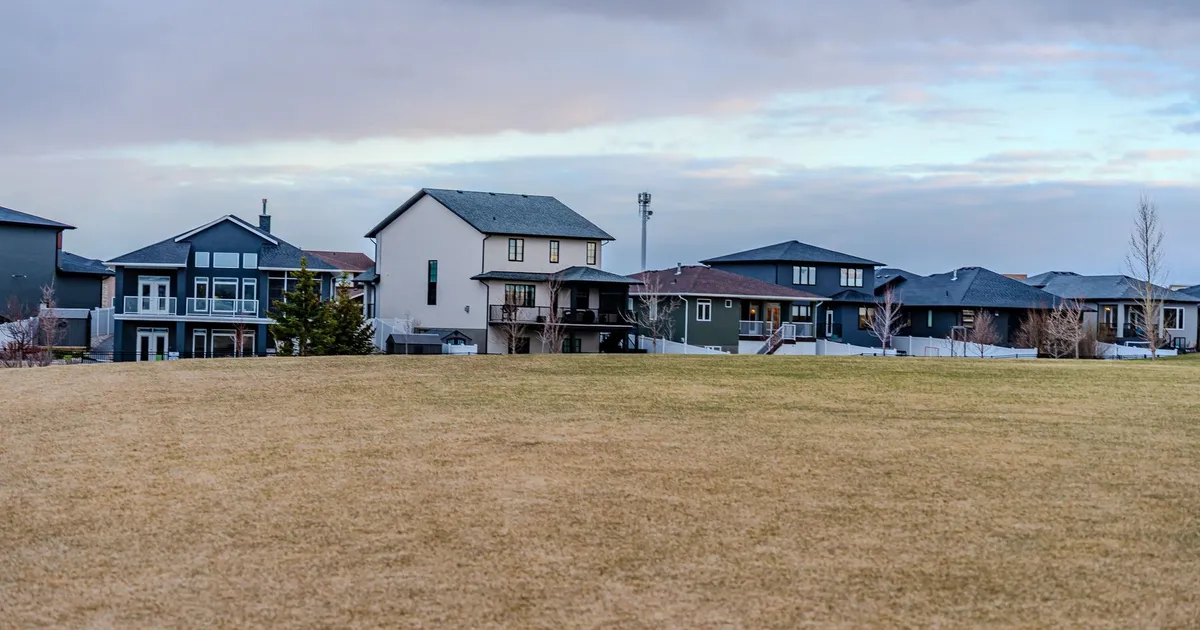
Queenstown’s housing story is usually told as a tragedy. Fowler Homes is telling it as a sales pipeline. Jason McGirr, the company’s nationwide managing director and its Queenstown franchisee, is rapidly expanding a portfolio of turnkey homes aimed squarely at owner-occupiers and first-home buyers, and the stock is clearing almost as fast as it can be built.
The lesson for business is simple. When a market is this broken at the bottom, whoever can deliver a sensible product at a sensible price does not need to fight for buyers.
Two stages, almost nothing left
At Shotover Rise, at the Stalker Rd entrance to Shotover Country, stage one’s 14 homes have sold out, with about 70% going to owner-occupiers, according to the Otago Daily Times. Stage two’s 11 three-bedders, priced at about $1.3 million, are down to two unsold, with at least six bought by first-home buyers. A third stage near Ladies Mile is in for resource consent.
Nearby, Songbird Lane’s 14 three-bed homes at about $1.2 million each have gone mostly to first-home buyers, with at least 10 sold to that group and the final four settling this month. McGirr’s development partner is also seeking consent for about 80 more homes on 30,000-plus square metres across Stalker Rd, with marketing pencilled for early 2027. “I need people to be able to afford to live in Queenstown,” McGirr said, adding that buyers are “struggling to find something that’s urban-designed at that price point.”
That second line is the whole business case. The demand is not for cheap housing in the abstract. It is for well-designed, finished, standardised product that a dual-income local household can actually finance.
The gap is the market
The numbers explain why. QLDC’s monitoring report, published in 2025, put the district’s median house price at $1,331,883 and average weekly rent at $756, with rental affordability worsening since 2023. The council’s capacity assessment, released in September 2025, projected dwelling demand nearly doubling to 48,100 dwellings over 30 years.
For employers, this is not a housing-policy abstraction. Hospitality, retail, tourism and construction operators in the district compete for staff who cannot afford to live near the jobs. Every home that lands with a local owner-occupier rather than an absentee investor is a small structural win for the labour market.
Fowler is not alone
What makes this more than one franchisee’s good run is that others have reached the same conclusion. Back in 2024, Classic Builders director Peter Cooney was planning land-and-house packages in the $800,000s at a 271-lot subdivision with the NZ Super Fund, saying the company would be hitting a price point with “a massive gap in the market“. His formula, controlling design, build and sales in-house, is essentially Fowler’s.
The build-to-rent side is scaling harder still. Simplicity Living has expanded its Remarkables Park project from 600 homes to 1078 homes across 10 hectares, with construction targeted for January 2027. “There’ll be no Jafa ski houses, this is built for locals,” managing director Sam Stubbs said, while mayor John Glover said it could “significantly support the well-being of our resident community.”
Even the micro end of the market has been tested. As early as 2022, Clever Homes was offering a transportable 60 square metre two-bedder for $230,000 at Lake Hayes Estate. The pattern across four years is consistent. Builders who standardise design and control the pipeline find buyers waiting.
Consent delays are the real price inflator
The obstacle is less demand than time. Cooney warned in 2024 that two years of council approvals risked pushing prices up, and in 2024 QLDC’s Liz Simpson acknowledged the council was “constrained by our debt ceiling and a small rating base” when funding new infrastructure. Simplicity’s use of fast-track consenting is telling. The faster land becomes buildable, the more of the price stays in the buyer’s pocket rather than in holding costs.
A genuine win with an honest ceiling
None of this solves Queenstown for everyone. The council’s 2025 capacity assessment found shortfalls in lower dwelling value bands are expected to persist even where overall supply catches up. Economist Shamubeel Eaqub argued in 2024 that demand was so “insatiable” that lower-income residents would keep missing out without a broader mix of policy tools.
That is a fair point about the bottom of the market, but it does not diminish what is happening in the middle. A $1.2 million home is not cheap anywhere else in New Zealand. In Queenstown it is a credible first rung for working households, and the private sector is building it without being told to.
The next test arrives in 2027, when Fowler’s 80-home Stalker Rd project goes to market and Simplicity breaks ground. If both clear the way Shotover Rise and Songbird Lane have, the council’s best housing strategy may be the least glamorous one available: get consents out the door and let builders chase the gap.
Sources
- ODT: Turnkey builder in expansion mode (2026-11-07)
- QLDC: Annual Monitoring Report, National Policy Statement on Urban Development, December 2024 (2025-10)
- QLDC: Housing and Business Development Capacity Assessment 2025 (2025-09-23)
- ODT: Sub-$900k homes in new subdivision (2024-02-22)
- RNZ: Simplicity Living expands Queenstown build-to-rent project to 1078 homes (2026-06-10)
- NZ Herald: New affordable housing option in Queenstown starting at less than $300,000 (2022-09-04)
- Aspen Institute NZ: Housing at a crossroads, Queenstown and Aspen compare notes (2024-04-14)
- Crux: Economist says developers love Queenstown and new ‘tax’ won’t send them packing (2024-02-27)
Join the discussion
Add useful context, ask a good question, or challenge an idea — keep it specific and respectful.