

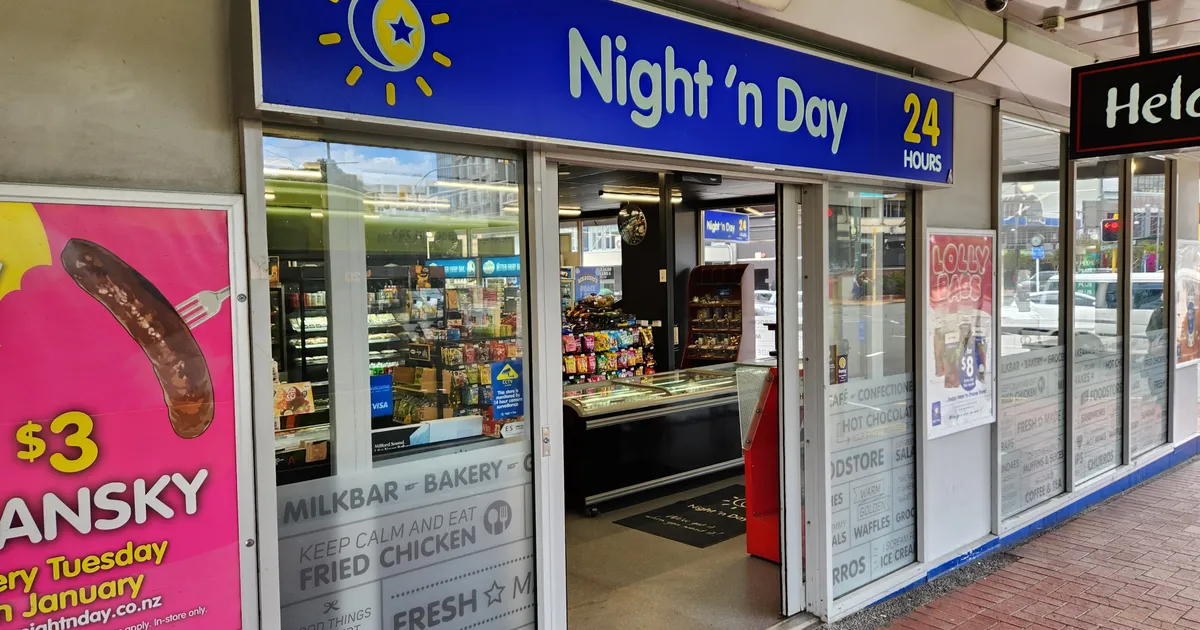
The Clyde Night ‘n Day is fighting to keep its liquor licence, and the case comes down to a distinction most shoppers would never notice. Is it a grocery store, which can sell beer and wine, or a convenience store, which cannot?
For the business, that question decides whether an established revenue line survives. For every small retailer watching, it is a reminder that New Zealand’s alcohol law still asks licensing committees to read the character of a shop, then hands owners the legal bill when they read it differently.
A definition that settles nothing
Section 36 of the Sale and Supply of Alcohol Act 2012 bars off-licences for “a shop of the kind commonly thought of as a convenience store”, alongside petrol stations, dairies and shops-within-shops. “Commonly thought of” is not a test. It is an invitation to argue.
Ministry of Justice guidance, last updated in December 2024, tried to tighten it. A grocery store could sell alcohol only if it mainly sold food products, and that excluded confectionery, ready-to-eat takeaways and snack food. So a store selling pies, chips and cold drinks alongside its bread and milk is perpetually one inspection away from being reclassified.
The same hearing, again and again
The Clyde case is a rerun. In a hearing reported in January 2015, the Regent Night ‘n Day in Dunedin had its renewal opposed by Public Health South’s then medical officer of health, Keith Reid, who pointed to 24-hour trading, “convenience” branding and snacks near the till. The store’s then-director, Denise Lane, answered with a stocktake that reads like a legal exhibit: 93 breakfast cereals, 27 cheeses, 34 soups, food products at 41.75% of turnover and alcohol at just 5.20%. The Liquor Licensing Authority had already ruled it a grocery store in 2011. The owners were made to prove it again anyway.
By 2022 the chain had largely lost the war. Then managing director Matthew Lane told Newsroom that 85% of Night ‘n Day stores held licences before 2012, but only three of 57 still did, mostly because they were the only grocery in town. High Court challenges over its central Christchurch and flagship Dunedin stores had failed. Lane argued the test should hinge on product range and household items, and pointedly did not ask for every dairy to get a licence.
Then came Papakura. In 2025, McLennan Grocery Store lost its off-licence on appeal to the Alcohol Regulatory and Licensing Authority, more than a year after Auckland’s District Licensing Committee granted it. ARLA noted the only change from “McLennan Convenience Store” had been the sign, that drinks, takeaways and a vape store outshone the fresh food, and that just two shopping baskets were on offer. Dr Grant Hewison, then secretary of Communities Against Alcohol Harm, welcomed it as a firm precedent.
Fair enough, the McLennan rebrand looked thin. But when the number of baskets by the door becomes evidence, the law has stopped giving retailers a rule they can comply with in advance.
Who carries the cost
The burden is not only on shopkeepers. A 2023 University of Auckland analysis noted supermarkets spent six years litigating Auckland Council’s alcohol policy, and that many councils without its resources dropped or diluted their policies to avoid legal battles. The outcome depends on who can afford lawyers, which is the opposite of predictable regulation.
Meanwhile large supermarkets qualify without having to defend their snack aisles, while the independent grocer in a small town must document its cheese range. Back in 2010, Dipal Desai, then an Association of Community Retailers spokesperson, warned the retail environment had “changed hugely” and that family shops were “the lifeblood of many small communities”. That was before the 2012 Act. The rigidity he described was then written into law.
The public health case deserves a hearing. Researchers argued in 2013 that commercial interests dictated alcohol policy at real cost to families. Limiting outlets is a legitimate goal. But a goal pursued through an undefined phrase becomes a lottery, not a policy.
Officials already see the problem
In October 2025 the Ministry of Justice’s own regulatory impact statement conceded “a tension between regulatory intent and consumer convenience”, and flagged a review of whether the restrictions unduly impede competition and grocery retail expansion. The same document said the rules exist to stop shops circumventing limits by “artificially designating parts of their business differently”. Both things can be true. The fix is a clear, measurable test, whether product range, floor space or another objective threshold, that a retailer can check before signing a lease rather than after an appeal.
Until then, Clyde will not be the last store asked to argue over a suffix. Whatever the hearing decides, the next owner who adds a pie warmer or extends trading hours will face the same gamble. Parliament wrote the ambiguity. It should be Parliament that removes it.
Sources
- Otago Daily Times: Convenient or convenience? Store fights to keep liquor licence (2026-11-06)
- Ministry of Justice: Key points for businesses – Sale and Supply of Alcohol (2024-12-13)
- Otago Daily Times: Doubt raised on status of store (2015-01-01)
- Newsroom: Govt review looks at returning wine and beer to corner stores (2022-06-09)
- RNZ: South Auckland grocery store loses right to sell alcohol (2025-07-07)
- University of Auckland: Wide impact of court’s liquor licensing decision (2023-05-25)
- Scoop: Retailers in limbo over liquor decision (2010-06-21)
- Regulation.govt.nz: Regulatory Impact Statement – Improving Alcohol Regulation, Further Proposals for Off- and Club Licences (2025-10-28)
Join the discussion
Add useful context, ask a good question, or challenge an idea — keep it specific and respectful.