

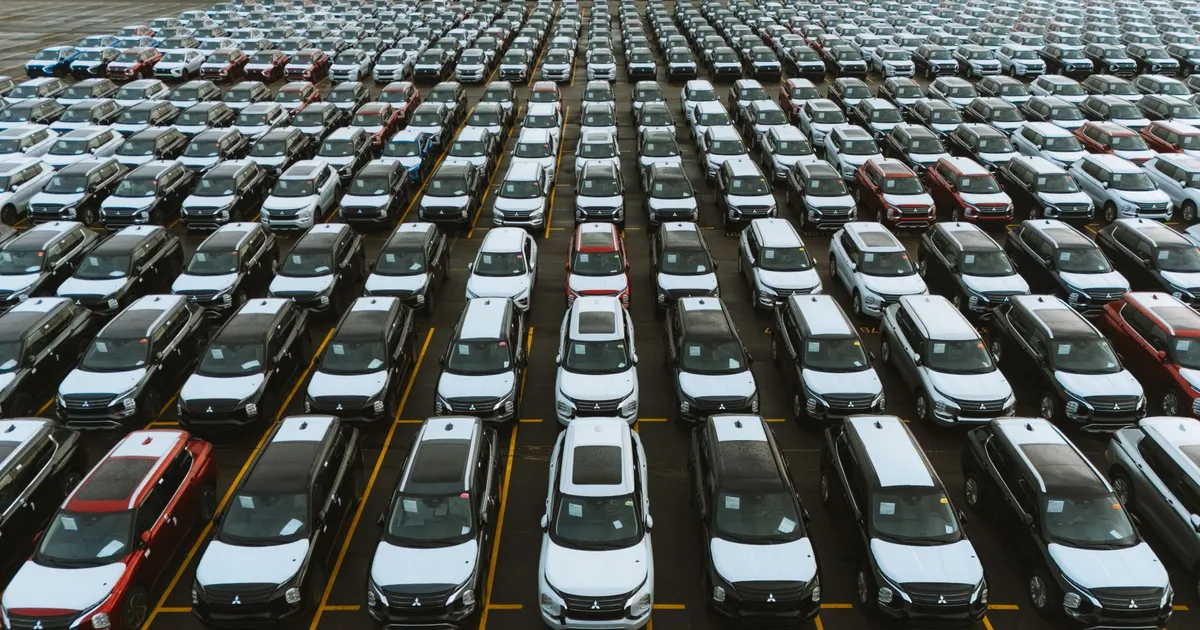
Christchurch used-car importer Good Cars Ltd is now in liquidation, likely owing about $1.36 million, with creditors expected to lose out. That is a far smaller number than the $4 million-plus that made headlines when the business went into receivership last December. The gap tells the real story. The secured lenders were paid out of the wreckage. Whoever is left at the back of the queue gets very little.
From $4 million to $1.36 million
The Waltham dealership, which imported vehicles from Japan and sold BMWs, Mercedes, Volkswagens, SUVs and hybrids online and from its yard, was placed into receivership on 4 December 2025 by secured creditor AutoBridge Limited. In March 2026, The Press reported debts of more than $4 million, while other outlets put the figure at $4.1 million and $4.16 million.
The breakdown, as reported in 2026, was roughly $2.15 million to AutoBridge, $875,000 to Westpac, $675,000 to Inland Revenue and $265,000 to other unsecured creditors. Most of it related to floor-plan finance on the vehicles in the yard, plus a property mortgage and tax.
BDO Christchurch receivers Colin Gower and Diana Matchett kept trading and sold down the stock. By their second report, a commercial property had fetched $1.19 million and the remaining vehicles $2.66 million, a combined $3.85 million. At that point, only $40,900 in loan and overdraft facilities remained owed to the finance firm that appointed them. On 20 October the company was put into liquidation, with Brenton Hunt appointed liquidator and creditors given until 21 November to lodge claims.
The stack decides who eats
This is the part every supplier to the motor trade should read twice. The receivership did its job, for the people it was designed to protect. AutoBridge and Westpac held security over the stock and the property, and the sale proceeds flowed to them. Back in March 2026, the receivers were blunt that no funds were expected for unsecured creditors.
That is not a scandal. It is how secured lending works, and it is why banks and floor-plan financiers price credit the way they do. The receivers described the directors, Sergey and Iouri Serikov, as very cooperative, and there is no suggestion of misconduct. This was a trading failure, not a fraud. But it shows the asymmetry plainly. A financier with a registered security interest gets nearly made whole. A parts supplier, detailer or advertiser extending 30-day terms gets a claim form.
Floor-plan finance cuts both ways
The receivers’ first report blamed unfavourable trading conditions and reduced sale margins, which caused defaults on floor-plan vehicle loans. That is the model’s weak spot. Floor-plan funding lets a dealer carry far more stock than its own capital would allow. When cars move quickly at decent margins, it is efficient. When they sit, every week of interest eats into a margin that was already shrinking, and the default arrives fast.
The old trade wisdom holds. Industry voices have long argued that survival in used cars comes down to turning stock, with some dealers quick to wholesale vehicles they cannot shift rather than carrying them. Capital-light operators have the least room to wait out a soft patch.
Not a credit crunch, a margin crunch
Good Cars is not an outlier. Centrix data shows motor vehicle and parts retailer liquidations jumped 53% year-on-year, even as the sector recorded an 18% rise in credit demand and a 15% fall in defaults. Across retail, 219 companies entered liquidation, up from 160 a year earlier, with fuel, vehicle and hardware retailers singled out as under particular pressure.
That combination matters. Auto loan arrears have fallen to 5.3%, and household lending is growing. Money is available. What is missing is margin. Centrix chief operating officer Monika Lacey says that for businesses, “conditions are stabilising but remain fragile.” In vehicle retail, fragile means larger, better-capitalised groups taking share while undercapitalised yards with expensive stock and thin buffers get squeezed out. That is market discipline, and it will keep producing cases like this one.
What suppliers should take from it
For anyone extending trade credit to dealers, the warning signs are visible in this file: slowing turnover, shrinking resale margins and heavy reliance on floor-plan lines to keep stock rotating. If a customer’s lenders hold security over everything of value, your unsecured invoice is effectively equity risk without the upside. Shorter terms, retention of title clauses and closer attention to how long stock sits on the lot are cheap insurance.
The Insolvency and Trustee Service will add Good Cars to its national tally, and the liquidator’s first report will confirm what remaining creditors are owed. Nobody should expect a surprise. The banks got their money in the receivership. The $1.36 million left over is the cost of being last in line, and with vehicle retail failures still climbing, more suppliers will be standing there before the cycle turns.
Sources
- ODT: Creditors likely to lose out after Christchurch car dealership in liquidation owes more than $1.3m (2026-11-06)
- The Press: Christchurch car dealer in receivership with debts of $4m (2026-03-30)
- Autofile: Used-car business faces liquidation (2026-10-27)
- Chris Lynch Media: Christchurch car dealership placed in receivership owing more than $4 million (2026-04-02)
- AutoTalk NZ (LinkedIn): Christchurch car dealer enters receivership owing $4.16m (2026-04-09)
- AutoTalk: Motor vehicle retailer liquidations jump 53% (2026-06-05)
- Autofile magazine: Liquidation risk for dealers ‘fairly high’
- Insolvency and Trustee Service: Corporate insolvency statistics
Join the discussion
Add useful context, ask a good question, or challenge an idea — keep it specific and respectful.