

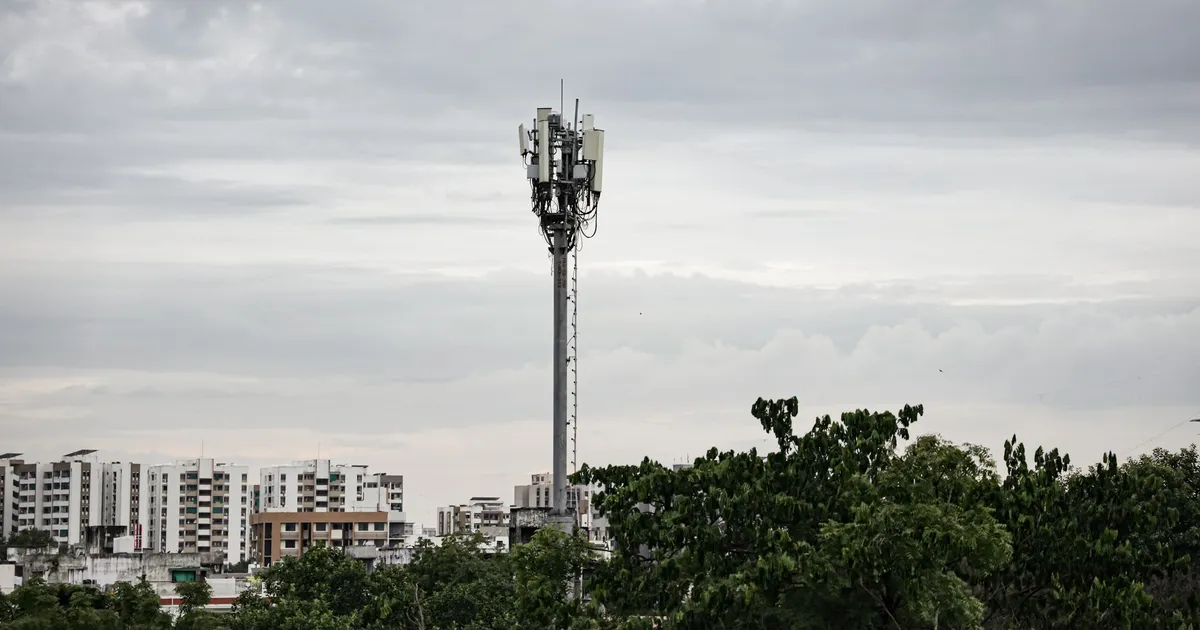
New Zealand is about to get roughly 3500 telecommunications towers up to 20 metres tall over the next decade. That is close to one a day, built by two tower companies, Connexa and Fortysouth, under rules that since 8 October no longer require resource consent or public consultation.
For businesses that depend on reliable mobile coverage, which is nearly all of them, the reform is the right call. The problem is the way it is landing. Neither company will say where the towers are going, and the government says it doesn’t hold that information either. That is a gift to anyone who wants the old system back.
The old consent system really was broken
Strip away the neighbourhood anger and the case for change is strong. A government analysis released in June shows the average resource consent cost telcos about $15,000, roughly 67% of new cell towers needed consent since 2022, and consent volumes nearly doubled between 2014/15 and 2023/24. A 2021 Sapere study cited in the same release found consenting ate up 16% of project costs on builds under $200,000. That is a tax on exactly the small, incremental upgrades that fill coverage gaps.
The trend was getting worse. Officials’ interim regulatory impact statement in 2025 found average consent fees had climbed from about $1,800 in 2014/15 to over $4,000 in 2022/23, and the share of applications blowing past statutory timeframes rose from 2% to 11%. Only 24 consents were notified across that whole period, yet those cost over $100,000 each and dragged on for months.
The national rules underpinning all this had been in force since 1 January 2017, before 5G was a commercial reality. Back in 2024 the Telecommunications Forum told Parliament the consenting process could prevent upgrades “happening at all”. The June analysis also links reform to network resilience after the severe weather of 2023, a business continuity argument that deserves more airtime than it is getting.
Auckland got the towers before it got the explanation
Within three weeks of the rule change, Auckland Council had received 29 tower applications, 11 from Canadian-owned Connexa, many in residential streets. Albany Ward councillor John Watson said that if a tower fits the “new generous zone standards, it’s a permitted activity” that bypasses local consent, and argued residents should get a say on “significant semi-industrial structures”.
The flashpoints write their own headlines. In One Tree Hill, resident Eamon points out local rules cap buildings at 8 metres while the tower companies “are able to go double that standard, unchecked by the council,” and describes a “tsunami of these things coming”. In heritage Grey Lynn, where homeowners jump through hoops for a fence, a 15-metre tower is planned outside a living room window.
Some of this is the ordinary friction of infrastructure. Every network that works sits in somebody’s view. But the specific complaints, a claimed crash hazard on a blind corner, a heritage overlay that binds residents but not towers, are the kind a quick conversation could resolve before construction rather than after.
Secrecy is the weak link
Telecommunications Forum chief executive Paul Brislen is right on the engineering. “You can’t have the coverage without the technology,” he says, and towers are getting taller because they must see past rising skylines. Auckland is densifying fast, and denser cities need more, taller sites.
The secrecy argument is far weaker. Sabotage risk is real, but towers become visible the day they go up. Commercial sensitivity hardly applies when two companies share the market and councils already receive applications. Refusing to give even central government an aggregate picture turns a sound deregulation into a story about unaccountable foreign-owned builders.
That matters because the industry has been here before. In a February 2026 joint submission, Spark, Connexa, Fortysouth and One NZ complained that “multiple layered” regulation was delaying 5G rollout, and that they had not been consulted on Auckland’s PC120 and MDRS density changes. They know what fragmented, politicised planning costs. A backlash in an election-sensitive city is the fastest route back to it.
What happens next
The government should hold the line on permitted activity status. Reinstating consent for standard towers would put back the cost, delay and uncertainty the evidence shows was strangling upgrades. But the tower companies need to give a little to keep a lot: advance notice to affected neighbours, a shared pipeline with councils, and a willingness to shift sites a few metres when a genuine safety issue is raised.
For Auckland businesses, the stakes are simple. Coverage, capacity and resilience are productivity inputs, and the consent reform was the biggest step forward in a decade. Losing it because the builders would not publish a map would be an own goal of the highest order.
Sources
- NZ Herald: Telco towers spark fury among powerless Auckland residents (2026-11-05)
- RNZ: Telco towers spark fury among powerless Auckland residents (2026-11-05)
- RNZ: Auckland residents unable to stop telco towers being built near their properties (2026-10-29)
- Proactive Release: Summary of Underpinning Analysis, Amendments to the NES for Telecommunication Facilities 2016 (2026-06-19)
- Ministry for the Environment: Interim Regulatory Impact Statement, Amendments to the NES for Telecommunication Facilities 2016 (2025-04-16)
- TCF: Submission on the Fast Track Bill 2024 (2024-04-18)
- NZ Parliament: Spark, Connexa, Fortysouth and One NZ submission on the Planning Bill and the Natural Environment Bill (2026-02-13)
Join the discussion
Add useful context, ask a good question, or challenge an idea — keep it specific and respectful.