

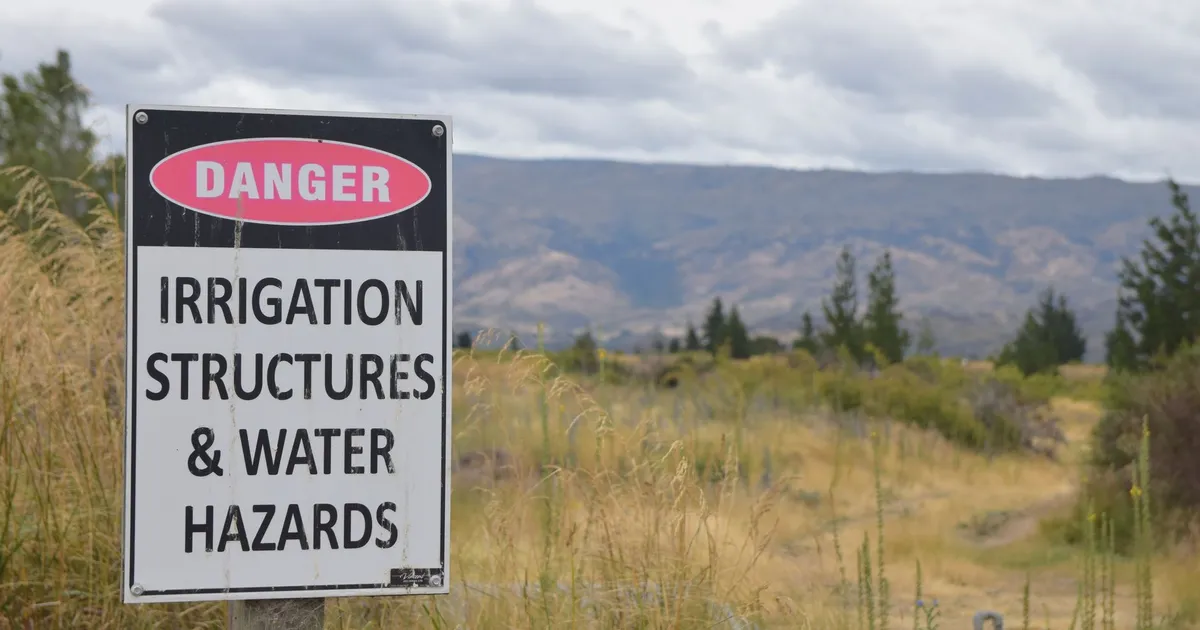
Central Otago District Council has drawn a line that developers across the country should study. Its new Three Waters Growth Servicing policy took effect nine months ahead of schedule, a direct response to what group manager Three Waters Julie Muir called a “relentless” stream of requests to waive subdivision fees and connection charges.
The message is blunt. Developers pay for the pipes their projects need, and they pay before ratepayers do. For anyone modelling a subdivision in Cromwell, Clyde, Alexandra or Omakau, infrastructure has moved from a political talking point to a hard number that decides whether the project proceeds.
The fees were set last year, the patience ran out this year
The policy does not change fee levels. Those were reset in July 2025, when the council’s Development and Financial Contributions Policy shifted the primary charging mechanism from financial contributions to development contributions, calculated per household unit equivalent for each infrastructure activity.
What the new policy does is end the negotiation. It sets out the timing and funding of growth-related three waters work, and it warns that council may not immediately accommodate development where capacity does not exist in networks Muir describes as constrained in places. Councillor Martin McPherson put it plainly: “growth pays for growth, and that’s something we have to be firm on”. The Otago Daily Times reports Muir framing it as a policy that defines who is responsible for what.
Contributions now sit at around $30,000 per section in Alexandra, Clyde and Omakau.
Some projects have already died on the spreadsheet
Developers saw this coming. In 2025, they warned the July increases could stifle housing growth, with contributions jumping more than 200% in some cases. Alexandra developer Shanon Garden said at the time that contributions in Alexandra rose from $17,000 to $58,000 a section, pushing the charge from 6-8% of a land sale to 11-15%. In Cromwell they rose from $15,000 to $34,000.
The sharpest example was Breen Construction’s 14-lot Omakau subdivision, which would have cost $21,134 a section under the old policy and $38,000 under the new one. General manager Trevor Breen said in 2025 the company would not have proceeded “because the numbers didn’t stack up”. That is the real business consequence. Higher charges do not just shave margins, they remove marginal projects from the pipeline entirely.
Garden also warned the structure would push growth from Alexandra to Cromwell, starving the smaller town of employment and services. That redistribution risk is the genuine weak point in an otherwise defensible policy.
Why the council won’t blink
The council is not being bloody-minded. Its 2025 Infrastructure Strategy shows development contribution reserves “in most instances” run in deficit, accruing interest, because capacity gets built ahead of demand. Council effectively finances growth upfront and recovers the cost later. Every waiver leaves existing ratepayers carrying that debt.
The wider maths is worse. The council’s 2025-34 Long Term Plan consultation document conceded current funding could not meet the investment stricter water standards demand. Morrison Low’s analysis behind the Southern Water Done Well arrangement with Gore and Clutha found water services would become progressively unaffordable for most ratepayers within a decade without a change in approach.
In 2025, Mayor Tamah Alley noted that Omakau sections had gone from $60,000 to $300,000 during her time in the district. Set against that uplift, a $30,000 contribution looks less like a tax on housing and more like a fair share of the cost of making the land usable.
This is user-pays, and on the numbers it is hard to argue with. The alternative is cross-subsidising developers’ margins through the rates bills of retirees and small businesses who never asked for the new subdivision.
A preview for other growth councils
Central Otago is moving well ahead of Wellington. Central government is still building tools to let councils recover actual growth costs, with the new system not expected until 2027. The council’s Three Waters team has even met Watercare’s major development unit, which is handling 70 fast-track applications, to see how a larger network copes.
For developers with sites in Queenstown Lakes, Selwyn, Waimakariri or Tauranga, the lesson is to price infrastructure in early and assume no waiver is coming. Councils facing the same affordability cliff are likely to reach the same conclusion, and without a national framework the charges will vary sharply by district.
Central Otago has made the right call for its ratepayers. The open question is whether the district accepts that the cost is fewer subdivisions in its smaller towns, or finds a way to stage capacity so places like Omakau and Alexandra are not priced out of growing at all.
Join the discussion
Add useful context, ask a good question, or challenge an idea — keep it specific and respectful.