

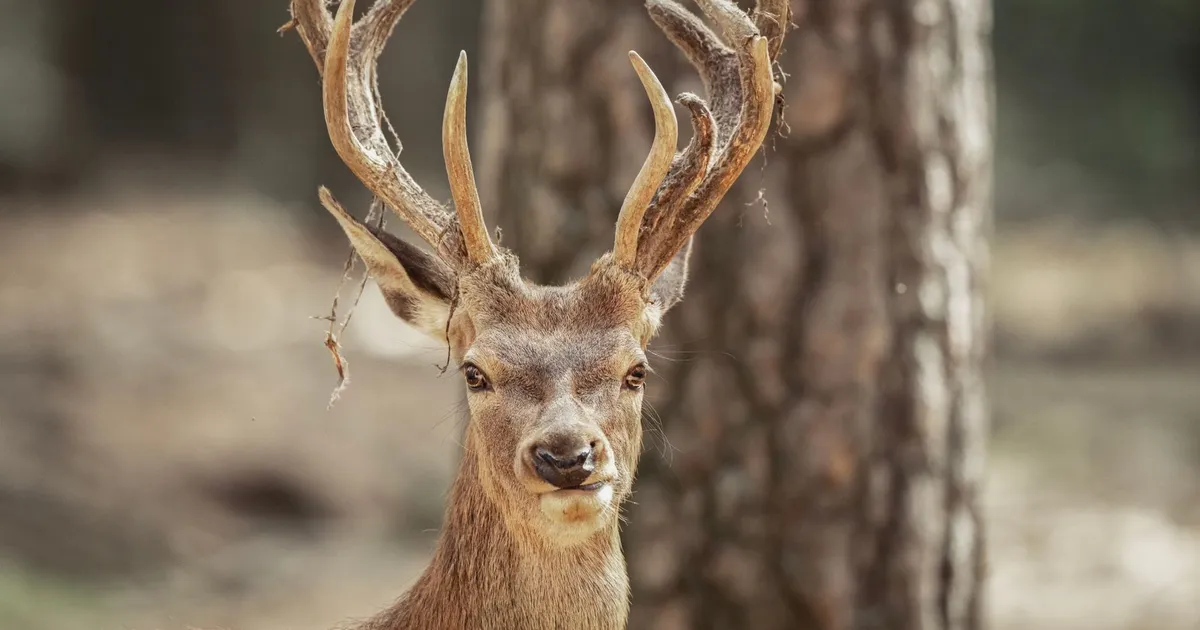
Fiordland has a deer problem that no government budget will fix, so the people closest to it are trying something simpler. They are selling the problem. BurgerFuel’s limited-edition ‘Wild & Wagyu’ burger, launched this week, pairs wild Fiordland venison with wagyu beef. It is the chain’s third collaboration with wild-game supplier WithWild and the Fiordland Wapiti Foundation, and BurgerFuel will donate $1 from every burger sold to the foundation and its Te Anau processing plant project.
A burger promotion does not save a national park. What matters is the model behind it. Pest control is being rebuilt as a supply chain with paying customers. Subsidy comes second.
The cull never paid for itself
The old economics were brutal. A 2023 Game Animal Council analysis found the 2022 Fiordland deer contract cost about $116 per deer in helicopter time, plus GST. At that rate, matching the historic recovery rate of 6,000 deer a year would cost around $636,000 annually. That is money conservation budgets were not going to find.
The council’s conclusion was blunt. In 2023 it said charitable meat recovery was only viable when funding was provided or when venison sales covered recovery and processing costs. Back in 2020, the same herd was being turned into about 18,000kg of mince for foodbanks. That was worthy work, but it depended on donors and could not grow.
Roy Sloan, the foundation’s general manager, put it plainly in February 2026. “We know that it’s costly to do deer recovery. We know that the government can’t afford it, and we know that DOC can’t afford it,” he told RNZ.
A pest becomes a product line
WithWild, founded in 2020, connects the cull to the market. It now supplies more than 40 hospitality venues and high-end restaurants, drawing on a foundation that culls about 1,000 wapiti a year. In 2023, co-founder Dariush Lolaiy described the aim as taking ‘a pest problem, turn it into a product’ and putting part of every sale back into conservation. He also admitted then that the margins were tight.
The market is now helping. Co-founder Donald Shepherd says rising beef prices are making wild venison more price-competitive. The harder barrier is consumer hesitancy about cooking and eating wild game, and that is where BurgerFuel comes in. A fast-casual chain putting venison in front of mainstream diners does more marketing in a month than a fine-dining menu does in a year. By 2025 the partnership had already raised $60,000 for predator trapping in the Nitz Valley.
This is also new territory for a shrinking sector. Farmed deer numbers fell to 709,000 in 2024, down 59% from the 2004 peak. Export receipts were below the 2009 high of $293 million throughout 2018 to 2024. A domestic, story-led channel for wild meat adds to that picture. It is not competing with a booming export trade.
The $3 million bet in Te Anau
The real test is infrastructure. The foundation is building a $3 million processing plant in Te Anau, with $2 million secured by August and a 2027 opening targeted. Without local processing, every carcass carries freight and handling costs that eat margin. With it, the foundation controls quality, volume and price.
Sloan is clear about the purpose. “Our project is about controlling deer numbers in Fiordland and using the profits from the venison plant to undertake other conservation projects,” he says, naming stoat and rat trapping. He has also been candid about the risk. In February 2026 he told RNZ the worst case was that “in five years we fall over”. That is how a founder sizes a bet, not how a grant applicant talks.
The scale of the job is real. Between 2,000 and 2,500 deer are shot each year across roughly 1.2 million hectares. More than 18,000 have been removed since 2005.
Government rules, private money
Wellington has played a useful, limited role. In July, Fiordland wapiti became the country’s first ‘Herd of Special Interest’. The designation sets ecological targets and monitoring around the foundation’s existing work with DOC. It also states plainly that it is not about increasing deer numbers. The state provides the framework and the private operators provide the cash flow. That is a sensible division of labour.
Proof of concept, not yet proof of profit
None of this is a finished success. A $1 million funding gap remains on the plant, helicopter access is still expensive, and a burger promotion lasts weeks, not years. But the direction is right. If the Te Anau plant opens in 2027 and WithWild keeps growing its customer list, Fiordland will have shown that conservation can run on revenue rather than grants. Councils, iwi and landowners dealing with goats, pigs and deer elsewhere should watch closely. The template is simple. Find the buyer first, then fund the cull from the sale.
Sources
- Otago Daily Times: Deer pest going into wild venison funds conservation in Fiordland National Park (2026-11-04)
- Farmers Weekly: Burger with conservation credentials hits BurgerFuel again (2026-11-03)
- Hospitality Business: Fiordland’s wild venison goes on the BurgerFuel menu for conservation (2026-11-02)
- NZ Herald: WithWild wild venison business gains ground as beef prices rise (2026-11-02)
- NZ Herald Viva: Jesse Mulligan on WithWild, a Fiordland conservation project (2023-08-03)
- Game Animal Council: Wild deer management and meat recovery (2023-12-01)
- 1News: Southland Foodbank stocked with meat thanks to Fiordland deer culling programme (2020-06-16)
- RNZ: Fiordland hunters make big push for venison meat processing plant (2026-02-26)
- BurgerFuel: Wild Heart burger (2025-08-05)
- Stats NZ: Agricultural production statistics, year to June 2024 (final) (2024-11-21)
- Figure.NZ: Value of venison exported from New Zealand (2025-06)
- Fiordland Wapiti Foundation: The Fiordland Project (2026-09-19)
- The Press: Fiordland’s not-for-profit venison processing plant edges closer to $3m goal (2026-08-15)
- The Press: Fiordland’s not-for-profit venison processing plant edges closer to $3m goal (alt) (2026-08-15)
- DOC: Fiordland wapiti Herd of Special Interest (2026-07-13)
Join the discussion
Add useful context, ask a good question, or challenge an idea — keep it specific and respectful.