

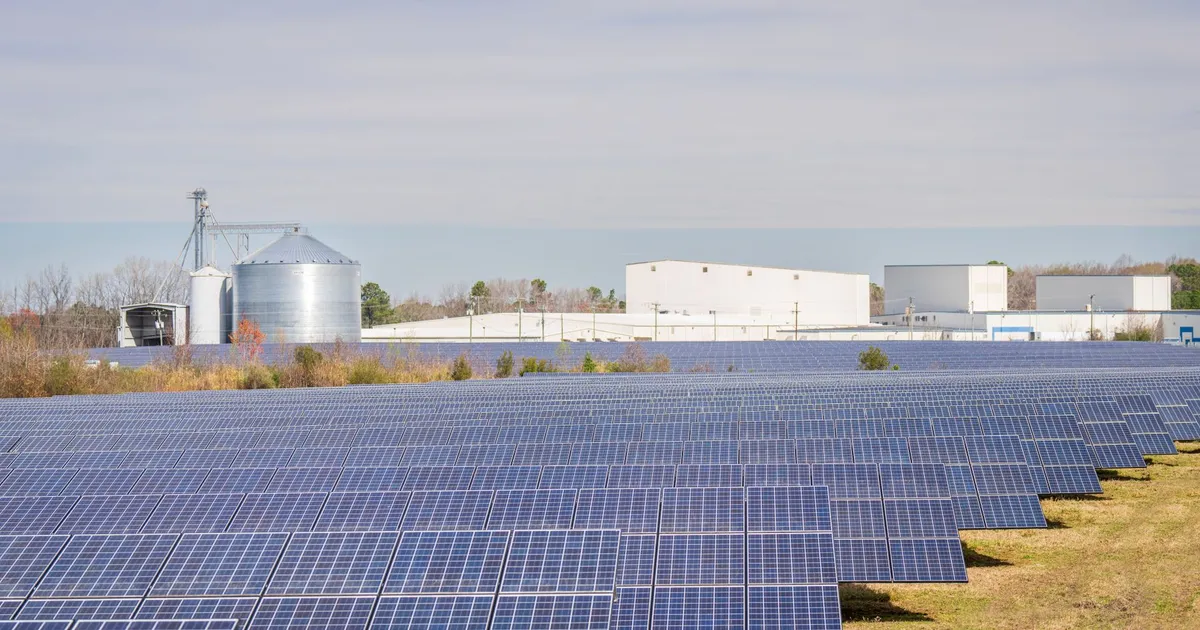
New Zealand has heard plenty of renewable-energy ambition announced long before the funding was in place. Lightyears’ latest deal is not one of those. The New Zealand-owned solar and battery developer has secured $174 million in combined funding, a $100 million lending facility from Australian infrastructure credit lender InfraDebt and a $74 million equity investment from Tokyo-listed construction group Obayashi. It is backing a pipeline of more than 300MW over five years.
This is project finance with conditions attached, which is why it counts.
The money moves when the projects do
The structure tells you more than the headline figure. Obayashi is taking a 90% stake in a new company, LYOC1, which will hold Lightyears’ solar project assets. Lightyears Energy keeps the remaining 10%. Obayashi’s board approved the purchase on 22 October through a new holding vehicle, OCE Investment New Zealand 1 Limited, at roughly 6.6 billion yen.
Obayashi is not paying the full amount upfront. The capital will be released in stages as individual projects reach development milestones, running through to March 2028. A major Japanese contractor is funding specific, de-risked tranches of a real build programme. It is not writing one large cheque on the strength of a pitch deck. Obayashi has also named Japan and New Zealand as priority markets for its green energy business, so this looks like a strategic commitment rather than a one-off.
The debt side is a repeat customer. InfraDebt made its first New Zealand transaction with Lightyears in 2025, and the $100 million facility expands that relationship. Lenders that come back for more, and on a larger scale, are usually the ones who have seen the earlier assets perform.
The numbers are still easy to get wrong. Dealroom’s own item on the deal ran under a $103 million headline, even though its body copy and every primary source put the total at $174 million.
Eight sites today, 100MW a year planned
Lightyears is already operating. It runs eight sites generating about 45MW. Three more sites are due online this year and six in 2027, and the company is targeting 100MW of new development a year once the funding is in place. For a business whose founders, Matt Shanks and Sean Tobin, delivered New Zealand’s first utility-scale solar farm only in 2023, that is rapid scaling.
The named projects are specific. A 14MW farm at Reefton is nearing completion and will support West Coast energy resilience. A 6MW site feeds the Electricity Ashburton network. The 15MW Te Aho o te Rā Solar Farm near Kuratau is a joint venture with eight local Māori land trusts, incorporations and investment entities. It is expected to produce about 23.5 gigawatt hours a year, enough for around 3,300 homes, and is due for completion in July 2027. That gives landowners an income stream and an equity stake in generation, which is a useful model for regional economies.
Avoiding the Transpower queue
Lightyears connects its plants to local distribution networks rather than Transpower’s national grid. Distribution-connected generation of this size is generally quicker to build and avoids much of the queueing and congestion that has slowed larger transmission-connected renewables. It also puts supply closer to the regional businesses that use it.
This matters for market structure. In August, former Energy Minister Simon Bridges argued that the gentailers, which control around 85% of generation capacity and 95% of firming, invest only enough to keep prices near the cost of new entry. “Gentailers will invest in just enough new supply to keep prices around the cost of new entry (and avoid an energy security crisis), but no more than that,” he wrote.
If that is right, the answer is independent capital building independent supply. That is what this deal delivers, without a subsidy, a government guarantee or a new agency.
Lower prices still have to be proven
Shanks describes the deal as recognition of Lightyears’ track record. He says the funding “lets us add new generation in the regions that need it”, and that he is confident it will ultimately help lower energy prices for New Zealand people and businesses. That price claim comes from the company raising the capital, and one developer adding 100MW a year will not reshape wholesale pricing by itself.
What the deal does show is that patient offshore capital will back New Zealand generation when there is a credible operator, a real pipeline and a structure that pays out as risk falls. Business energy users should watch the Reefton and Kuratau delivery dates. If Lightyears hits them, the next tranche of Obayashi money follows automatically, and other independent developers will find investors more willing to fund them.
Sources
- NZ Herald: Lightyears secures $174m funding from InfraDebt and Japan’s Obayashi to deliver 300MW solar and battery projects (2026-11-02)
- Lightyears: Lightyears secures $174m from Japan and Australia to accelerate solar infrastructure builds (2026-11-03)
- IBTimes Japan: Obayashi targets New Zealand solar with NZ$74 million stake purchase (2026-10-23)
- Obayashi Corporation: Financial Results and Investor Relations (2026-10-22)
- RNZ: NZ-owned renewable solar firm gets funding boost from investors in Japan and Australia (2026-11-03)
- NZ Herald: Why New Zealand’s gentailer model is holding back energy investment – Simon Bridges (2026-08-19)
Join the discussion
Add useful context, ask a good question, or challenge an idea — keep it specific and respectful.