

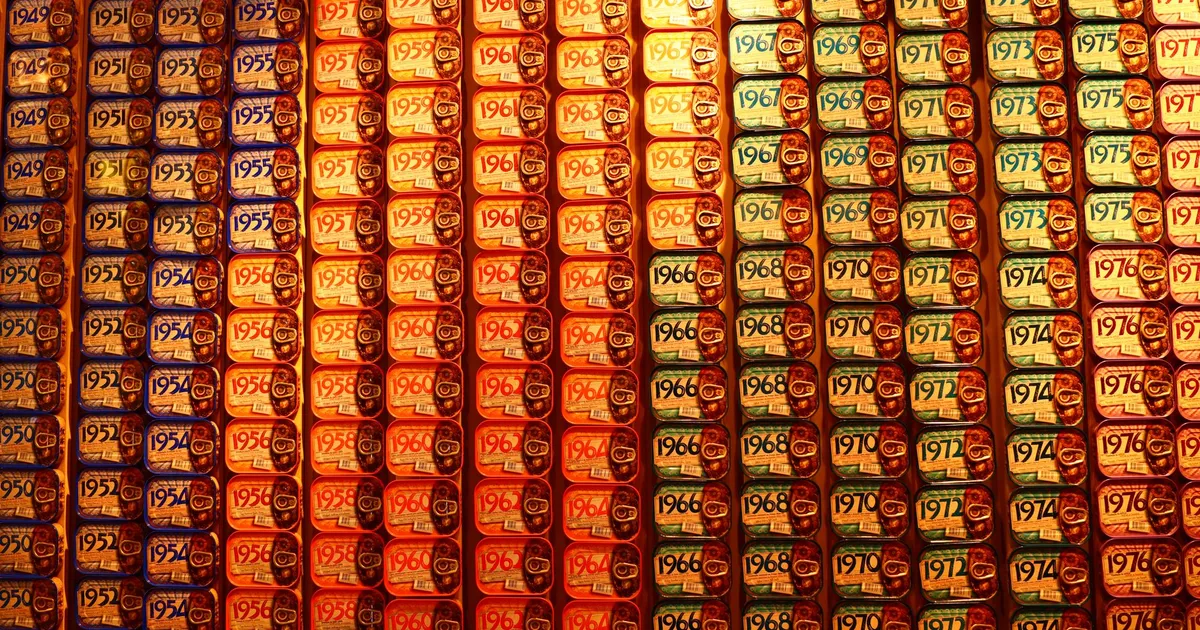
New Zealand catches some of the most valuable fish in the world, ships most of it offshore as frozen product, then buys its convenience seafood back in tins made somewhere else. That is the productivity trap in miniature, and it has taken two sisters with a manufacturing background to try to break it.
TINNiES Fish Co, founded by Josephine and Hillary Sharp, is set to become New Zealand’s only domestic tinned fish manufacturer. Josephine spent a decade in the Navy. Hillary runs a business making medical devices and veterinary pharmaceuticals. Plenty of others have looked at canning fish here, the Herald reports, then hit a thicket of regulation, expensive machinery and food safety requirements and walked away.
Asked why they pushed on, Josephine Sharp was blunt: “We’re pretty f stubborn, to be honest.“
The shelves are already empty
The timing is good. Sardines have become scarce worldwide, and Woolworths told Consumer NZ its sardine sales rose 53% over the past 12 months, even as both major grocers reported stock constraints. Foodstuffs sources its tinned fish from Poland, Portugal, Australia and the Philippines. When those supply chains wobble, there is no domestic cushion, because nobody built one.
Demand is not just volume. In 2025 the Herald noted specialty grocers such as Farro, Sabato and Moore Wilson’s were increasingly stocking premium Spanish conservas, and observed that while most premium offerings here were imported, there was “untapped potential for local producers”, suggesting tinned pāua, snapper or mussels might one day earn Iberian-style status. Fifteen months on, TINNiES is the first serious attempt to find out.
The wrong fish for the format
There is a catch, literally. TINNiES is reportedly developing New Zealand sardines with local flavours, but this country barely has a sardine fishery. Aaron Irving, Seafood New Zealand’s head of deepwater fisheries, puts it plainly: “New Zealand doesn’t really have those sorts of pelagic, ocean-style fish… our fish are demersal species, they live on the bottom, near the bottom, that’s like hoki and things.“
There is one small sardine fishery near the top of the North Island, and jack and English mackerel are typically sold fresh. Whether TINNiES tins that northern catch, adapts another local species or cans imported stock will matter for its branding. It does not undercut the business case. It sharpens it. Canning in a country whose commercial catch skews demersal is a harder engineering and product problem than simply opening a cannery, which is precisely why the value has gone uncaptured.
More money per fish, still not enough
To be fair to the industry, it is getting smarter at the commodity end. BERL’s 2025 report for Seafood New Zealand finds average annual catch fell 15%, from 406,754 tonnes to 344,541 tonnes, while catch value rose from $1.29 billion to $1.53 billion. Export prices per kilogram of greenweight climbed to $2.45 for hoki, $4.90 for ling and $12.50 for snapper, up from $1.80, $4.50 and $10.40 in 2020. Commercial fishing generated $6.4 billion in total economic output, and processing alone supports 8,129 full-time jobs.
But hoki at $2.45 a kilo is still an ingredient. The margin sits further down the chain, in the finished product a shopper picks off a shelf.
A gap everyone identified and nobody filled
This is not a new insight. Back in 2011, researchers found most of New Zealand’s largest processors were filleting in China at US$200 a tonne versus US$800-900 here, warning that value-added margins and capability were being exported to third countries. Norway and Iceland answered the same pressure by investing in automated processing. New Zealand largely did not.
In 2017 an MBIE-commissioned investor’s guide flagged further processing into consumer-ready products as a largely greenfields opportunity. The 2023 Fisheries Industry Transformation Plan set out actions to shift low-value material into higher-value uses and improve conditions for processing investment. Reports, strategies and plans, all pointing at the same hole.
The lesson for business is uncomfortable. Diagnosis has never been the constraint. Execution is, and the barriers that turned away earlier would-be canners, compliance cost, capital equipment and food safety certification, are the kind of friction that falls hardest on small operators. A regulatory system that makes a tinned fish start-up an act of stubbornness is not neutral. It quietly protects the status quo of exporting bulk and importing finished goods.
What the sisters are really testing
TINNiES will not reshape a $2 billion export sector on its own. Its significance is as a proof of concept. If a determined, well-resourced small manufacturer can engineer around the species mismatch and the compliance load, the excuse that value-add seafood is uneconomic here gets much thinner, and larger processors sitting on cheap raw material will have questions to answer.
Watch the next 12 months closely. Supply of global sardines is expected to normalise by late 2026 or early 2027, which will bring cheaper imports back. If TINNiES survives that, on quality and local provenance rather than scarcity, New Zealand will have its first real answer to a problem it has been writing reports about since 2011.
Sources
- NZ Herald: Meet the sisters behind what may be New Zealand’s only tinned fish company (2026-10-31)
- RNZ: Where have all the sardines gone? (2026-10-02)
- NZ Herald: Food trend prediction – The global ‘fancy’ tinned fish revival is headed this way (2025-07-11)
- Seafood New Zealand / BERL: The economic contribution of commercial fishing 2025 (2026-08)
- Fisheries Industry Transformation Plan (2023-08)
Join the discussion
Add useful context, ask a good question, or challenge an idea — keep it specific and respectful.