

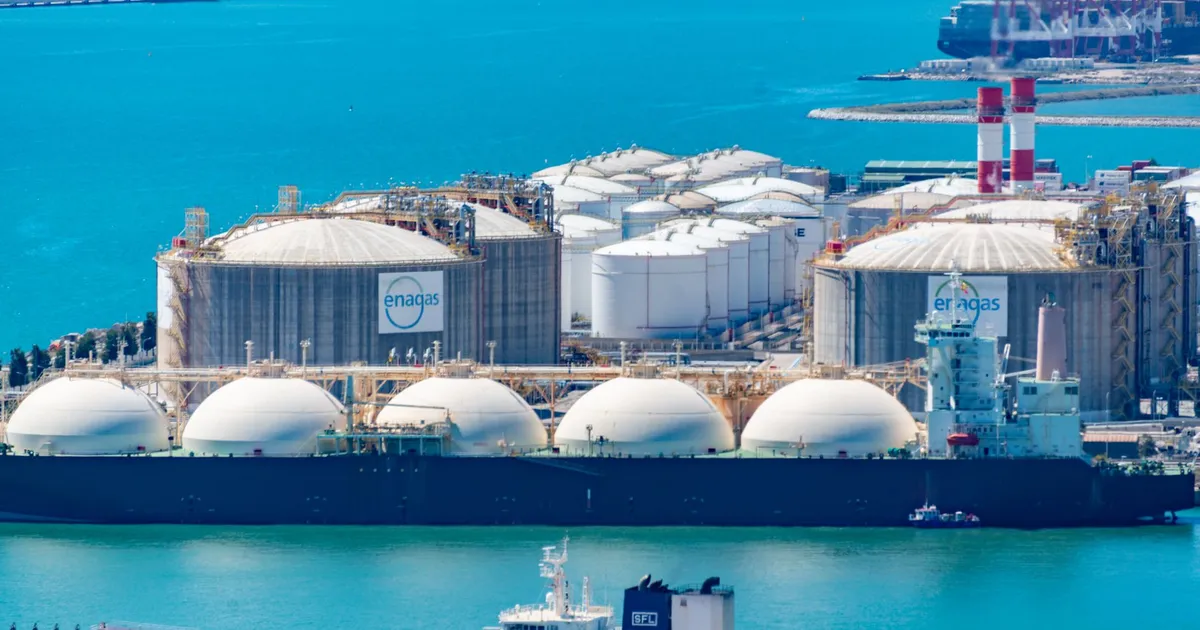
The Port Taranaki LNG terminal was sold as an insurance policy against dry winters and dwindling domestic gas. Insurance is supposed to cap your downside. Eight months into the Iran conflict, global LNG prices have nearly tripled since February, Qatar has struggled to move cargoes through the near-closed Strait of Hormuz, and the government has pushed its decision past the 7 November election.
For manufacturers, cold stores, food processors and anyone else on a large power contract, the question is blunt. Would this terminal protect them from domestic risk, or simply plug them into a bigger external one they cannot control?
Treasury’s maths assumed a calm world
The economic case was always about option value rather than actual imports. Treasury argued that simply having the ability to import LNG could shave the dry-year risk premium baked into forward electricity prices, conservatively by $10/MWh, worth about $400 million a year to electricity customers. Because Treasury concluded the market would not build the infrastructure on its own, the bill would be met through an industry levy estimated at $2.05 to $4.10/MWh. Pay a few dollars to save ten. On paper, a good trade.
Treasury did flag the obvious risk, that domestic gas prices could rise to parity with LNG during import periods. But the modelling underneath the decision was narrower than the rhetoric. In April 2026, RNZ revealed it tested only two static prices, $20 and $25 per gigajoule, and stated plainly that it “has not considered the potential impact of international fuel price volatility”. MBIE’s response at the time was that the conflict was short-term volatility and that 2028/2029 futures still lined up with Cabinet’s analysis.
That is a reasonable argument for a commodity analyst. It is a thin one for a billion-dollar piece of national infrastructure whose entire purpose is to perform in a crisis.
The market moved faster than the business case
The US and Israeli strikes on Iran began on 28 February 2026. Hormuz carries about 20 percent of global LNG trade, and traffic stopped almost immediately. By late March, Asian LNG prices had jumped 143 percent to a three-year high of US$25.30/mmBtu, with analysts expecting prices to stay elevated through 2027.
New Zealand did not need a terminal to feel it. Gas Industry Co data shows the LNG spot price climbing from US$10.44/GJ in January to US$17.61/GJ in May, a 68.7 percent rise, with Rockgas adding LPG surcharges of 4.1 percent in May and 3.8 percent in June. That is a preview of what pass-through looks like when the country is a price-taker.
Swapping one risk for a bigger one
Industry voices were sceptical well before the latest figures. In March 2026, Genesis Energy’s then-CEO Malcolm Johns quipped that “LNG stands for likely no gas”, noting that electricity makes up only 30 percent of national energy use and that half the country’s energy footprint is already imported. Even Energy Resources Aotearoa’s John Carnegie, who backed LNG as an insurance policy, warned that month it “could expose us to international prices and global events beyond our control”.
The worry has now spread beyond the sceptics. Energy Link’s Paul Chapman says the LNG market is “so volatile as a result of the Middle East that it is getting people worried” about what international exposure would actually look like.
Meanwhile, the domestic urgency that justified the 2024 announcement has eased. The same Herald report notes gas-fired generation has been scaled back, dry-year hydro reserves strengthened and significant new generation capacity connected to the grid since the terminal was first floated. The insurance is getting dearer just as the house looks less likely to burn down.
Rerun the numbers before anyone signs
None of this proves the terminal is a bad idea. Option value is real, and a country that has watched domestic gas fields decline faster than forecast has reason to want a backstop. But a levy-funded asset that the market declined to build deserves a harder test than two static price assumptions, and the levy-payers deserve to see it.
MBIE is still progressing procurement on a floating storage and regasification vessel. Labour says it would halt the project, and Opportunity also opposes a terminal, so the outcome now rides on 7 November. Whoever governs next should do the one thing the original modelling skipped: price the scenario the world has actually delivered this year. If the $400 million benefit survives a Hormuz-style shock, build it with confidence. If it only works in a calm market, it was never insurance at all.
Sources
- NZ Herald: Middle East conflict clouds case for Port Taranaki LNG terminal as gas prices surge (2026-10-30)
- Treasury: OIA Response 20260078 – Impact of LNG imports on electricity prices, generation costs, or broader economic outcomes (2026-04-23)
- RNZ: Government’s plans for LNG terminal didn’t model international price spike (2026-04-22)
- RNZ: Conflict in Iran shows ‘risk’ of government’s plan to import LNG as back-up to Taranaki facility (2026-03-03)
- Gas Industry Co: Quarterly Report – Gas Prices (2026-06)
- RNZ: War on Iran a ‘bazooka’ through government’s LNG plan – gentailer CEO (2026-03-31)
- NZ Herald: LNG price spike highlights risks for planned $1b NZ terminal (2026-03-03)
Join the discussion
Add useful context, ask a good question, or challenge an idea — keep it specific and respectful.