

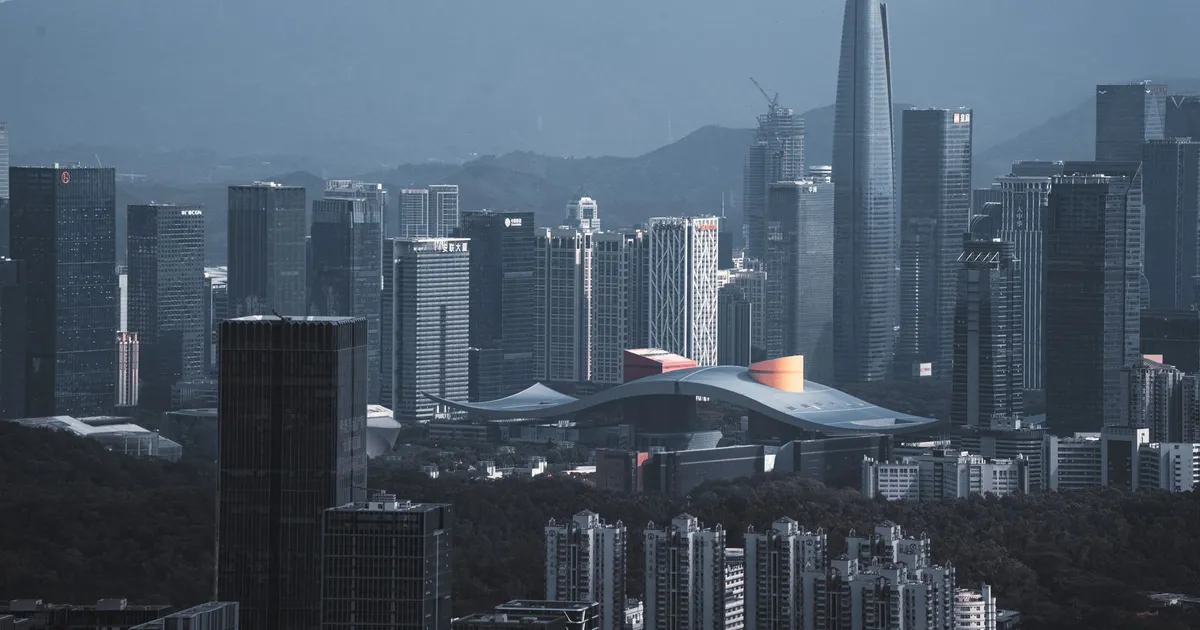
Polling day is 7 November. Official results are declared on 27 November. Between those dates, on 18 November, the leaders of 21 Asia-Pacific economies gather in Shenzhen for the Apec summit. New Zealand may turn up with a caretaker, a stand-in, or a prime minister-elect still haggling over coalition terms.
That is not a constitutional footnote. It is a market access problem, and it needs sorting before the votes are cast, not after.
The calendar does the damage
The government’s own post-election constitutional guidance sets out the timetable: official results on 27 November, return of the writ on 3 December, and Parliament sitting by 14 January 2027. During the caretaker period ministers keep full executive authority but are expected to defer significant decisions where they can, or consult other parties where they can’t.
So the Shenzhen summit falls entirely inside a window where New Zealand, by its own convention, should not be making big new commitments. Officials are saying only that representation will be decided “closer to the time”, calling it standard election-period practice. Standard it may be. Reassuring it is not.
2023 was the easy version
We have been here before, and the precedents show how much depends on luck. In 2008 John Key was sworn in 10 days after the election, having quickly stitched together support from Act, the Māori Party and United Future, and flew to Lima straight after his first Cabinet meeting, with the global financial crisis unfolding.
In 2023 the result was clear on election night, and Christopher Luxon chose coalition talks over San Francisco. Outgoing Labour trade minister Damien O’Connor went instead. At the time, Stephen Jacobi, then executive director of the New Zealand Business Forum, warned that Apec covered a region taking over 70 percent of our exports and that sending no one would be “incredibly negative”.
That arrangement worked because everyone knew who had won. The outgoing minister was a placeholder, and the region understood exactly whose government was coming.
This year’s arithmetic is messier
2026 does not look like that. Westpac’s election preview notes that major-party support is unusually low, with minor parties running distinct and sometimes conflicting programmes. If the count is tight, the bank warns, the outcome may not be clear until after 27 November, and a hung parliament cannot be entirely ruled out.
Fran O’Sullivan points out that a Hipkins-led arrangement would be harder to assemble quickly, with the Greens wanting a seat at the table and Te Pāti Māori and Opportunity potentially in the mix. A 10-day Key-style turnaround looks unlikely in that scenario.
The economic backdrop raises the stakes further. Finance Minister Nicola Willis warned this week the economy is still at risk despite the OCR holding. A fragile recovery is precisely when trading relationships matter most.
The table New Zealand cannot skip
Apec economies account for roughly half of global trade and 60% of global GDP. The host, China, has been our largest trading partner since 2017, with two-way trade hitting NZ$41 billion in the year to September 2025. This year’s agenda covers trade digitalisation, AI, food security and sustainable growth, the rule-setting areas that decide how easily a Kiwi exporter clears customs or sells data-heavy services into the region.
A small trading nation’s leverage at these meetings is personal. Bilateral pull-asides with Xi Jinping’s team, quiet conversations with Asean leaders, the corridor diplomacy that unblocks a stalled market access issue, none of that happens through a deputy with no mandate.
Business leaders already have views on who carries economic credibility. In this year’s Mood of the Boardroom survey, Luxon scored a weak 2.52 out of 5 on political performance, but 65% of executives backed him as having the strongest capacity to drive growth, against 3% for Hipkins. Whoever goes needs both authority and credibility on the economic brief. A caretaker in a hung-parliament limbo has neither.
Settle it before polling day
O’Sullivan’s prescription is sensible: the two contenders should agree on representation without politicking, and if Luxon looks likely to continue, it would be “no hardship” to fly to Hong Kong, cross into Shenzhen and return the next day.
The better move is to lock it in now. Luxon and Hipkins should publicly commit, before 7 November, to a simple rule: whoever is clearly positioned to govern attends, and if nobody is, the outgoing trade minister goes with a cross-party brief agreed in advance. That removes Apec from coalition bargaining and tells China and the region that New Zealand’s trade posture does not change with the vote count.
Exporters cannot pause their order books for coalition talks. Neither should the country’s seat at the Asia-Pacific’s biggest economic table.
Sources
- NZ Herald: Apec 2026: Who will represent New Zealand at the Shenzhen summit? – Fran O’Sullivan (2026-10-30)
- NZ Herald: Election 2026: Planning underway for New Zealand representation at Apec right after election (2026-10-30)
- Westpac: Economic Bulletin: Preview of 2026 General Election (2026-10-27)
- NZ China Trade Association: APEC 2026 and New Zealand’s role in the Asia-Pacific’s shared future (2026-10-26)
- RNZ: Business leaders doubt Christopher Luxon’s political future, survey reveals (2026-10-22)
- RNZ: Election live: Economy still at risk despite OCR holding, Willis warns (2026-10-29)
- RNZ Checkpoint: Clock counting down to APEC conference, but who will NZ send? (2023-11-09)
Join the discussion
Add useful context, ask a good question, or challenge an idea — keep it specific and respectful.