

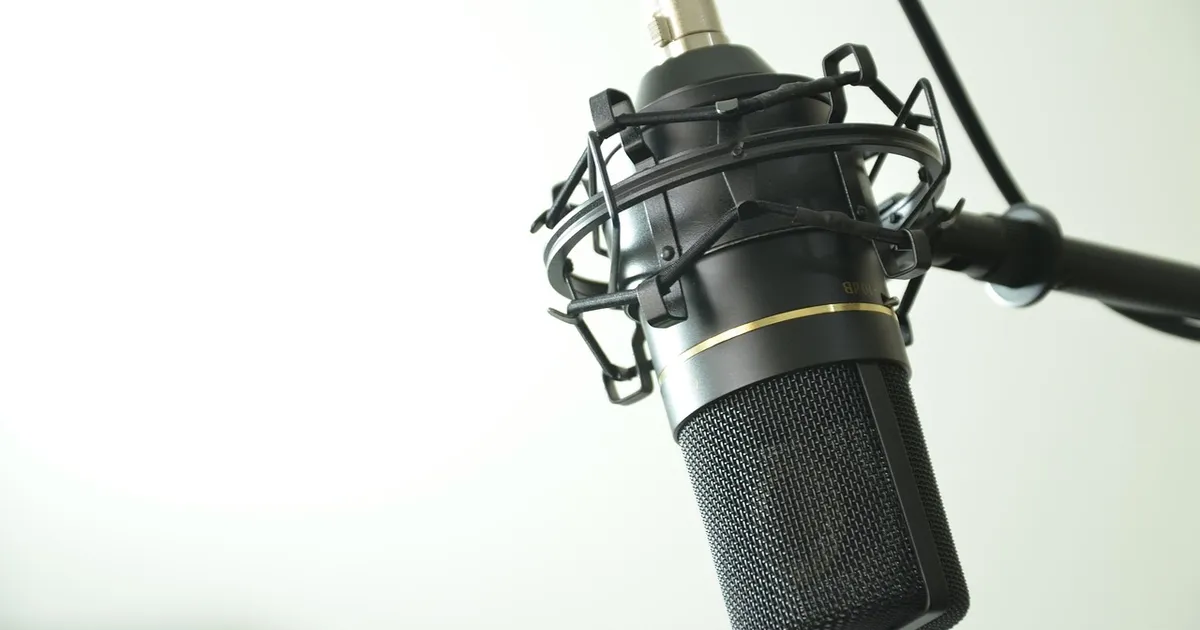
Broadcasting Minister Paul Goldsmith has overruled his own officials to lower the cost of AM/FM spectrum licences for commercial radio, Newsroom reports. Its framing is a pre-election Christmas present. The harder question for business is simpler. Is this smart support for a squeezed domestic industry, or a minister discounting a scarce public asset when the people who benefit control some of the country’s loudest microphones?
The industry’s case is real. The process is the problem.
A discount on top of a discount
This is not the first cut. In May 2025, Radio Spectrum Management proposed FM pricing of $1.16 per capita for a 20-year term, against a 2011 average of $2.47. That was already a 47% reduction.
Then, in December 2025, Cabinet’s Expenditure and Regulatory Review Committee agreed to renew the licences to April 2051 at a total industry value of $29 million. Under the May 2025 methodology, an analysis commissioned by the Radio Broadcasters Association put the government’s own pricing at roughly $37.12 million for FM and $1.62 million for AM. That is about $38.7 million. The settled figure came in around a quarter lower.
The sweeteners went beyond price. In January 2026, the Herald’s Media Insider reported that broadcasters would pay in five-yearly instalments rather than a lump sum and could hand back licences they no longer wanted.
The exact size of Goldsmith’s latest cut has not been made public in the reporting available so far. What is confirmed is that his officials advised one thing and he chose another, for the second time on the same deal.
Radio’s numbers do justify some help
The broadcasters did not invent their hardship. The 2025 NZIER and Plum Consulting work for the RBA found commercial radio advertising revenue was $272 million in 2024. In real terms that was 27% below 2014. Member revenue rose just 2.4% nominally from 2011 to 2024 while operating costs rose 9.2%. Staff numbers fell 29%, and audiences were forecast to keep shrinking by 1.7% a year to 2031.
The last renewal was no picnic either. In 2023, industry figure Jana Rangooni wrote that earlier negotiations dragged on for a decade. She said broadcasters such as MediaWorks borrowed from the government to pay the government, at interest above 11%.
There is also a fair argument that spectrum priced above what a declining industry can bear simply goes unused. That outcome would earn the Crown nothing.
Officials were pushing the other way
But that argument belongs in the official analysis, not in a ministerial override. MBIE’s own proactively released papers show officials working on full cost recovery for spectrum administration, not looking for discounts. Even before this latest move, Cabinet forecast only $1.625 million a year in extra Crown revenue from 2031/32.
The dollar amounts are small next to the Budget. The principle is not. Spectrum is a finite public asset. A centre-right government that preaches user-pays and value for taxpayers should be the last to reprice it by ministerial discretion.
Quick on fees, slow on Google
The timing makes it worse. Newsroom notes that Goldsmith has kept the Fair Digital News Bargaining Bill on hold since 2024 while he watches Australia’s regime. Its photo caption asks whether Mike Hosking’s ZB breakfast show was in the back of his mind.
That is an insinuation, not evidence. But a minister who will not make Google and Meta pay New Zealand newsrooms, yet moves twice to cut fees for broadcasters with enormous on-air reach, has handed his critics the line.
New Zealand has been here before. In 2011, then-Prime Minister John Key approved a deferred-payment deal for radio broadcasters after then-Communications Minister Steven Joyce had rejected it on Treasury advice that it would turn the Crown into a bank. Political override of official advice on radio spectrum is becoming a tradition.
What other industries should take from this
For NZME, MediaWorks and their peers, this means a cheaper, more flexible cost base locked in to 2051. That is a genuine competitive gain against offshore streaming and podcast platforms.
For everyone else paying fees, levies or licence costs, the lesson is less comfortable. Cost-recovery advice can be set aside if your sector is politically salient enough and the calendar is right. That is not how a rules-based regulator should work, and it invites every lobby group to try its luck.
The fix is transparency. Goldsmith should publish the officials’ advice he overruled and the price he chose instead. If the case for helping radio stands up, the paperwork will show it. If it does not, voters already casting ballots deserve to know before polls close, not in a proactive release next year.
Sources
- Newsroom: Goldsmith overrules officials and offers commercial radio a cut price deal (2026-10-27)
- NZ Herald: Media Insider – Licences to thrill, Kiwi radio stations receive 20-year frequency extension (2026-01-27)
- RSM: AM/FM radio spectrum – 2031 expiry of licences and potential reassignment, discussion document (2025-05-08)
- NZIER/Plum for RBA: Commercial radio spectrum licences – Valuation principles and review of past approaches (2025-07-16)
- NZ Herald: Opinion – NZ commercial radio’s existential threat from overseas giants (2023-12-18)
- RNZ Checkpoint: Key stepped into radio deal after it was rejected (2011-04-08)
Join the discussion
Add useful context, ask a good question, or challenge an idea — keep it specific and respectful.