

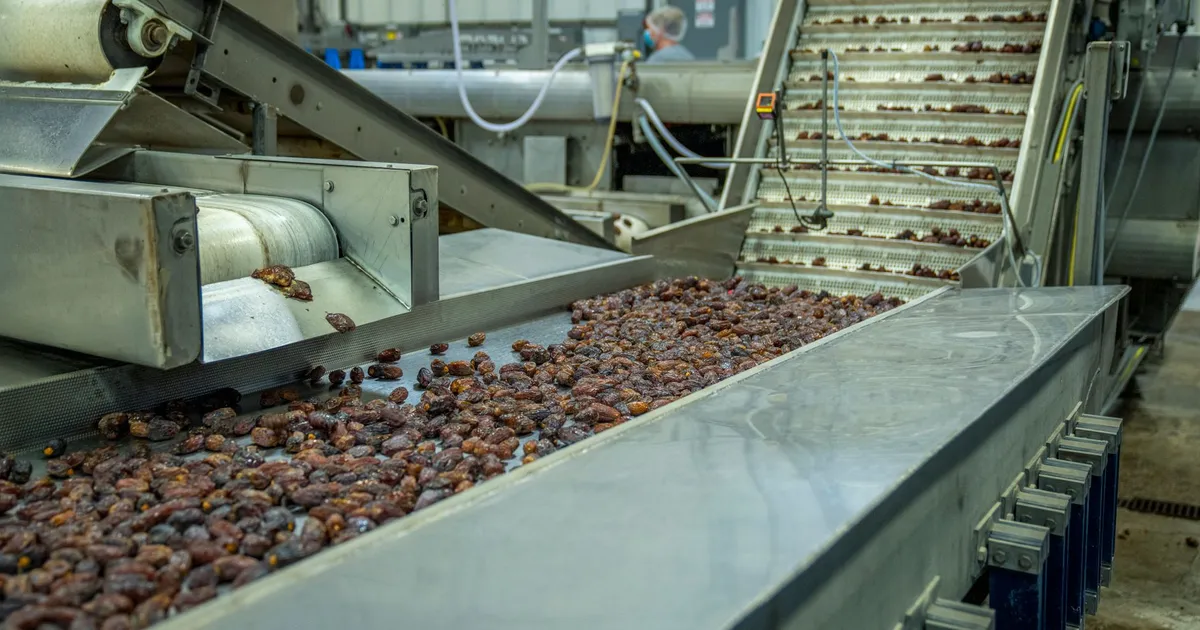
Agriculture Minister Todd McClay on Monday opened a $5 million research lab for Auckland ag-tech firm Hectre, next door to its CBD headquarters. The pitch is simple. If you can see inside an apple before it leaves the packhouse, you stop shipping problems to the other side of the world.
That is a genuinely useful thing to build, and the funding structure suggests the right incentives. Hectre is carrying 60% of the cost of the lab and its three-year research project, with the Ministry for Primary Industries covering the rest. This is a company putting its own investors’ money first, not a startup living off grants.
Slicing a sample is not quality control
The problem Hectre is targeting is old and expensive. Internal quality checks today mean cutting into a small sample of fruit, a method the government itself describes as slow, destructive and representative of only a fraction of a crop. Internal browning, rot or poor starch conversion that slips past that sample often reveals itself only after a container has landed offshore, when the options are discounting, repacking or dumping.
For an apple and pear industry worth more than $1 billion a year to the economy, that is a margin leak hiding in plain sight. Better data earlier would let exporters make smarter calls on what to store, what to pack and what to ship immediately.
From the truck deck to inside the fruit
Hectre is not starting from scratch. Its Arc scanner already reads fruit on open-top trucks as they arrive at packhouses, capturing colour, size and external defects with AI vision cameras in near real time. The new lab adds hyperspectral sensors that fire light beyond human perception at the fruit and read what bounces back, aiming to measure internal defects, starch and firmness without a knife.
The lab is the physical home of the programme McClay announced in August in Cromwell, a three-year, $4.6 million project to detect internal apple defects non-destructively. The Crown’s share is $1.84 million from the Primary Sector Growth Fund.
Crucially, the money comes with dates attached. Hectre must deliver a proof-of-concept algorithm with at least 80% detection accuracy by June 2027, and a packhouse prototype validated under commercial operating conditions by June 2028. That is how co-investment should work: public money tied to measurable outputs, not open-ended innovation theatre.
Private capital moved first
The lab follows a capital raise that investors chased. In February 2026, Hectre closed an oversubscribed $12 million Series A led by Punakaiki Fund, which took a 13% stake. The round was pitched explicitly to fund a new AI scanner alongside an online trading platform designed to shift pricing power towards producers.
At the time, Hectre reported revenue growing around 100% year on year and quality data on 17 billion apples and 37 billion cherries annually across North America, Europe and Latin America. Founder and CEO Matty Blomfield said then that growers “seem to work the hardest and get paid the least“, calling the retailer-skewed supply chain “largely an information and data problem.”
His ambitions were not modest. Blomfield projected a $1 billion valuation and more than $100 million in revenue within five years. Hectre’s investor materials claimed up to 99% accuracy for its existing camera data. The global backdrop helps: a Boston Consulting Group estimate cited in 2026 put the agritech market on track to grow from US$24 billion in 2023 to US$54 billion by 2029.
Accuracy alone will not sell it
Packhouse operators should hold the headline numbers lightly. Industry commentary on the project has made the sensible point that a scanner is only as valuable as the workflow around it. Staff need to know what an alert means and what action follows, and readings must be matched confidently to a specific batch. A false all-clear ships bad fruit. An over-cautious reject bins good fruit. Both cost money.
That is why the 2028 milestone matters more than this week’s ribbon. Lab accuracy at walking pace is one thing. Reliable reads at commercial throughput, in a wet, busy packhouse in the middle of harvest, is the actual product.
What exporters should watch
If Hectre hits its marks, New Zealand growers get something rare: a homegrown tool that protects export margins and could be sold to orchards worldwide. Exporters get fewer nasty surprises on the wharf in Asia or Europe. And the government gets a template for backing productivity with conditions attached.
The next checkpoint is June 2027. An 80% detection rate would prove the physics works. Getting that into a working packhouse a year later would prove the business does.
Sources
- NZ Herald: Ag-tech Hectre opens $5m lab to develop its AI-powered, hyperspectral fruit-scanning (2026-10-26)
- National Party: Agritech project to lift apple productivity (2026-08-28)
- Scoop: Agritech Project To Lift Apple Productivity (2026-08-28)
- AgNavigator: NZ backs Hectre’s bid develop tech that can scan for internal apple defects (2026-09-02)
- Punakaiki Fund: Hectre investors over-subscribe NZ$12m Series A round for AI horticulture start-up (2026-02-12)
- Fruitnet: Orchard tech firm Hectre secures funding for AI-based expansion (2026-02-13)
- NZ Herald: Golden visa cash helps fuel $12m raise for AI fruit-scanning start-up (2026-02-11)
- University of Auckland: Hectre raises millions to tackle global fruit waste (2026-02-16)
- Businesstalk: Looking inside the apple before it leaves the packhouse
Join the discussion
Add useful context, ask a good question, or challenge an idea — keep it specific and respectful.