

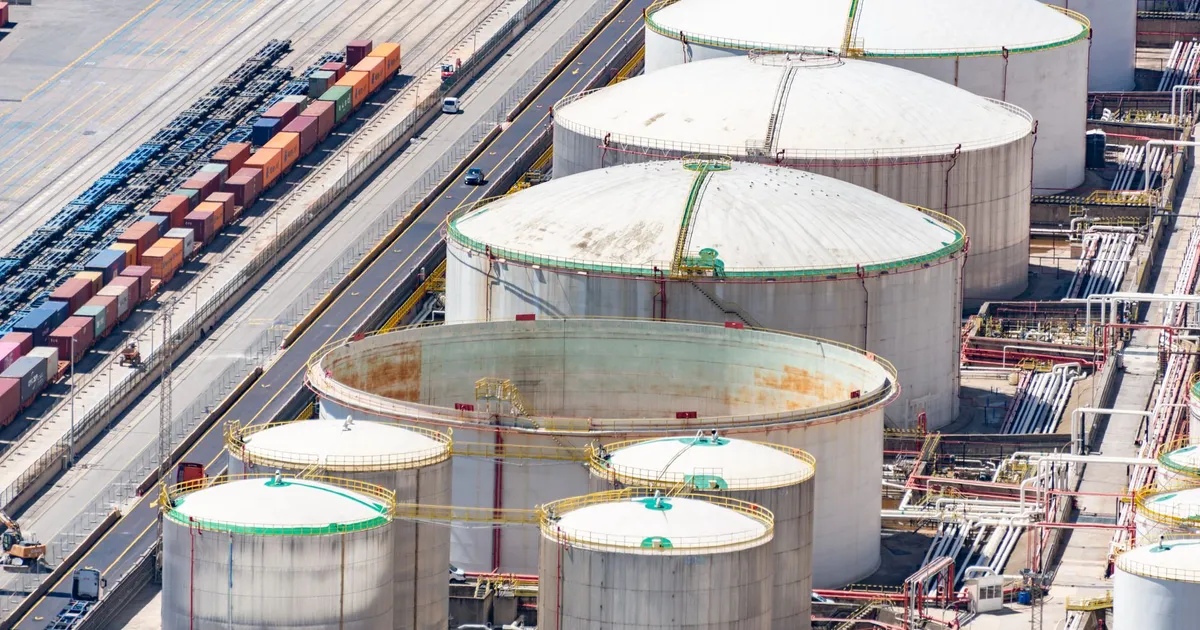
On paper, New Zealand’s diesel position looks comfortable. MBIE’s own tracker showed 48.2 days of diesel cover as of 27 September. Look closer and only 28.7 of those days were actually in the country. A further 18.9 days were still on ships outside the exclusive economic zone, which is fuel that exists but is not yet ours.
The number that matters for business continuity is the legal floor. Under the Minimum Stockholding Obligation, fuel importers must hold just 21 days of diesel, onshore or on incoming ships within the EEZ. Everything above that is either commercial choice or a temporary government arrangement. And the temporary arrangements are doing a lot of the work.
Channel is ringing the bell
Channel Infrastructure, which runs the Marsden Point import terminal, used its updated demand outlook this week to sound the alarm. Chief executive Rob Buchanan called a fuel supply interruption a “critical and rising risk” in an increasingly unstable geopolitical environment, noting onshore diesel cover including tankers in the EEZ sits at about 30 days, while Australia has committed more than A$3 billion to lift its own stockholding.
The demand side makes the warning sharper. Channel now expects 1.3 billion litres more fuel to move through the terminal over the next 24 years than it previously forecast, with diesel demand rising as the economy recovers and EV and commercial fleet turnover runs slower than expected. More diesel burned per day means a fixed stockpile covers fewer days.
The reserve is on a short lease
The government’s strategic diesel reserve, 550,000 barrels held in refurbished tanks at Marsden Point, was guaranteed only until 30 November until ministers extended the agreement to August 2027 a fortnight ago. Finance Minister Nicola Willis called fuel security the government’s top priority, against a backdrop of the US-Iran conflict pushing diesel past $3 a litre.
That is welcome, but it is another rolling extension, not a durable setting. Channel separately references tanks available until a storage contract ends in December 2027, a distinct arrangement from the Crown reserve deal. Either way, both expire before the structural fix arrives.
In 2025, the government set rules requiring importers with more than 10% market share to hold an extra 7 days of diesel from 1 July 2028, lifting their obligation to 28 days. Do the maths. The Crown reserve ends in August 2027. The industry obligation bites in July 2028. That leaves roughly 11 months where effective cover could drift back toward the 21-day floor, at precisely the moment everyone agrees risk is rising.
The 2028 fix may be a wash
Transporting New Zealand flagged the deeper flaw back in 2025. In its submission on the draft Fuel Security Plan, it warned that if the government’s extra seven days ceased in 2028 as industry upped its storage, “in effect there is no improvement” to diesel security. The cost simply moves from taxpayer to importer, and the country ends up where it started.
Business leaders are blunter than officials. Mainfreight managing director Don Braid told the Herald’s Mood of the Boardroom survey that “we dodged the issue during the fuel crisis this year” and that “our emergency holding capacity is pathetic” compared with other developed regions. Transporting New Zealand chair Cameron Bagrie offered a more measured view in the same survey, arguing New Zealand should benchmark against the OECD before assuming it needs more than 28 days.
Cheap insurance nobody is buying
Here is the frustrating part. Channel puts the cost of the current nine-day diesel top-up at about 1 cent per litre sold. For an economy where diesel moves around 93% of road freight tonnage, that is about as cheap as business continuity insurance gets.
Transporting New Zealand wants a Fuel Resilience Fund backed by a 1 cent levy and 60 days of diesel cover. You can argue about the target. It is harder to argue that a sequence of short-term contracts is a serious strategy for a country importing every litre it burns.
Businesses are not covering the gap themselves either. Only 25% of Mood of the Boardroom respondents have invested in fuel or energy resilience, and 47% have no plans to.
What to watch
MBIE’s review of whether to extend the 28-day rule to all importers is due this year, and the election campaign gives every party a chance to put a durable number on the table. The ask from business should be simple. Lock in the reserve beyond 2027, close the gap to July 2028, and make sure the 2028 obligation adds days rather than replacing them. Until then, freight, construction, farming and manufacturing operators should plan as though the 21-day floor is the real number, because legally it is.
Sources
- NZ Herald: Channel Infrastructure boss warns of the rising risk of fuel disruptions and shortages (2026-10-27)
- NZ Herald: Business leaders warn of New Zealand energy security risks (2026-10-27)
- The Post: Petrol, diesel demand to rise as cost of living slows electrification (2026-10-27)
- RNZ: Government extends strategic diesel reserve agreement to August 2027 (2026-10-14)
- Transporting New Zealand: Fuel volatility reinforces need for fuel security (2026-09-29)
- Transporting New Zealand: Submission on Draft Fuel Security Plan (2025-08-25)
Join the discussion
Add useful context, ask a good question, or challenge an idea — keep it specific and respectful.