

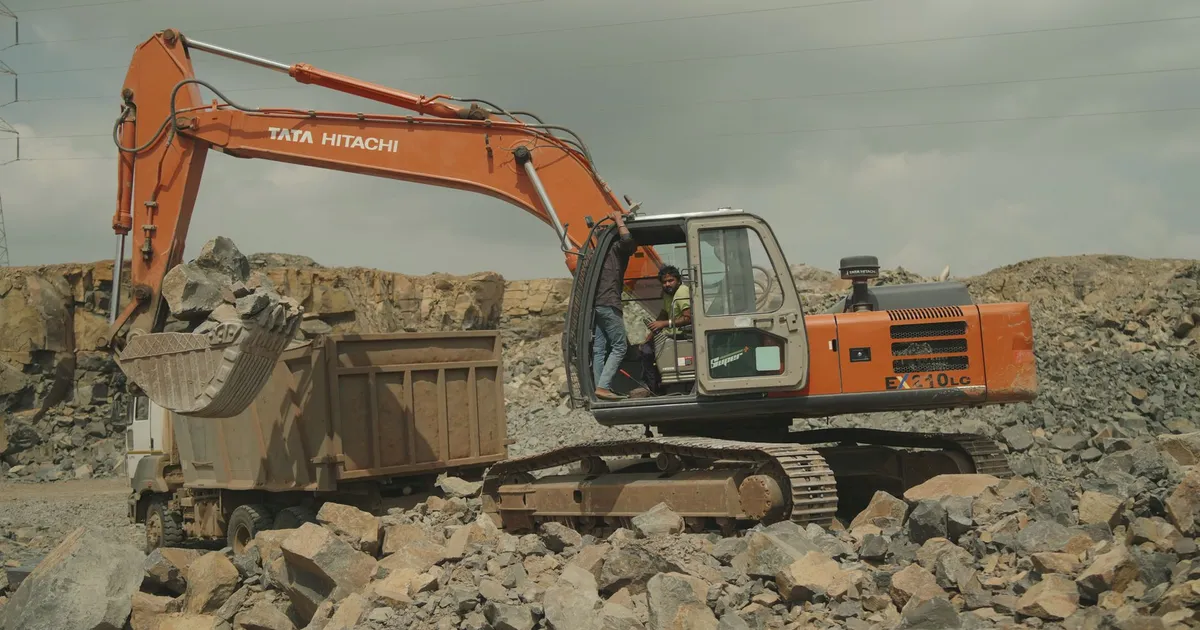
Cambridge is one of the Waikato’s designated growth towns, and nobody involved in its latest planning brawl claims to be against housing. Even so, a 301-home development is now in doubt because of a fight over what ResourceCo can bury at its quarry and recycling plant on Cambridge Road.
There is no villain here. The supply is stuck in a consent system that lets an industrial application drag on for a year across two councils while the houses around it wait.
A sensible business case with a very large footprint
ResourceCo wants to place more than 1.4 million cubic metres of Class 3 managed fill at 3831 Cambridge Road over four stages and 10 to 20 years. The plan needs a 13-metre retaining wall along the northern boundary and internal walls up to 14 metres high.
The commercial logic holds up. According to a September Waikato Times report, the plant already recovers about 80 percent of the construction waste it takes in. The leftover soil, rubble, concrete and clay cannot be recycled, and the company wants to keep it on site instead of trucking it somewhere else. Director Henry Fullerton-Smith puts the project at more than $20 million of investment and up to 10 permanent local jobs. The cost falls on the neighbours, with up to 8,000 truck movements a year from 7am to 6pm, six days a week.
For a country that keeps saying it wants a circular construction economy, refusing to let a recycler deal with its own residue would be an odd result.
The objectors are building houses too
The opposition is not a group of anti-development holdouts. Named objectors include St Peter’s School, Te Awa Lifecare retirement village and local housing developer 3Ms. Waipā District Council received 21 submissions. St Peter’s Trust Board chair John Macaskill-Smith said the proposal was in “complete contrast” with the town’s growth plans. He said the recycling plant “was only meant to be operating in the short-term” but “it’s been growing considerably.”
St Peter’s is also planning a riverside subdivision in Cambridge. Macaskill-Smith said the school would likely delay it if the fill consent is granted, because it worries buyers would be put off.
That leaves Cambridge in a bind. If ResourceCo gets its consent, one subdivision probably slows down. While nobody decides, a 301-home project is left uncertain. Every party says it supports growth, and the town still has no answer.
Two councils running separate processes
The delay comes from how the application is being handled. ResourceCo’s regional consent application went to Waikato Regional Council on 22 October 2025. It covered five separate authorisations, including fill discharges, earthworks in a high-risk erosion area and water takes for dust control, and was notified to 27 affected parties.
The district land-use consent is following its own timetable. In November 2025, Waipā District Council issued a Section 92 request for further information. It asked about retaining wall and grassing timelines, Transpower power-line clearances, and a breach of the District Plan’s cut-and-fill depth rule. The statutory clock was put on hold until ResourceCo answered. The district application was then notified to 25 residents and four iwi groups in mid-2026, and a further nine parties were added in a later round.
The result is one site with two applications and two councils, each with its own notification lists, submission rounds and information requests, and neither timetable tied to the other. Each step is lawful and probably defensible on its own. Together they have produced a year of delay with no decision.
Uncertainty does the most damage
Developers can price a no. They can redesign around conditions. What they cannot finance is a long period with no answer. Presales stall when buyers can’t tell whether they will be living next to a wall of fill. Lenders ask harder questions, and holding costs keep accruing either way. A 301-home project does not need to be refused to fail. Enough delay can make it unviable.
This is what the government’s planning reform is meant to fix. Nobody behaved badly here. A recycler made a reasonable application, neighbours raised reasonable objections, and two councils followed their processes. The system still allowed an industrial consent to hold up housing supply for more than a year.
What happens next
Waipā and Waikato Regional Council should hear and decide this case together, and soon. Whatever the decision, a firm yes with tough conditions or a clear no would let the 301-home developer, St Peter’s and ResourceCo get on with their plans. Another year of separate processes means Cambridge loses the houses while the dirt sits undecided.
Sources
- NZ Herald: Waikato development: 301-home project in doubt over Cambridge fill plan (2026-10-16)
- Waikato Times: Neighbours decry managed fill proposed Cambridge quarry (2026-09-03)
- Waipā District Council: Proposed managed fill at 3831 Cambridge Road, Cambridge (2026-07-24)
- Waikato Regional Council: Resource consent application APP147661 (2025-10-22)
Join the discussion
Add useful context, ask a good question, or challenge an idea — keep it specific and respectful.