

The man the NZ Herald calls New Zealand’s biggest fraudster has been jailed over a $175 million wine Ponzi scheme. Herald business investigations reporter Matt Nippert is examining whether Stephen Burton is in fact Andrew Pittman, a former Auckland Grammar School pupil. That link is still being reported out, and it will dominate the coverage.
It shouldn’t dominate the boardroom conversation. The real lesson is that Burton’s operation survived for years because it borrowed the language of a regulated credit product and bolted it onto an asset almost nobody can value quickly. Fixed interest, conservative collateral, a tidy plan for defaults. Every feature designed to reassure was the thing that should have triggered harder questions.
Gold bars and two passports
The Herald’s account opens with Burton’s February 2019 arrest at London’s Chelsea Harbour Hotel, where police found $1.7 million in gold bars, ingots and Krugerrands, five designer watches, 500 lottery tickets, $125,000 in cash and two passports in his name with different dates of birth. James Derham, then a Kent Police detective inspector, said in 2019 that Burton “could offer no explanation as to where that money came from”.
From there the story runs through a UK prison, a flight to Morocco, extradition to the United States and detention in New York, ending in this month’s sentence.
The pitch spoke fluent banking
When US prosecutors laid charges in December 2023, the New York Times reported that Bordeaux Cellars, based in the UK and Hong Kong, told investors it made fast loans to wealthy collectors secured against their cellars. It claimed a 35% loan-to-value ratio, paid investors a fixed 12% and said it had lent out $152 million over six years.
Investigators found Bordeaux Cellars never held most of the wine it claimed. New money paid old investors and funded the operators’ lifestyles. In 2023 prosecutors put the sum raised at US$99.4 million, with $8.2 million unaccounted for when the scheme collapsed in 2019. The Herald’s $175 million figure is the current total; the US numbers reflect the case as charged three years ago.
This wasn’t a back-alley operation either. Burton and his co-accused worked the investor conference circuit for roughly a decade, presenting as polished executives before both eventually pleaded guilty.
Wine is a near-perfect hiding place
The asset itself did half the work. A 2018 Hawke’s Bay Today analysis noted auction turnover in fine wine had climbed from around US$90 million in 2003 to more than US$233 million in 2009, yet reliable pricing data only went back to 2001. Investment-grade bottles could cost up to 2000% more than ordinary drinking wine, and the writer warned that information given to investors was “all too often poor or, worse, misleading”.
That 2018 piece also cited a local case, a former consultant at an Auckland auction house charged with defrauding clients of more than $1.3 million by faking vintages. Wine fraud is not something that only happens to other people’s money.
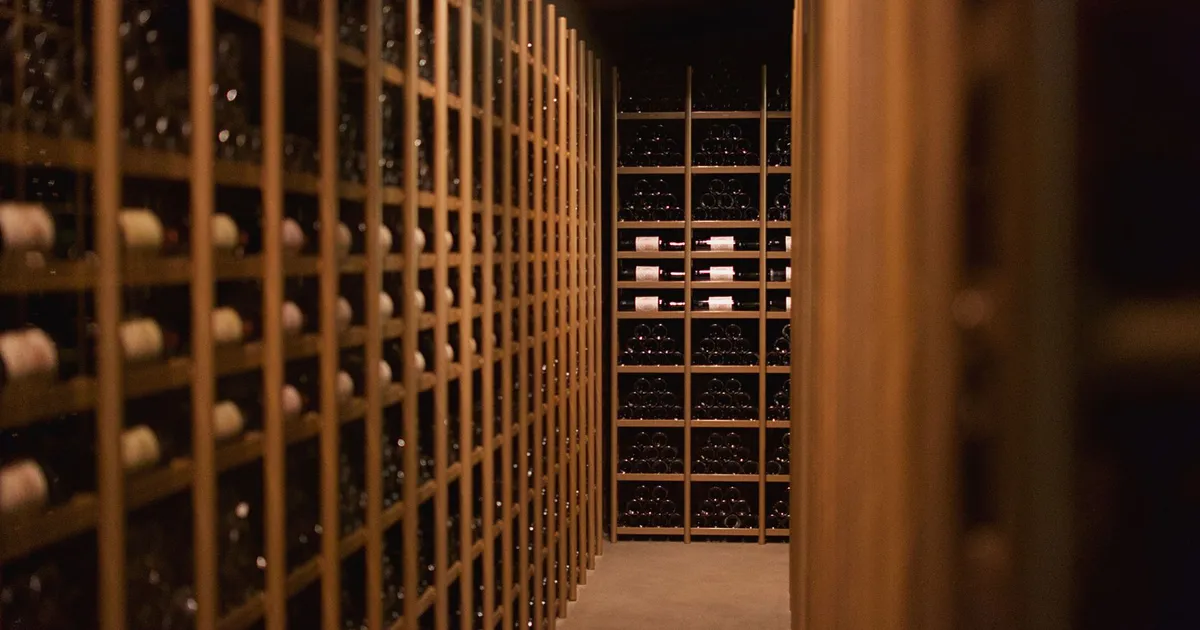
Thin markets, opaque pricing and assets stored out of sight in bonded warehouses are a fraudster’s ideal conditions. You cannot mark a fictional cellar to market.
The reassuring numbers were the warning
A 35% loan-to-value ratio sounds like a fat safety cushion. It is only a cushion if the collateral exists, is genuine and is worth what someone says it is worth. Bordeaux Cellars controlled every one of those claims. A fixed 12% on a loan book nobody could inspect is not conservative lending, it is a promise with nothing behind it but the promoter’s word.
For directors, advisers and family offices, the checklist is short and unglamorous. Confirm the asset exists by contacting the custodian directly, not through the operator. Get valuations from parties with no stake in the deal. Ask who audits the books and which regulator, if any, has jurisdiction. And treat a perfect record of on-time payments as neutral at best. Every Ponzi scheme pays reliably right up until the day it stops.
New Zealand has seen this film before
The pattern is familiar locally. The FMA’s review of the Barry Kloogh Ponzi scheme showed how a trusted adviser front kept a fraud undetected, and the SFO has jailed a Christchurch Ponzi operator for a scheme a fraction of Burton’s size. Back in 2018, MBIE’s discussion paper on unravelling Ponzi schemes flagged gaps in how victims recover money once these schemes collapse.
That last point matters. Recovery after the fact is slow, partial and expensive. Prevention is the only protection that works.
Alternative yield needs adult supervision
The Herald will keep digging into who Stephen Burton really is. Investors should spend their energy on a different question. Wine, whisky casks, art and private credit are all being marketed harder as conventional returns feel thin, and the most dangerous pitches will look exactly like Bordeaux Cellars did, sober, numerical and secured. The more a pitch sounds like a bank product, the harder you should check it isn’t hiding an empty warehouse.
Sources
- NZ Herald: New Zealand’s biggest fraudster: Andrew Pittman, aka Stephen Burton, jailed for $175m wine Ponzi scheme (2026-10-15)
- Wine Spectator: Two Suspects in $99 Million Wine Ponzi Scheme Plead Guilty
- NZ Herald (Hawke’s Bay Today): Canny view – Fine-wine investment too good to be true (2018-03-16)
- FMA: Lessons learned from the Barry Kloogh Ponzi scheme
- SFO: Ponzi scheme operator jailed for $17.5 million fraud
Join the discussion
Add useful context, ask a good question, or challenge an idea — keep it specific and respectful.