

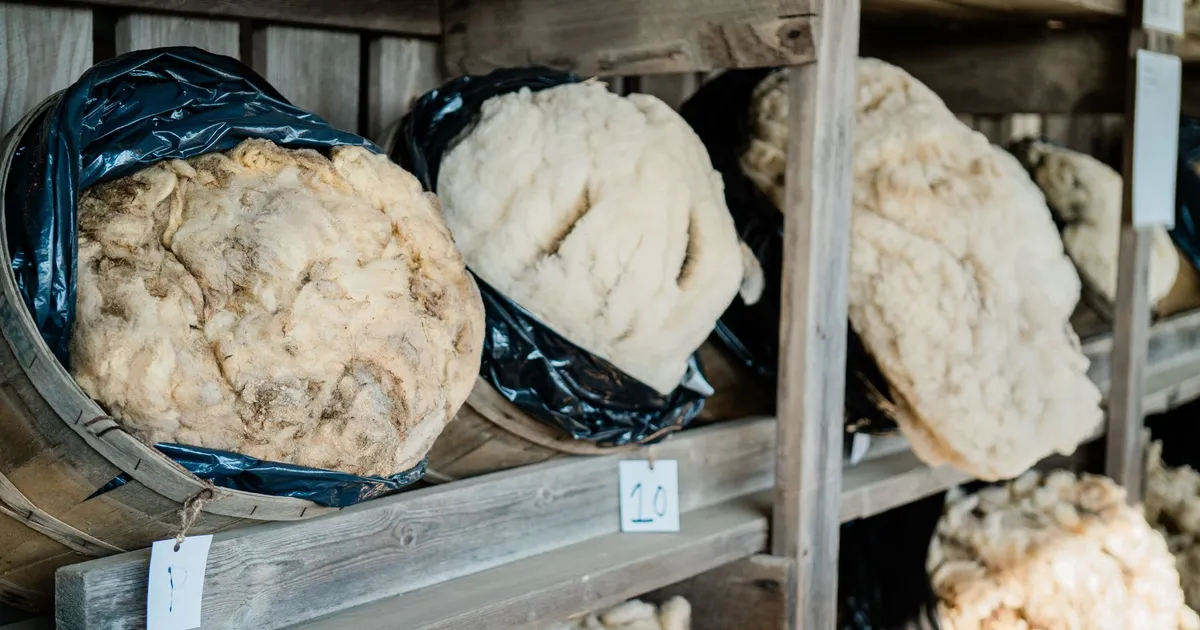
Sheep farmers will decide early next year whether to tax themselves again to sell wool. That is the right instinct. Wool’s problem has never been a shortage of fibre. It has been a shortage of buyers willing to pay for it. But the industry asking for the money has had three names in roughly a year, and farmers are entitled to ask what they are actually buying before they tick yes.
The cheque is small, the question is not
Beef+Lamb NZ and the New Zealand Wool Collective have confirmed a grower vote in February 2027, with the levy potentially in place by late 2027. Wool Collective chief executive Ross McIsaac puts the cost at 2-3 cents per kilogram of greasy wool. “For a farm that maybe has 2000 sheep and produces about 10 tonnes of wool you’re looking at about $200 to $300 per year,” he says.
For most commercial sheep operations, that is less than a single day of contract shearing. Nobody serious is arguing the levy will break farm budgets. The argument is about return on investment, which is precisely the conversation a business owner should want to have. McIsaac made the case for that return on Mike Hosking Breakfast, pitching it as demand creation rather than administration.
A funding cliff is forcing the vote
The timing is not accidental. B+LNZ chair Kate Acland says that “with funding for New Zealand Wool Collective coming to an end in late 2027, a grower levy will be essential to continue building on the work that is underway.” The plan folds the wool work inside B+LNZ, which Acland calls “a positive and practical step” that avoids duplicating administration.
That last point deserves credit. Putting wool inside an existing levy body with existing governance is cheaper than standing up yet another standalone organisation. It is also an admission that the previous attempts to build one did not stick.
What doing nothing actually cost
Farmers funded the Wool Board for decades before voting it out in 2003, and every attempt to reinstate a levy since has failed. PGG Wrightson national auction manager Dave Burridge says the result was “25 years of poor returns for wool growers”, with shearing training declining and promotion falling behind synthetic fibres. “It’s the old saying of you do nothing, you’ll get nothing,” he says.
That is the strongest argument for a yes vote. A fragmented commodity sector of thousands of small producers cannot individually fund market research, standards or offshore promotion. Collective, grower-funded industry-good spending is the free-market alternative to asking Wellington for a bailout.
Three names in twelve months
The weaker argument is the institutional churn. In December 2025, the Wool Alliance proposed a levy body under the working title NZWool, chaired by former Fonterra chair John Monaghan. Campaign for Wool NZ’s then-general manager Kara Biggs said at the time that growers wanted “less entities, not more.” Monaghan said the aim was a fully funded model by 2027.
NZWool became the New Zealand Wool Collective. Now the work is heading into B+LNZ. To McIsaac’s credit, the numbers have barely moved. In 2025 he put the budget at just under $5 million a year, targeting value far greater “than two or four cents per kg.” Consistent costings help. A shifting letterhead does not.
A recovery that cuts both ways
The market backdrop complicates the pitch. In August, Associate Agriculture Minister Mark Patterson said wool had staged a “remarkable comeback” after returning from India’s Bharat Tex trade fair. Burridge was more cautious, noting overseas buyers were waiting for price stability before re-entering.
Lisa Portas’s Nuffield report found strong crossbred wool had lifted to roughly $5.50-$6.50/kg clean by February 2026, finally approaching shearing costs in many regions, yet still not covering harvesting costs for many growers. She described the sector as “at a critical crossroads” and asked whether the gains are structural or merely cyclical.
Some farmers will see better prices and conclude the market is fixing itself. The more likely reading is that a cyclical bounce is exactly when to lock in demand, before the next slump wipes it out.
What a yes vote should buy
Acland lists market insights, standards and research, training, on-farm extension and “a united voice for wool.” Reasonable categories, but categories are not outcomes. Before February, the industry should publish targets farmers can hold it to: new product contracts, premium volumes, price spread over synthetic alternatives, and a sunset review if those numbers do not move.
The levy itself is cheap. Another 25 years of drift would not be. Farmers should vote for the money only if the people asking for it are willing to be measured like any other business spending someone else’s capital.
Sources
- RNZ: Wool levy could cost farmers $200-$300 a year (2026-11-11)
- NZ Herald: Wool levy – Sheep farmers to vote on proposal early next year (2026-11-10)
- Newstalk ZB: Wool levy aimed at boosting industry’s value goes to vote next year (2026-11-11)
- Beef+Lamb NZ: Wool levy vote, February-March 2027 (2026-11-10)
- Rural News Group: New industry body aims to unite and rebuild strong wool industry (2025-12-16)
- BusinessDesk: Getting the wool rolling again – is it time for a levy? (2026-08-13)
- Nuffield NZ: Strong Wool, Stronger Returns – Lisa Portas (2026-05)
Join the discussion
Add useful context, ask a good question, or challenge an idea — keep it specific and respectful.