

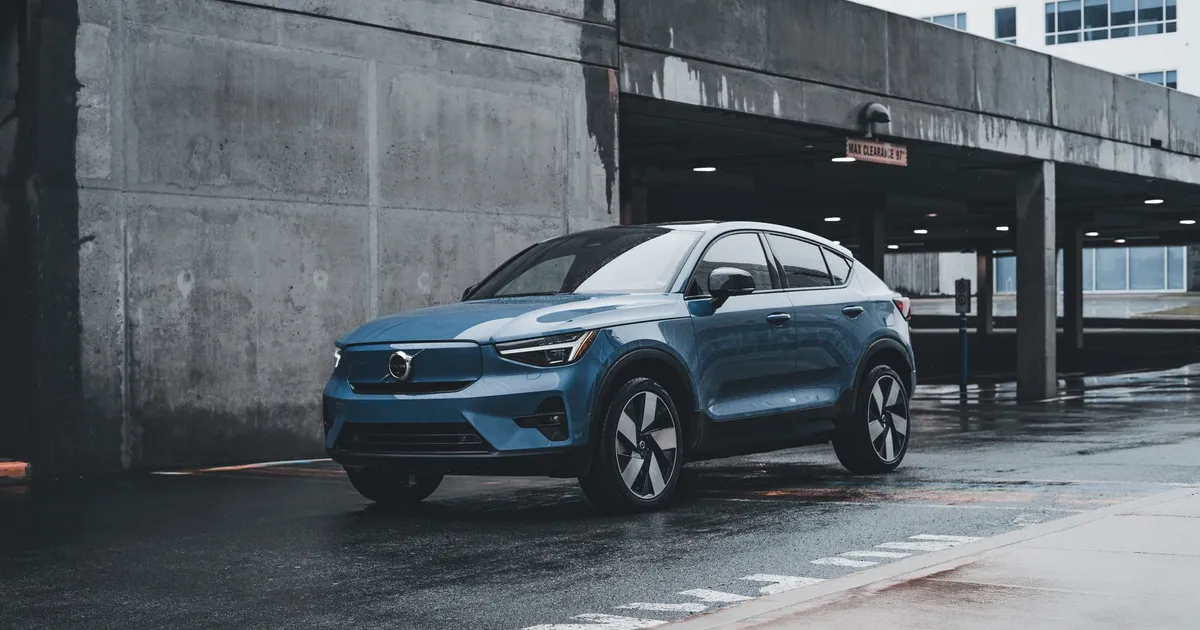
Same sticker, different powertrain
Volvo Cars New Zealand has confirmed the EX60 electric SUV will start at $116,990 for the Ultra P6 RWD, with the AWD Ultra P10 at $125,990. The P6 price matches the XC60 plug-in hybrid to the dollar. First deliveries land in November.
This is not accidental. In April, Volvo dropped the XC90 PHEV from $161,990 to $149,990 to match the EX90 electric seven-seater. The EX60 extends that logic to the mid-size segment, which is the brand’s highest-volume category. Volvo is telling the market that a BEV no longer requires a premium or a subsidy to compete.
Volvo Brand Manager Daile Stephens put it bluntly: “The EX60 overcomes the three main reasons people hesitate to go all electric: range, charging speed and price.”
The spec sheet answers the remaining objections
The EX60 is built on Volvo’s SPA3 architecture with an 800-volt electrical system. The P6 delivers 611km WLTP range from an 83kWh battery. The P10 pushes that to 660km on 95kWh. A P12 variant due in the second half of 2027 promises 810km.
Charging hits 10-80% in 16 minutes at 350kW DC, adding roughly 315km in ten minutes. Towing capacity reaches 2,400kg on the P10, which removes one of the last practical objections fleet managers have raised against EVs.
The EX60 is also priced below the BMW iX3 and Audi Q6 e-tron equivalents in New Zealand, a pointed move against German rivals that have been slower to close the BEV-PHEV price gap.
The market is already moving without government help
Volvo’s pricing confidence is backed by results. In Q1 2026, total NZ sales rose 67% year-on-year, with BEV sales up 66%. That growth came after the Clean Car Discount was scrapped and road user charges were applied to EVs. The demand is commercial, not policy-driven.
The broader market tells a similar story. After BEV sales collapsed from roughly 26,000 units to just over 9,000 in 2024 following the subsidy removal, registrations surged 265% between February and March 2026. In March, BEVs hit 16.6% market share with PHEVs adding another 10.2%, giving electrified vehicles a combined 27% share for the month.
Dane Fisher, Group General Manager of NordEast Vehicle Distributors, argues the shift is structural: “We’ve moved beyond the debate stage. Electrification is no longer a theory, a policy experiment, or a niche option. It’s becoming the default.”
Premium buyers have already decided
Here is the data point that should matter most to business owners making fleet decisions: the premium medium-SUV segment is already 50% electric, even though EVs account for only 6.5% of total NZ registrations. Electrification is not spreading evenly. It is concentrated at exactly the price points where executives and business owners buy.
The running cost case reinforces the purchase decision. New Zealand’s 88% renewable electricity generation means EV drivers pay the equivalent of 40 cents per litre compared to petrol. For a fleet running high-mileage vehicles, that differential compounds fast.
One genuine constraint remains
New Zealand’s charger-to-EV ratio sits at 1:52, among the lowest in the OECD. The EX60’s 800V system and 350kW peak charging are matched to NZ’s fastest public chargers, but those chargers are not yet ubiquitous outside major centres. For businesses with workplace or home charging, the constraint is manageable. For geographically dispersed operations, it remains real.
That gap between vehicle capability and network capacity is both a commercial risk for fleet operators and an investment opportunity for infrastructure providers.
The commercial case has settled itself
The government’s removal of the Clean Car Discount and introduction of road user charges slowed EV adoption by roughly two years. But the market has moved on under its own commercial logic. When a manufacturer prices its BEV at exact parity with the hybrid equivalent, posts 67% sales growth in a post-subsidy environment, and undercuts its German rivals, the signal is not subtle. Fleet buyers and business owners who have been waiting for the policy environment to stabilise before committing may find the commercial case has already settled the question for them.
Sources
- Driven: Volvo EX60 EV price for NZ: ‘same range as a petrol car, charges as fast as an average fuel stop’ (2026-06-19)
- AutoTrader: Volvo EX60 priced for New Zealand (2026-06-18)
- DriveLife: Volvo confirms pricing for EX60, their longest-range EV (2026-06-19)
- Motoring NZ: Thor point: EX60 arrival, pricing announced (2026-06-18)
- Drive Electric: State of the Nation Report (2026-06-05)
- Driven: The Insider: New Zealand has reached the tipping point for electrified cars (2026-03)
- Motoring NZ: NZ on fast track for Volvo’s smartest EV (2026-03-17)