

The earthquake is not the problem
A University of Waikato study published this week modelled what happens to New Zealand’s freight network after a magnitude 8.5 earthquake on the Hikurangi Subduction Zone, with Wellington and Picton ferry terminals out of action for three months. The findings are pointed, and the most important one has nothing to do with the shaking.
Researchers identified 43 constraints linked by 99 cause-and-effect relationships, all tracing back to just 18 root causes across six areas of government policy. As senior lecturer Cécile L’Hermitte puts it: “While the earthquake is what exposes many of these vulnerabilities, they often are not what creates them.” The damage, in other words, is already done. A rupture just reveals it.
This is not a tail-risk thought experiment. Scientists calculate a roughly one-in-four probability of a magnitude 8.5 Hikurangi event within the next 50 years, a planning horizon well inside the operating life of most businesses and their infrastructure.
Four ferries hold up the whole country
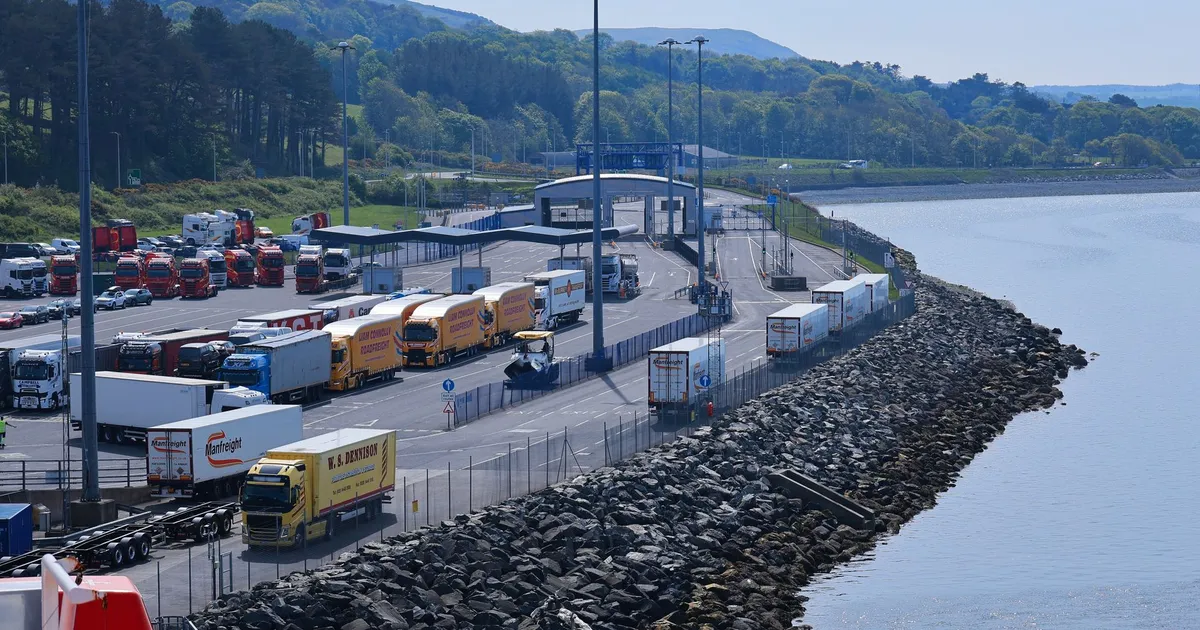
The Cook Strait ferry link is the spine of inter-island freight. It carries more than 500 trucks a day and 5.5 million tonnes of freight a year, bridging State Highway 1 and the main rail corridor. The entire system runs on just four roll-on, roll-off ferries operated by Interislander and Bluebridge’s StraitNZ.
Knock out the terminals and the fallbacks look thinner than most assume. Air freight can move medicines and high-value goods but is expensive, capacity-constrained, and short of pilots and engineers. Coastal shipping has limited spare vessels, containers and refrigerated equipment, made worse by the recent closure of Pacifica’s domestic service. Remaining ports would absorb more volume with fewer people. Road detours are longer and demand more trucks and drivers the country already does not have.
When the pump won’t take your card
The cascade does not stop at transport. Fuel pumps depend on electricity, drivers rely on electronic payments to fill up, and freight operators need telecommunications to coordinate deliveries. If any of those fail after a disaster, freight seizes up even where the physical fuel infrastructure is intact.
That is the uncomfortable footnote to the good-news story on resilience investment. Z Energy’s Seaview Energy Resilience Project is over $100 million across eight years to strengthen a wharf, subsea pipeline and onshore pipeline supporting more than 10% of national fuel supply, with Prime Minister Christopher Luxon visiting in early August. Upgraded pipes matter. But the electricity and payments dependency means resilience is a systems problem, not a concrete one.
Built to export, not to feed ourselves
The structural fragility pre-dates any fault line. Just under 93% of NZ freight moves by road, against 72% in Germany, and many regions have only one or two freight-capable roads. The two dominant supermarket chains account for 80 to 90% of food consumed and run centralised, just-in-time distribution that keeps costs low and buffers near zero.
The 2011 Christchurch quake damaged distribution centres serving the entire South Island, forcing supply to reroute from North Island hubs. A Hikurangi event hitting both islands at once removes that fallback. Tellingly, a Timaru District Council study found 95% of commercially-bought food in South Canterbury comes from outside the region, despite it being called the food bowl of New Zealand. The system is built to ship exports out, not move food around.
The fixable failures
What makes the study sting is that the root causes are policy choices, not acts of God. Port of Tauranga, the country’s largest, spent years in consent processes to expand berths, leaving it less able to absorb sudden surges. Coastal shipping investment has been chilled by marine fuel policy uncertainty. Workforce shortages across trucking, ports, shipping and aviation would be acute during any recovery. Ferry terminals are ageing and below modern resilience standards.
What it means for your business
This is a business continuity story dressed as a civil defence one. Foodstuffs holds seven to ten days of stock and runs civil defence exercises, which covers a short shock but not a three-month Cook Strait outage. The businesses least exposed are those that have already mapped supply chain dependencies and built redundancy, more stock, alternative suppliers, generator backup, diversified logistics. Everyone else is quietly betting the system works. The research says that bet is not safe, and the fix is largely political rather than geological.
Sources
- How a quake could bring fuel and supermarket deliveries to a halt (2026-08-09)
- Z Energy Seaview Energy Resilience Project (2026-08-04)
- Climate extremes make NZ’s supply chains highly vulnerable – it’s time to rethink how we grow and ship food (2024-07-26)
- How would NZ’s vital freight system handle a big earthquake? Our study sounds a warning
Join the discussion
Add useful context, ask a good question, or challenge an idea — keep it specific and respectful.