

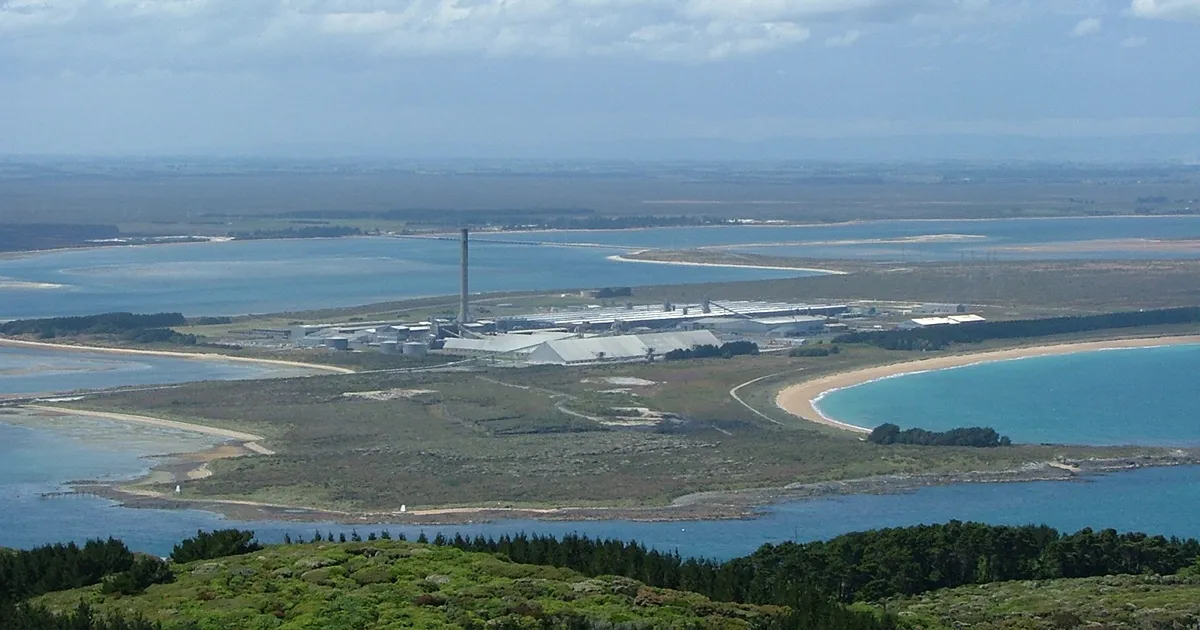
Contact Energy and Rio Tinto have done something unusual in New Zealand’s energy debate. They have added heavy industrial demand instead of losing it. The binding 50MW, three-and-a-half-year agreement signed on 16 November restarts Line 4 at the Tiwai Point smelter, idle since April 2020. The line restarts in October 2027, with full production expected by December.
This is an industrial production story as much as an energy one. The restart adds about 30,000 tonnes of aluminium a year, taking the smelter back to its full capacity of around 360,000 tonnes. At current spot prices, Rio Tinto puts the extra export earnings at roughly NZ$100 million a year.
Six months, three years saved
The date is the real signal. When the companies signed a non-binding letter of intent in May, the restart was pitched for around 2030. Half a year later it is contracted and roughly three years closer.
That compression did not happen by accident. The 50MW deal is a bridge, built so the restart does not have to wait for a longer 20-year power purchase agreement that is still being negotiated. Both sides evidently decided the economics were too good to sit on. Large companies do not bring forward capital decisions by three years unless the numbers have moved decisively.
Aluminium at double the 2020 price
They have. After a major smelter in the United Arab Emirates was damaged in late March, aluminium prices in April rose 51% year-on-year. By May the metal was trading around US$3700 a tonne, more than double its price when Line 4 was switched off.
Tiwai’s three running potlines have already cashed in. They produced 165,000 tonnes in the first half of 2026, up from 149,000 tonnes a year earlier, and national aluminium exports climbed 40% to $2.22 billion over the year to September. Line 4 layers extra volume onto an export category that was already booming.
Armando Torres, managing director of Rio Tinto’s Aluminium Pacific operations, said the restart comes “at a time when demand for high quality, low carbon aluminium has never been higher.”
Power that bends in winter
The clever part of the contract is its shape. Supply drops to 25MW during the second and third quarters, protecting the grid when demand peaks and hydro lakes are under pressure. That matters for a site that already consumes about 14% of national electricity production.
For every business negotiating a long-term power contract, this is a live price signal. Flexible industrial load has value, and committed long-duration demand is what underwrites new generation. Contact has been explicit that the deal supports its consented Southland Wind Farm, with chief renewable growth officer Dorian Devers saying demand for renewable energy underpins the project. Industry analysis has long argued that a committed load makes generation and transmission investment easier to finance than one that might vanish.
It also cuts against the dominant narrative that New Zealand power costs are driving manufacturers offshore. Here a global miner is choosing to expand production in Southland.
A high-wage anchor for Southland
Rio Tinto expects only about 20 initial jobs from Line 4 itself. The bigger effect is on confidence across the services ecosystem. The smelter directly supports 917 full-time jobs paying an average $125,000, against a Southland average of $73,700, and contributes 6.9% of Invercargill’s economy. Back in 2024, Contact’s integrated report noted its supply contract secured the smelter’s operation to 2044.
In May, then-Southland mayor Rob Scott said he could not see any negatives in the plan. For port operators, engineering firms and trades businesses, a binding date is far more useful than intent.
The caveats are real but manageable
None of this is permanent. Tiwai remains a single, foreign-owned site in a fiercely competitive commodity market, and today’s aluminium price owes plenty to a supply shock in the Gulf. Prices that spiked can soften. But a short bridging contract limits the downside for both parties, and the winter step-down limits the risk for everyone else on the grid.
The next milestone is the 20-year agreement. If that lands, the Line 4 restart stops looking like an opportunistic response to high prices and starts looking like the template for how New Zealand sells renewable power to heavy industry.
Sources
- NZ Herald: Contact Energy-Rio Tinto power deal enables Tiwai Point fourth potline restart at aluminium smelter (2026-11-16)
- Businesswire: Rio Tinto signs 50MW electricity contract to support Line 4 restart in New Zealand (2026-11-16)
- Rio Tinto: Rio Tinto signs 50MW electricity contract to support Line 4 restart in New Zealand (2026-11-17)
- Contact Energy: Rio Tinto and Contact Energy sign Letter of Intent to support restart of Tiwai Point potline (2026-05-27)
- RNZ: Southland mayor salutes deal between Contact Energy and Rio Tinto on Tiwai Point smelter (2026-05-27)
- RNZ: Contact signs deal to get Line 4 potline at Tiwai Point aluminium smelter restarted (2026-05-27)
- The Post: Rio Tinto moves to restart fourth potline at Tiwai Point smelter (2026-05-26)
- The Press: Tiwai goes flat out as aluminium prices surge and exports hit $2.2b (2026-09-25)
- Contact Energy: 2024 Integrated Report (2024)
- BusinessTalk: Tiwai Point and the Southland Industrial Base
Join the discussion
Add useful context, ask a good question, or challenge an idea — keep it specific and respectful.