

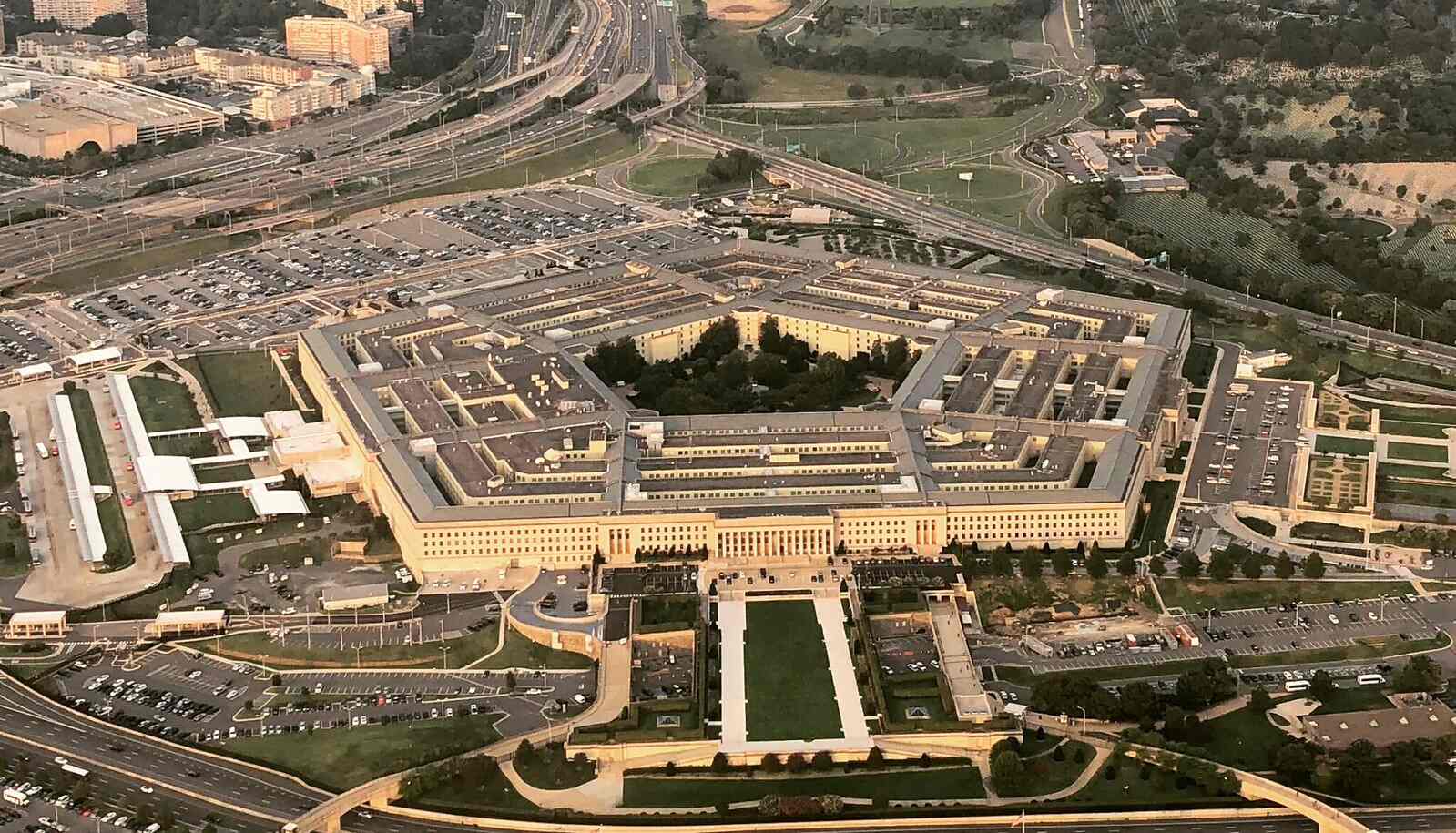
Washington has widened its scrutiny of Chinese technology companies by adding Alibaba, Baidu, BYD, and several other major firms to a Pentagon register of businesses it believes have links to China’s military and defence industrial network.
The updated Section 1260H list, published by the U.S. Department of Defense, does not immediately impose sanctions or block private investment. However, it carries growing commercial consequences.
The Pentagon will soon be barred from awarding direct contracts to companies on the list, while restrictions on purchases made through third-party suppliers are due to take effect in June 2027.
The latest additions stretch far beyond traditional defence contractors. They include biotechnology company WuXi AppTec, lidar developer RoboSense Technology, humanoid robot maker Unitree, and Chinese memory chipmakers CXMT and YMTC. The breadth of the update reflects Washington’s concern that civilian technologies, including artificial intelligence, electric vehicles, semiconductors, and robotics, could also support China’s military capabilities.
“These indirect restrictions could force some U.S. firms that work with the U.S. military to drop designated Chinese firms as suppliers,” said Michael Hirson, head of China Research at 22V Research.
The move comes at a sensitive moment for relations between Washington and Beijing. U.S. President Donald Trump and Chinese President Xi Jinping recently met in Beijing, where both sides sought to stabilise trade ties and announced plans for a joint investment and commerce board. The Pentagon’s decision shows that national security concerns continue to shape the relationship despite efforts to lower tensions.
Alibaba and WuXi AppTec have rejected their inclusion and said they would seek to have the designations reversed. Baidu and BYD did not immediately comment.
“There’s no basis to conclude that Alibaba should be placed on the Section 1260H List. Alibaba is not a Chinese military company nor part of any military-civil fusion strategy. We will take all available legal action against attempts to misrepresent our company,” Alibaba said in a statement to CNBC.
Several Chinese companies have challenged similar U.S. designations in court. Xiaomi was removed from a blacklist in 2021 after successfully contesting its inclusion.