

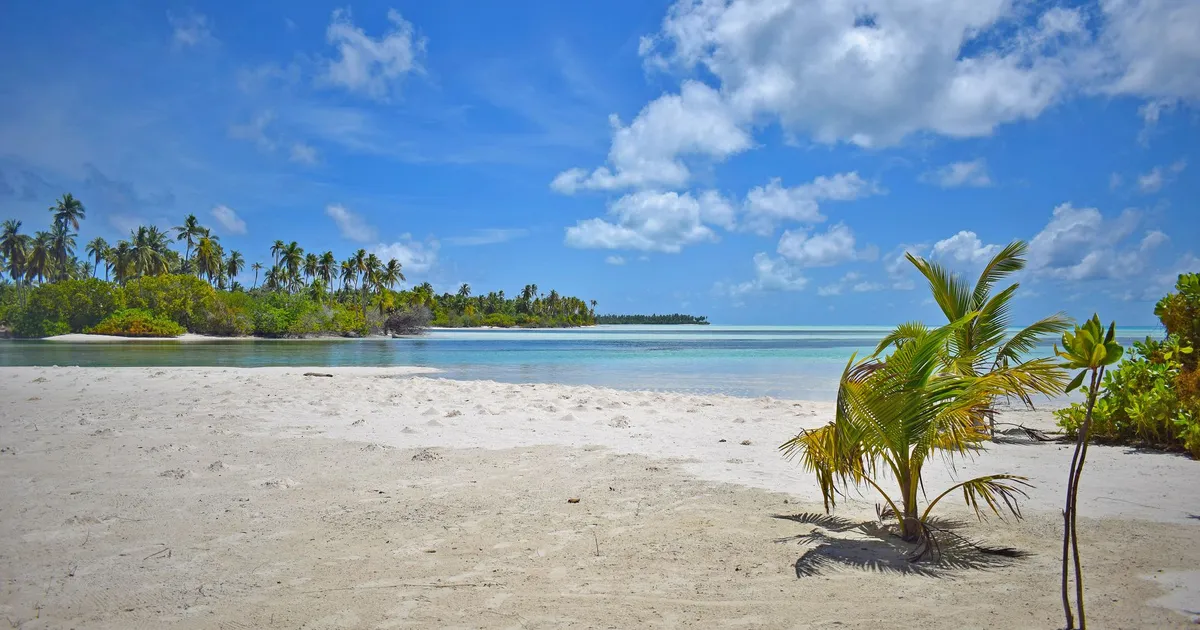
New Zealand may well be right to help the United States rebuild a port in the remote northern Cook Islands. The strategic logic is easy to follow. What is harder to defend is how the money was committed. Documents released under the Official Information Act show MFAT officials acknowledged there was no business case for New Zealand’s contribution to the Penrhyn port upgrade, but tagged it a ‘priority’ and pressed ahead.
No board in the country would sign off an eight-figure capital commitment on that basis. Government should not either.
A $102 million project on a letter of intent
The deal was unveiled at the Pacific Islands Forum leaders’ meeting in Palau in early September. According to the joint statement, the US State Department, working with Congress, will contribute US$50 million (about NZ$84 million) and New Zealand will put in $17.5 million. New Zealand is also implementing the project in coordination with Rarotonga and Washington. Cook Islands News put the total at over $101 million.
At the time of the announcement, Newsroom reported that only a letter of intent had been signed and precise details were scarce. It also suggested the project gathered pace because the Trump administration needed to use federal funds before its fiscal year ended on 30 September. Even the headline figure wobbled, with one RNZ report citing a US$60 million upgrade.
A US budget deadline is a reason for Washington to move fast. It is not a reason for Wellington to skip its own homework.
Officials knew the rules and waived them
The most damning line comes from MFAT itself. A May briefing to Foreign Minister Winston Peters stated that “major New Zealand development activity would ordinarily be supported by a detailed business case prepared over a number of years with firm cost estimates.” Officials added that a feasibility study could not be completed in the available timeframe.
Cabinet signed off regardless. The decision is now documented in the proactively released Cabinet paper, CAB-26-MIN-0286, published on 20 October.
This is the part that should bother anyone who has ever had to justify capital spending to a bank or a board. The standard was not unknown. It was acknowledged, written down and set aside. And because New Zealand is leading implementation, any cost overruns on a remote atoll build will land with the party that never priced it properly.
Geopolitics as a get-out clause
The strategic framing is not subtle. US Ambassador to the Cook Islands Jared Novelly described Penrhyn as a “friendly port” to help Pacific nations counter “bad actors”, and tied it to the US-Cook Islands Critical Minerals Framework. Cook Islands Prime Minister Mark Brown calls it a lifeline for safer landings and better links for the outer islands. Both things can be true.
But international law expert Al Gillespie warns that dual-use projects blur quickly. “In reality, they often get merged because the countries need the money for the development and they’ll often turn a blind eye to its other purpose,” he told PMN. That is precisely why a business case matters. If the port is partly civil and partly strategic, taxpayers deserve to know what each half is supposed to deliver and what it costs.
On the ground, the questions are the same ones any investor would ask. Te Ipukarea Society director Alanna Matamaru Smith has raised concern about the lack of information on the project and its link to deep sea mining, while a local landowner asked about consultation and environmental assessments. Columnist Thomas Tarurongo Wynne asks what conditions the project must meet to deliver lasting benefit for the people of Tongareva.
Those are benefit-and-conditions questions. A business case exists to answer them.
The precedent is the real cost
Seventeen and a half million dollars will not break the Crown accounts. The precedent might. If ‘strategic priority’ is enough to switch off the discipline MFAT says normally applies, expect the label to get stretched. The Pacific is full of ports, runways and cables that Washington, Canberra, Beijing and Wellington all want a stake in, and more joint funding asks will follow.
The fix is not to walk away from allied economic statecraft. It is to insist that speed comes with conditions: published cost estimates before construction, a clear split of civil and strategic objectives, and a hard cap on New Zealand’s exposure. Cabinet has already spent the money. Parliament’s select committees should now ask MFAT for the business case it admits it never wrote, and make sure the next Pacific port does not arrive without one.
Sources
- NZ Herald: New Zealand backed US co-funding port on former Cook Islands military base without a formal business case (2026-11-15)
- Cook Islands News: Cook Islands lands $101 million US-NZ funding commitment for Penrhyn Port upgrade (2026-08-31)
- Newsroom: Any port in a geopolitical storm, as Peters encourages US back into Pacific fray (2026-09-02)
- RNZ: Penrhyn port upgrade raises transparency and environmental concerns in the Cook Islands (2026-09-03)
- MFAT: New Zealand-US-Cook Islands Penrhyn Wharf Upgrade Project (CAB-26-MIN-0286) (2026-10-20)
- RNZ: Penrhyn to serve as ‘friendly port’ for United States to counter ‘bad actors’ in the Pacific (2026-09-07)
- PMN: Penrhyn port deal puts focus on military use of Pacific infrastructure, law expert (2026-09-17)
- Cook Islands News: Thomas Wynne, the voice of Tongareva comes first (2026-09-05)
Join the discussion
Add useful context, ask a good question, or challenge an idea — keep it specific and respectful.