

The Department of Conservation has formally called for “contemporary” climate change information in NZSki’s proposed Remarkables expansion. On the surface it looks like a technical request buried in a fast-track file. In practice, climate assumptions have just become a live consenting hurdle for one of the biggest tourism investments in the South Island.
The question for investors is no longer only whether a project pencils out commercially. It is whether the assumptions underneath it survive a regulator asking what the world looks like in 2066.
A big bet on more mountain
The numbers explain why this matters. NZSki wants to grow the ski area from 449ha to 711ha, opening 262ha of new terrain in Doolans Basin with a gondola, new lifts, snowmaking and visitor facilities built over four summer seasons.
The company’s effects and compensation addendum puts capital investment at $193.3 million, lifts on-mountain capacity from 3,500 to 6,000 skiers, and forecasts an extra $112 million to $168 million a year in visitor spending, plus 1,242 to 1,851 additional job opportunities across Otago. For a Queenstown economy that lives and dies on winter shoulder-season demand, that is not a rounding error.
NZSki’s own evidence cuts both ways
Here is the awkward part. NZSki’s response to the EPA’s climate change questions shows snow accumulation at the Remarkables trending upward from 1985 to 2024. That is a genuinely good track record.
But the same document cites projections showing widespread decline in New Zealand’s snowpack at all elevations by the 2040s and 2090s, with the snowline rising 0-200m by the 2040s and 150-450m by the 2090s. The largest relative hits land at lower elevations and east of the Main Divide, which describes much of Central Otago’s ski country.
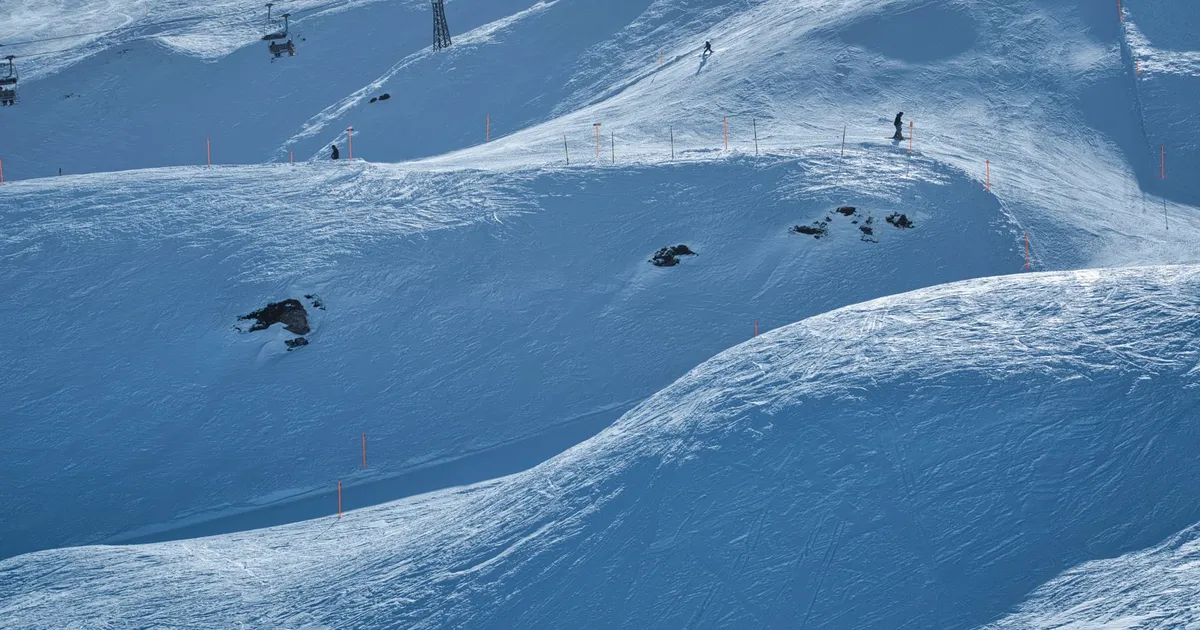
NZSki’s answer is that Doolans Basin faces south, giving it better climate resilience and a longer operating life than the terrain it already runs. That is a reasonable argument, and arguably the strongest commercial case for the expansion: if snow is getting scarcer, owning the best-protected slopes is precisely where you would want to put your money.
What DOC is actually asking
DOC is not disputing that climate change is happening. NZSki’s own filing confirms it. According to the Fast-track project record, the department’s concern is that there is insufficient information on how a 40-year concession squares with a precautionary approach, given documented impacts on snowpack.
That is a fair question. Forty years of historical data tells you what happened during a period that predates the worst of the projected decline. A concession running into the 2060s needs to be defended against the forward curve, not the rear-view mirror.
The climate test sits alongside a separate ecological fight. DOC has reportedly warned that some damage from the development cannot be reversed, with a proposal to replace an alpine tarn with a snowmaking reservoir the main flashpoint. The climate and ecological arguments reinforce each other: if snowmaking becomes more critical as natural snow declines, water storage becomes more critical too.
Speed of process is not the same as speed of approval
The timeline shows the Fast-track Approvals Act working as designed on procedure. The application was lodged on 20 May, hit an EPA information request on 4 June and was deemed complete on 8 July. That is quick by Resource Management Act standards.
But fast-track does not strip agencies of their ability to demand better evidence, and it was never going to. What it changes is where the fight happens. Instead of years of hearings, the pressure lands on the quality of the file at lodging.
That has implications well beyond skiing. Anyone planning long-dated assets on conservation land or in climate-exposed settings, whether hydro, wind, forestry, water storage or coastal tourism, should assume their climate modelling will be tested against the full life of the asset. Historical performance alone is no longer enough. Budget for current, forward-looking analysis at the outset, because it is cheaper than answering for its absence halfway through.
There is a risk on the other side too. Precaution is a legitimate principle, but if it hardens into a demand for certainty no forecaster can provide, fast-track becomes slow-track by paperwork. The panel’s job is to weigh the evidence, not to wait for a risk-free mountain.
April sets the template
A final decision from the expert panel is expected in April 2027. If the panel accepts the south-facing resilience case, it signals that a credible, site-specific climate argument can carry a multi-decade project through. If it sides with DOC’s push for more modelling, every long-horizon applicant just inherited a heavier due-diligence bill.
Either way, NZSki has the better hand than the headlines suggest. Its own data shows a mountain that has performed, and its pitch is essentially a climate adaptation play. The company now needs to prove that case in contemporary terms, and the rest of the fast-track pipeline will be watching how high that bar is set.
Join the discussion
Add useful context, ask a good question, or challenge an idea — keep it specific and respectful.