

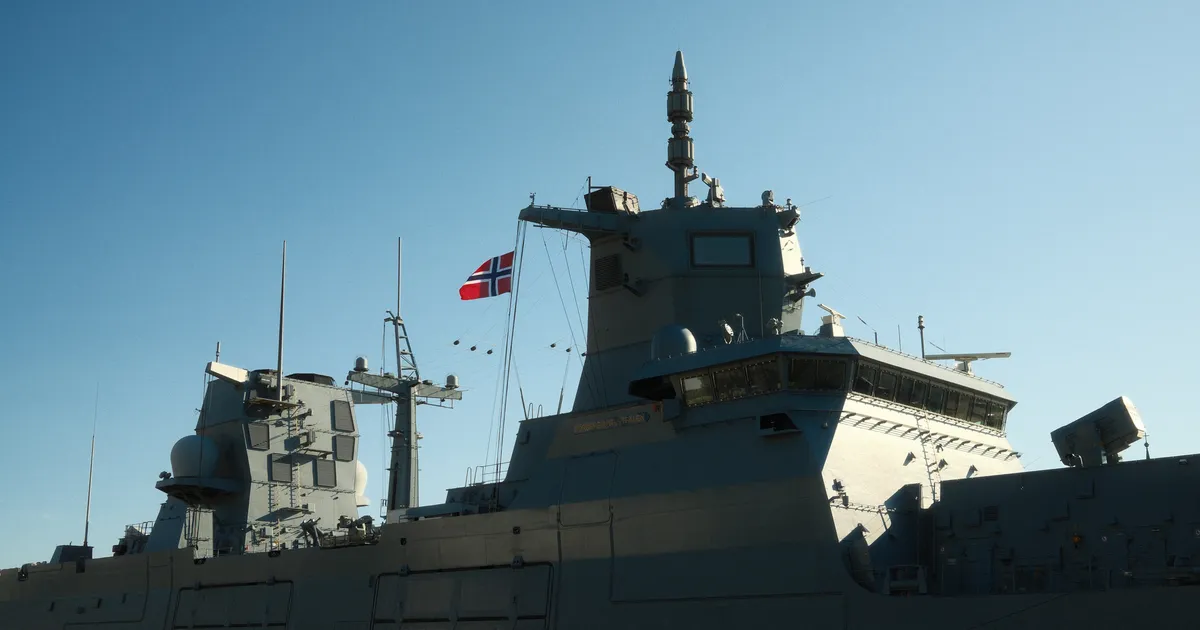
Defence barely rated a mention on the campaign trail. That changes nothing about the arithmetic. Whichever bloc emerges from coalition talks inherits HMNZS Te Kaha and Te Mana, two Anzac-class frigates running out of service life. As Dr Reuben Steff argues in Newsroom this week, this is the biggest security decision facing the country, and it cannot wait. Replacing the pair is estimated to cost $6-8 billion upfront and around $22 billion over 30 years.
The real story for business is not the strategic studies debate. It’s that this is one of the largest capital allocation decisions of the next term, and avoiding it simply makes it more expensive.
The clock was set before the votes were counted
In 2025, the Defence Capability Plan chose sustainment over immediate replacement, costing a life extension at $300-600 million to keep both ships running into the early 2030s and pencilling in replacement for 2029-2039. That bought time. It did not buy a decision.
Budget 2026 put $2.3 billion of capital and $1.2 billion of operating funding into defence and foreign affairs. In May 2026, Cabinet approved tagged contingencies for the next phase of frigate life extension, with maritime sustainment allocated $143 million capital and $72 million operating over four years. That contingency expires on 31 December 2026.
Across Budgets 2025 and 2026, defence received $5.8 billion of new investment. Officials told the incoming minister that Cabinet advice on replacement is due before the end of 2027. That lands squarely on the next government’s desk, whatever its colours.
Four parties, four answers, one bill
The same Newsroom report lays out the fault lines. NZ First would cancel replacement entirely in favour of a second amphibious ship supporting swarms of drones. National and Act want the 2025 plan delivered in full. The Greens and Te Pati Maori oppose replacement. Labour has refused to commit, with Chris Hipkins telling the NZ Herald in September that frigates “may not be the best strategic fit for New Zealand” in 20 years.
That is a legitimate question. But cancellation and deferral are not savings. They are a choice to run down a capability now and pay to rebuild it later, at a worse price and in a tighter window. National and Act’s position, whatever you think of defence spending, at least acknowledges the bill is coming either way.
The drone argument deserves scrutiny too. Sir Nick Hine, chief executive growth and marine at Babcock International, a shortlisted Type 31 bidder with an obvious commercial interest, says the Ukraine lesson is being misread. “The option of an autonomous fleet is an ‘and’, not an or,” he told Newsroom, arguing New Zealand’s vast maritime area looks nothing like the enclosed Black Sea.
Shipyards won’t hold a slot for Wellington
The choice is between upgraded Japanese Mogami-class frigates and two or three British Type 31s. Victoria University’s Centre for Strategic Studies puts a Type 31 at roughly NZ$920 million per hull and a Mogami at about NZ$765 million, before any Australia-spec upgrades.
Once a decision is made, New Zealand has to slot into existing shipyard order books competing with larger navies that are also rearming. Every year of delay pushes delivery further out. There’s a fleet-sizing problem lurking too: naval planners generally reckon on one ship deployed, one working up and one in dock, which makes two hulls a thin answer to a long-term need.
The industry prize nobody is talking about
Here is what gets lost in the security-versus-pacifism framing. The original 1990s Anzac build generated more than $800 million of work for New Zealand firms on a two-ship cost of $1.22 billion. The British High Commission says a Type 31 partnership could deliver up to 1,000 jobs and $300 million of investment in the local maritime sector.
The October 2025 Defence Industry Strategy requires international primes to submit formal NZ Industry Capability Plans. For marine engineers, fabricators, electronics suppliers and sustainment firms, that is a contractual lever worth positioning for now, not after the contract is signed.
A trading nation can’t wish the sea away
The New Zealand Initiative’s John Howard, a retired major general, notes that about 99% of New Zealand’s trade by volume moves by sea. His warning is blunt: delay or the wrong choice could leave the country “years without a warship able to operate in contested waters,” and “the window for action is very narrow, and it is closing fast.”
The coalition agreement will reveal whether the next government treats this as a procurement to be managed or a fight to be avoided. The frigates will keep ageing either way. The only question is whether New Zealand decides on its own timetable, with local industry at the table, or lets the shipyards and the calendar decide for it.
Sources
- Newsroom: Whoever takes power, NZ’s biggest security decision cannot wait (2026-11-26)
- Newsroom: NZ First would cancel $6-8b replacement frigates (2026-10-29)
- Newsroom: Drones can supplement new frigates but not replace them – Sir Nick Hine (2026-11-10)
- Ministry of Defence: Defence Capability Plan 2025 (2025)
- Ministry of Defence: August 2026 Briefing to Incoming Minister of Defence (2026-08)
- Budget 2026: Defence and Foreign Affairs (2026-05-28)
- Budget 2026 Package: Vote Defence Force – Financial Recommendations (2026-05-07)
- NZ Herald: Chris Hipkins considering pushing pause on replacing frigates, but defends Five Eyes (2026-09-22)
- Victoria University Centre for Strategic Studies: The Renewal of the Royal New Zealand Navy Fleet (2026-10-08)
- BusinessDesk: The Government’s billion-dollar frigate question
- The Post: Building a Navy fleet fit for the future (2026-09-21)
- New Zealand Initiative: Adrift – A Trading Nation, an Ageing Navy and the 2027 Frigate Decision (2026-07-14)
Join the discussion
Add useful context, ask a good question, or challenge an idea — keep it specific and respectful.