

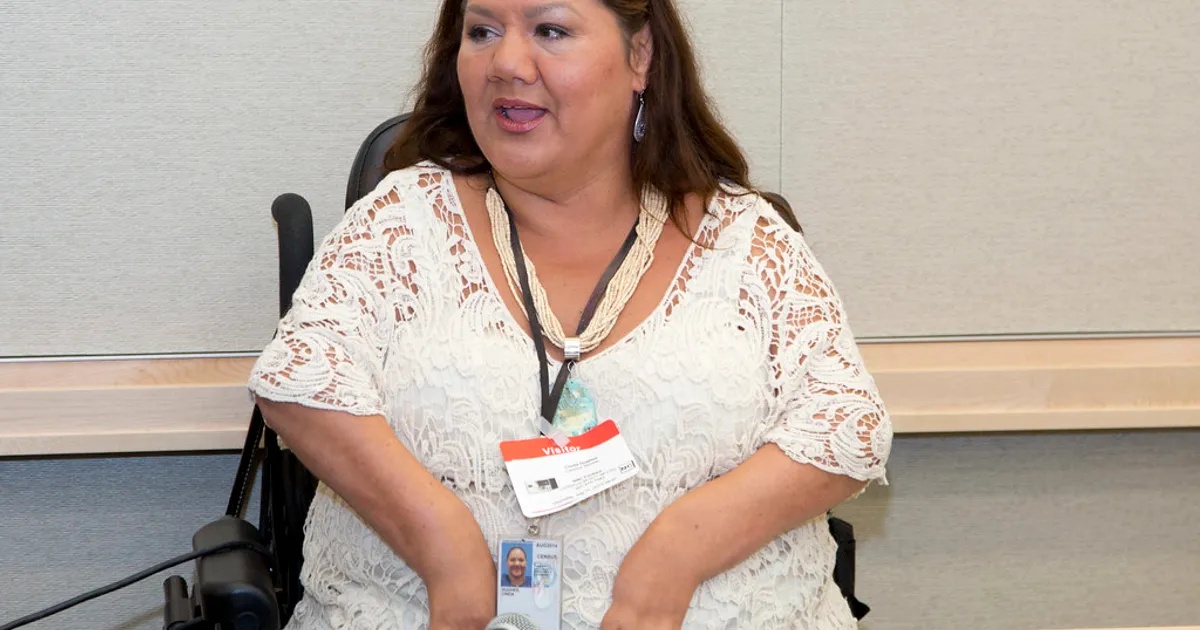
The chief victims adviser has publicly challenged the Ministry of Justice over a proposed $2 million budget for a new government website, calling the figure wildly disproportionate. When the person whose job is to speak for victims says a digital spend is out of all proportion, the ministry should listen. Any business owner signing off a $2 million web build would want a very good reason. Taxpayers deserve the same discipline.
This is not really a story about one website. It is about a public sector that keeps treating digital projects as if the money comes from nowhere.
The same $2 million, written off once already
The timing is awkward. On 2 November, RNZ reported that OIA documents showed the Government had shelved Project Whetu, a platform for at-risk victims, after already spending $2 million on it. Officials concluded there was “no practicable or sustainable way to fund, host and operate the proposed platform”.
Police Waikato District Director Rachael Douglas was blunt about what that failure means on the ground: “We cannot expect better outcomes for whanau while asking our people to work around systems that are no longer fit for purpose.”
So the justice sector has spent $2 million on a victims system that does not exist, and is now being asked to spend another $2 million on a website. The victims adviser is right to ask what victims actually get for that.
Courts digitisation, budget redacted
The pattern extends to Justice’s biggest technology bet. Te Au Reka, the courts digitisation programme, has run into delays, and the ministry refuses to reveal the extent of its cost overruns. An OIA response of almost 400 pages had every budget figure redacted, including numbers previously made public. Deputy Secretary Victoria McLaughlin says releasing budget information “would likely unreasonably prejudice the ministry’s position” in commercial negotiations.
That might be defensible for live contract talks. It is less defensible three years after the main contract was signed. Budget 2025 estimates showed Te Au Reka had $10.554 million in capital funding allocated for 2025/26 alone. The irony is that back in 2023 the programme’s procurement was recognised at the New Zealand Procurement Excellence Awards. Winning an award for signing a contract is not the same as delivering.
Wellington already showed how this goes wrong
For a sense of what a government website should cost, look at Wellington. The city council has apologised for spending over $600,000 on a website for its reopened City Library, against a typical government website range of $100,000 to $350,000. An independent review blamed an ambitious scope, a rushed “procurement in-a-day” tender that drew just two bids, and a vendor picked on a $75,000 first phase before being kept on for a much bigger job.
If $600,000 earned a public apology, $2 million deserves a forensic business case. The review’s fixes, a formal web strategy, whole-of-life cost planning and a value-for-money framework, are hardly radical. Any competent CFO would demand them.
The Government knows the problem
None of this is news to ministers. In 2025, a Cabinet paper from then-Minister for Digitising Government Judith Collins put the five-year government digital pipeline at $13 billion, much of it “unfunded, duplicative and at high risk of escalating costs”, with 15 to 30% in achievable savings. Treasury data at the time showed 59% of core government digital projects were behind schedule and 85% were rated high risk.
The diagnosis was right. The question is whether it changed behaviour. A $2 million website proposal suggests the message has not reached every ministry.
What victims could get instead
The opportunity cost is real. The ministry’s latest annual report shows it made grants to more than 7,000 victims through the Victim Assistance Scheme and processed about 100,000 legal aid applications. In January 2026, RNZ reported that victims were getting uneven access to that funding, with Dr Ruth Money, then chief victims advisor, calling it “racist, gender-biased, victim-blaming behaviour”.
Meanwhile, the ministry’s existing victims information site drew just 20,337 viewers in 2023/24. That is roughly $100 per historic visitor for a rebuild, before ongoing running costs.
Show the business case or drop it
The Auditor-General’s office has been clear that public bodies should understand their cost drivers and show spending lines up with outcomes. That is the standard every private firm lives by, and it is the standard the victims adviser is applying.
The ministry now has a choice. Publish the business case, benchmark it against the $100,000 to $350,000 norm, and justify every dollar above it. Or scale the project back. What it cannot do is shrug off its own adviser while Project Whetu’s $2 million sits in the write-off column. Business owners who watch every line of their own budgets will be watching this one too.
Sources
- Stuff: Chief victims advisor blasts $2m budget for new government website (2026-11-19)
- RNZ: Senior police staffer calls system for at-risk victims ‘outdated’ (2026-11-02)
- LawNews: Budget blow-outs and launch delays, Ministry of Justice officials refuse to reveal cost overruns for embattled courts digitisation project (2026-09-30)
- Treasury: Vote Justice Estimates of Appropriations 2025/26 (2025-05)
- Ministry of Justice: Annual Report 2023/24 (2024)
- RNZ: Wellington City Council apologises for library website overspend (2026-09-14)
- DIA: Driving down the cost of digital in government (proactive release) (2025-09)
- The Post: Billions on the line in Judith Collins’ digital government reboot (2025-10-10)
- Ministry of Justice: 2025/26 Annual Report published (2026-10-19)
- RNZ: Victims get uneven access to funding due to appearance, report suggests (2026-01-25)
Join the discussion
Add useful context, ask a good question, or challenge an idea — keep it specific and respectful.