

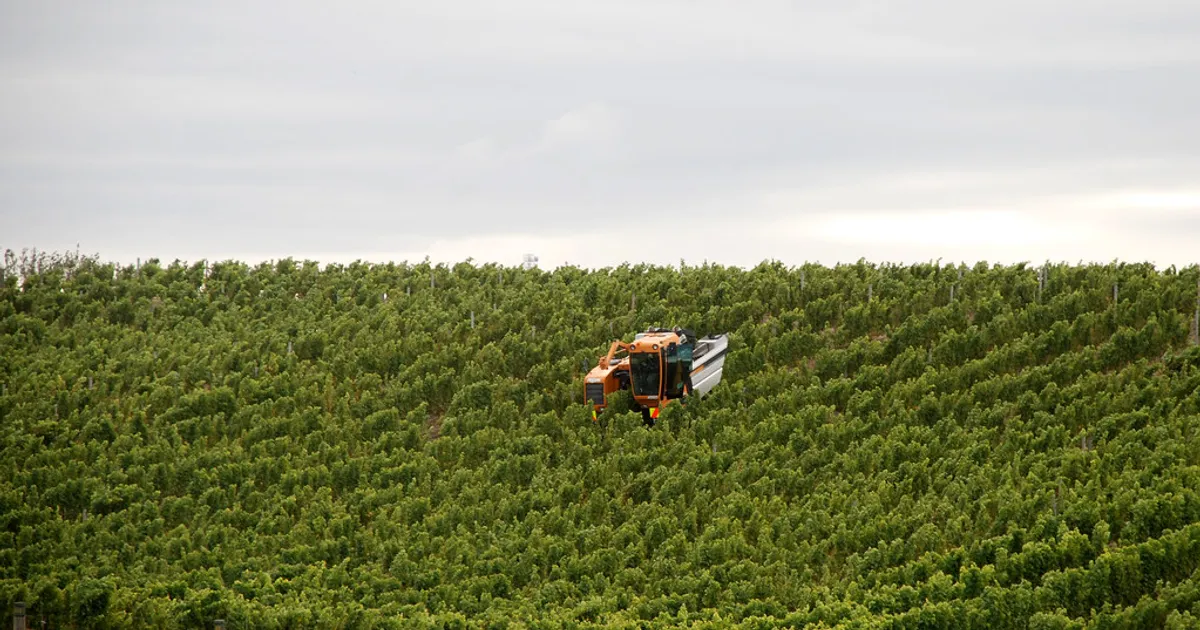
Every vintage, Marlborough produces a mountain of grape skins, seeds and stalks that someone has to pay to get rid of. A new $2.6 million black soldier fly pilot in Blenheim is testing a different idea: that the waste is worth something. If insect larvae can turn grape marc and seafood byproducts into protein for fish and pet food, processors stop paying to dispose of a liability and start supplying an input.
That is the real story here. Not novelty insects, but whether a cost line can be flipped.
The bill already exists
The case for the pilot rests on costs that are already being paid. Organic waste in Marlborough’s landfill landed the district council an Emissions Trading Scheme liability of $1.4 million in the past year alone. That is ratepayer money spent on gas from rotting organics, much of it from the region’s own primary industries.
The wineries are under pressure too. The council’s own 2025 vintage monitoring report found only 19 of 39 monitored wineries were fully compliant with their wastewater and marc discharge rules, while 17, or 43 percent, were outright non-compliant. Compliance went backwards by 13.64 percent on the 2024 vintage. The same report recorded 11 wineries sending grape marc out of the region entirely for stock feed.
That last figure is the tell. When businesses are paying freight to move low-value waste to another region, the local market has failed to offer a cheaper option. Any operator that can undercut the truck has a customer base waiting.
Two containers and a big ambition
The pilot is led by the Marlborough Research Centre with support from the Bioeconomy Science Institute, with Christchurch company Kōrure running a fly nursery and a processing unit out of shipping containers alongside Ecogas’s anaerobic digestion plant. The pitch, as trade coverage puts it, is a fly-borne factory turning grape waste into pet-food protein, with mussel and salmon farm byproducts blended in.
That blending matters more than it sounds. Marc is seasonal and its composition shifts through the year, so a commercial operation needs steady secondary feedstocks to keep larvae fed consistently. Marlborough happens to have them, which is why the region suits this better than most.
The science groundwork is not new. Back in 2023, researchers working with the Marlborough Research Centre fed mealworms on grape marc and found the larvae had protein and fatty-acid profiles suitable as a partial fishmeal replacement. A July 2026 Bioresource Processing Alliance summary of that work confirms residue testing found all detected agricultural compounds in the larvae and frass sat below MPI’s allowable limits. Different insect, but it clears a food-safety hurdle any buyer would ask about first. The same year, Veolia, MPI and Massey researchers piloted black soldier fly conversion of brewery, orchard and winery waste in Palmerston North.
Buyers are the real test
None of this matters without someone writing a purchase order. In August 2025, Marlborough Research Centre’s John Patterson said animal food, pet food and fish feed companies, both national and international, were interested in joining trials. He argued then that pairing insect bioconversion with anaerobic digestion gave the region its best shot at upcycling waste into value-add products, and that such a plant would be a first in Aotearoa.
The import-substitution angle is genuine. New Zealand’s aquaculture and pet food makers lean heavily on imported protein, exposing them to global commodity swings and freight costs. A domestic source, even a small one, is a hedge. But interest is not demand. The pilot’s job over three years is to prove price, consistency and volume, not just that larvae eat grape skins.
The policy variable nobody controls
Marlborough District Council’s solid waste manager Mark Lucas was candid about the one risk outside the pilot’s hands: “We don’t know what legislation will change with the new government when it’s decided, but with the current legislation that we have at the moment, we’re confident that it is going to be commercially viable.”
That is an honest caveat. Much of the economics leans on landfill carrying a carbon cost and on local rules such as the council’s waste minimisation bylaw, in force since September 2025. If an incoming government softens ETS treatment of waste or levies, the gap between dumping and diverting narrows. A venture that only works because regulation makes the alternative expensive is fragile. One that beats the truck and the tip on price alone is a business.
That is the bar worth holding this pilot to. Marlborough’s wineries and seafood processors already have a quantified, worsening disposal problem. If Kōrure and its partners can show, by the end of three years, that larvae turn that problem into feed cheaper than current options, a permanent Blenheim plant becomes a straightforward investment case. If they cannot, it stays a science project. Either way, the region will finally know what its waste is worth.
Sources
- RNZ: Could insects help turn Marlborough’s primary industry waste into animal feed? (2026-11-19)
- Processor Press: Marlborough’s New Fly-Borne Factory: Turning Grape Waste into Pet-Food Protein (2026-11-19)
- Marlborough Research Centre: Adding value to Marlborough waste streams using insect bioconversion (2023-06-27)
- Bioresource Processing Alliance: Executive Summary – Adding value to Marlborough waste streams (2026-07-16)
- RNZ Morning Report: Pilot program using flies to make high-protein animal feed (2023-09-06)
- Scoop: Food Waste Plant Proposed For Blenheim Landfill (2025-08-22)
Join the discussion
Add useful context, ask a good question, or challenge an idea — keep it specific and respectful.