

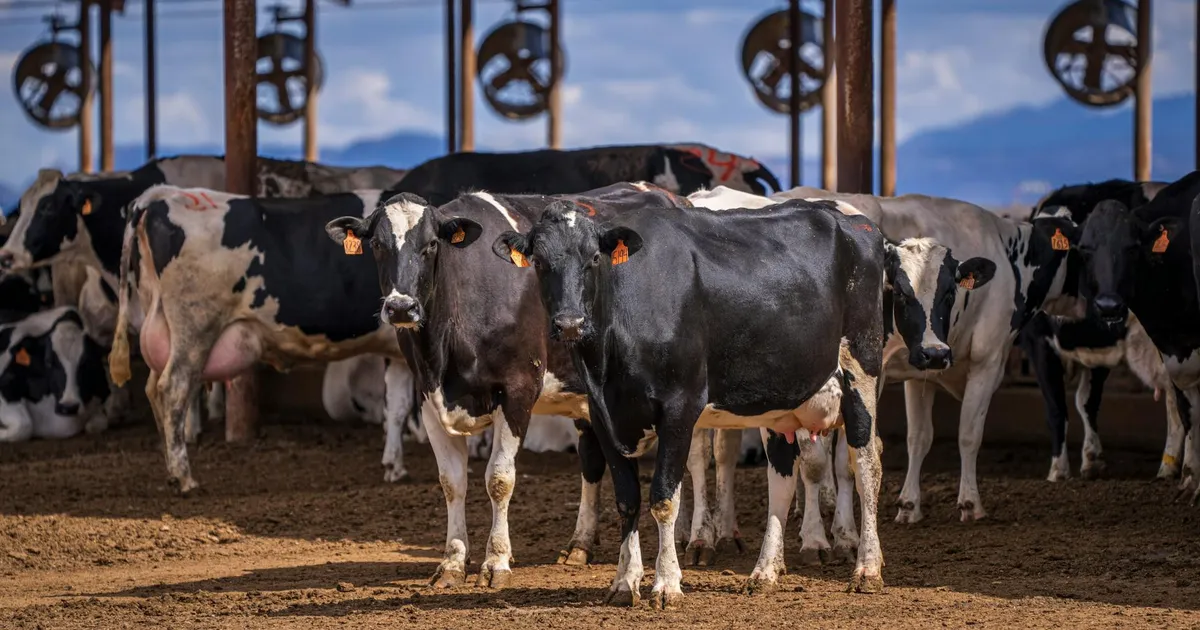
The government’s decision to halve New Zealand’s biogenic methane reduction target was sold as pragmatism for a sector worth almost $60 billion in annual export revenue. The framing worked. What did not feature in the public pitch was a figure buried in official advice: households would pay at least $270 more per year in higher energy and fuel costs as the emissions reduction burden shifted from farms to everyone else.
Ministers knew this before they announced anything. The documents say so plainly.
Officials said no, ministers said yes
The regulatory impact statement prepared by the Ministry for Primary Industries and the Ministry for the Environment recommended a 24% methane reduction target by 2050, not the 14-24% range the government adopted. Officials found the lower target’s primary beneficiary was the farming sector, with “negligible” benefit to overall economic growth.
The government went lower anyway, and ruled out on-farm emissions pricing by 2030. Agriculture Minister Todd McClay called it a “practical target”. Federated Farmers president Wayne Langford said farmers had been “bogged down in completely unscientific, unaffordable and unrealistic climate policy for far too long”.
That political case is not trivial. The MPI’s own modelling shows a mid-range pricing scenario would cut beef production by 10.5% and lamb and wool by 9%. The regulatory impact statement estimated the Climate Change Commission’s recommended targets would shave $12.4 billion off GDP by 2050. Those are real numbers for real communities.
But the question was never farmer costs versus no costs. It was farmer costs versus everyone else’s costs.
The gap that someone has to fill
New Zealand’s emissions budgets are legally binding under the Climate Change Response Act. Exempt agriculture from pricing and the remaining abatement has to come from somewhere. The NZ Emissions Trading Scheme is the default mechanism, and it covers energy, transport and industrial emitters.
The Cabinet briefing BRF-6320 quantifies the hole. Removing agricultural emissions pricing creates a 10.6 million tonne CO2-equivalent shortfall in the third emissions budget period (2031-35), on top of an existing 9.2 million tonne gap. The market-led technology measures the government is banking on are estimated to deliver 3.8-12.5 million tonnes of abatement over that period, with officials considering the lower end more likely.
That leaves a gap measured in tens of millions of tonnes. It gets closed through higher ETS prices, offshore credit purchases, or weaker budgets. All three options have costs, and all three land on businesses and households rather than farms.
The ERP2 technical annex shows current projections sit only 1.9 million tonnes below the second emissions budget of 305 million tonnes, a thin buffer that leaves little room for the additional pressure the third budget will bring.
Only 14% is legally binding
The 14-24% target range sounds like a compromise. It is not. As Newsroom reported, officials made clear that only the 14% lower bound is legally binding. The 24% upper end is aspirational. For any business modelling compliance costs, trade exposure or supply chain commitments, the operative number is 14%.
Officials warned the 14% target could be seen as “inconsistent” with New Zealand’s Paris Agreement obligations. The January 2026 ERP2 addendum confirmed that without pricing, only a 10% biogenic methane reduction by 2050 is likely, versus 25% with pricing in place.
Exporters carry a different kind of risk
The regulatory impact statement flagged “implications for our obligations under trade agreements”, specifically the UK and EU free trade agreements, both of which contain sustainability provisions. This is not hypothetical. The EU is New Zealand’s third-largest export market.
Fonterra already receives $50 million annually from Nestle and Mars through emissions incentive schemes. Global buyers are pricing emissions performance into supply chain decisions. A government that weakens its own targets sends a signal to those buyers, and it is not the signal dairy and meat exporters need.
Adrian Macey and Dave Frame argued in BusinessDesk that the methane science debate reflects genuine disagreement, not government bad faith. That is a fair point on the science. But the cost transfer is not a scientific dispute. It is an accounting reality written into Cabinet documents the government preferred to keep quiet.
What happens next matters more than the announcement
The political battle over methane targets has been fought and won by the government, for now. The fiscal and commercial consequences have not yet arrived. When ETS prices rise to fill the gap agriculture left behind, or when an EU trade partner asks awkward questions about New Zealand’s emissions trajectory, the $270 figure will look like the optimistic end of the range. The documents were clear. The announcement was not. That gap is the story.
Sources
- Newsroom: Govt warned new methane target aligned with ‘catastrophic’ warming (2025-12-04)
- RNZ: Government lowers methane target, rules out methane taxes
- RNZ: Officials recommended against lower target for methane emissions
- Cabinet Paper: Updating the 2050 Domestic Climate Change Emissions Target
- Briefing BRF-6320: Further 2050 target advice – policy impacts
- ERP2 Technical Annex
- ERP2 January 2026 Amendment Addendum
- MPI: Impacts of Emissions Reduction Plan on the primary sector
- BusinessDesk: The methane debate – what the open letter got wrong