

The government has outlined worst-case oil shock scenarios that expose how vulnerable New Zealand’s economy remains to global energy disruptions, raising fresh questions about long-term resilience and policy direction.
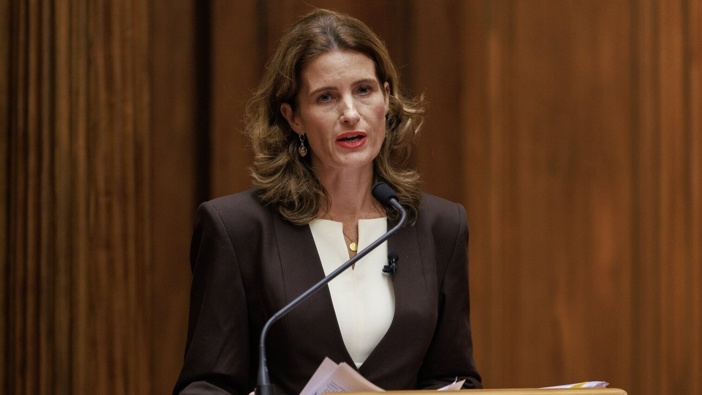
Nicola Willis said the Treasury had opted to revisit its economic forecasts ahead of next month’s Budget, citing ongoing volatility in oil prices since the conflict began.
“It’s important to note that these scenarios are about what might happen. They are not forecasts of what the Treasury thinks will happen,” Willis said.
“What we are presenting to you is a picture of an economy that has been disrupted but not derailed and will continue to grow this year.”
Treasury outlined scenarios to assess the potential economic impact of ongoing disruptions to oil shipments through the Strait of Hormuz.
There’s still a fragile ceasefire holding between the US, Israel and Iran, but the key shipping route remains mostly closed, leaving global energy markets facing disruptions that could drag on for a while.
The estimates vary widely, from a brief flare-up pushing oil to about US$110 a barrel to a worst-case scenario where a prolonged disruption sends prices as high as US$180.
With Brent crude sitting around US$102 today, Willis said the more moderate outcome currently looks the most likely.
In that scenario, inflation would climb to about 3.9%, economic growth would ease back to around 2%, and unemployment would rise to roughly 5.3%.
But in a more severe case, where oil prices nearly double from where they are now, inflation could surge to 7.4%, with unemployment increasing to 6.6% by mid-2027.
Willis told reporters she sees that worst-case scenario as about as likely as anyone would’ve been to predict, at the start of the year, that the US and Israel would end up at war with Iran.
“That’s a bit like saying to your readers, the unemployment [rate] could go this high if there were an outbreak of foot and mouth. It’s not looking likely right now,” she said.
“It’s very important that we do give that context to New Zealanders right now, and that we don’t present worse scenarios than are likely.”
Willis said Treasury’s main message was that the recovery has been “delayed, but not derailed,” noting that futures markets are already pointing to oil dropping below US$80 by the end of the year.
“It seems highly unlikely that the price of oil would be almost doubling to US$180 this year. That’s what that [worst-case] scenario is based on.”
“Based on the information I’ve gathered from trading partners, from global economic experts, but also what the futures market is telling us, that seems extremely unlikely.”
“But, you know, at the beginning of the year, if you’d said to me, ‘we’re going to have a massive conflict in the Middle East, and New Zealanders are going to see the price of diesel double at the pump,’ I would have said that was pretty unlikely.”
Willis said the government has had to adjust Budget 2026 to factor in costs that weren’t on the radar earlier, including an extra $50 a week for low-to-middle-income working families and more support for home and care workers.
She said the additional spending is still being managed within the existing $2.4 billion operating allowance.
The cabinet is expected to lock in its final budget 2026 decisions over the next few weeks.