

Former Auckland tenant Han Jiang has been ordered to pay her landlord $100,000, the most the Tenancy Tribunal is legally allowed to award, after she ran a large-scale methamphetamine lab out of the rental. On paper it is a landlord win. In practice it is a lesson in how far real losses can outrun the system meant to cover them.
Police raided the property in May 2024 and found an active lab, toluene, caustic soda, meth crystals and more than $124,000 in cash. Jiang was sentenced to three years in prison and did not turn up to the tribunal hearing.
The bill nobody can fully collect
The landlord’s documented losses came to $163,374.55, made up of $104,254.45 in direct costs and $59,120.10 in lost rent. Once the tribunal awarded the full rent loss, there was only $40,879.90 of headroom left for a $60,900.38 remedial work claim. The rest simply fell off the edge.
Adjudicator Rex Woodhouse was blunt about it. “We recognise that the landlord seeks further orders. However, given … we have reached the ceiling of our jurisdiction, we decline to make further orders,” he said, according to the Herald’s report, which also recorded a contamination reading of 3360 micrograms per 100sq cm in one room, the highest either the tribunal or the testing contractor had seen.
That is roughly $63,000 unrecovered, and that is before anyone asks how a prisoner pays a six-figure judgment. A tribunal order against someone serving three years is a ceiling on recovery, not a cheque in the mail.
Clean is not the same as sellable
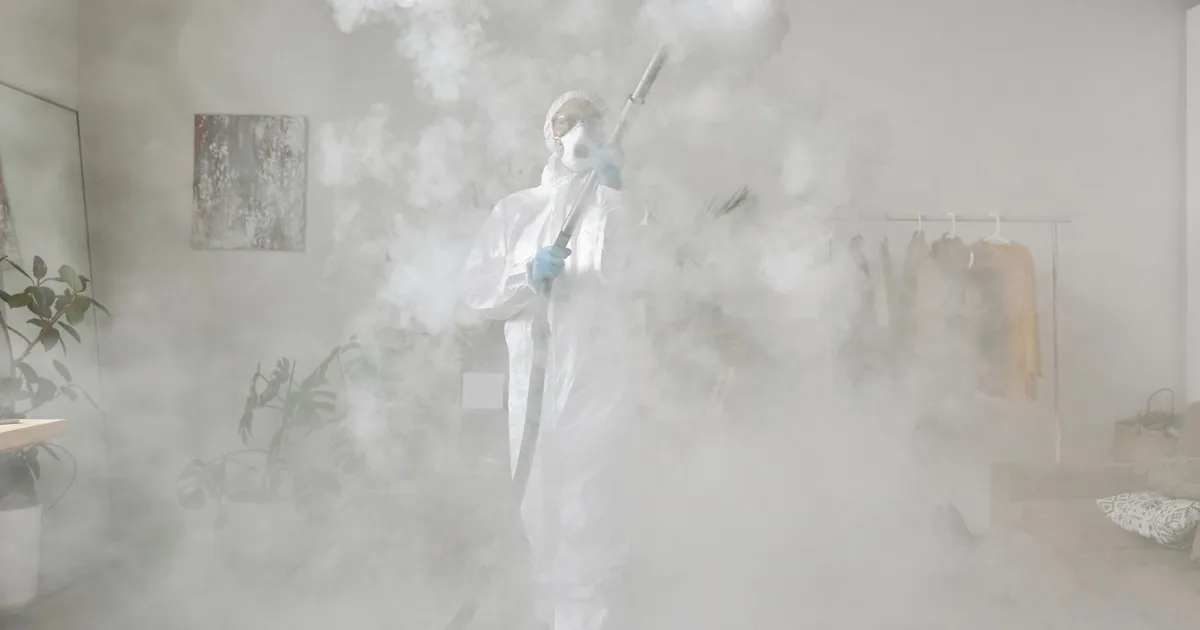
The physical damage was only half the problem. The house needed five separate decontaminations across 2024 and 2025 as recontamination kept turning up, plus a full repaint, new benchtop and appliances, new heat pumps, ventilation, carpets, curtains and blinds. Even after the refurbishment, the property manager struggled to relet a house locals knew as the “meth house”. New tenants did not arrive until January 2025, about eight months after the raid. An attempt to sell attracted weak interest for the same reason.
Stigma does not appear on a tribunal claim form, but it shows up in vacancy and resale price. That is the part of property risk most investors still model as zero.
A pattern, not a freak event
Jiang’s case is the extreme end of a long run of decisions that leave landlords short. In June 2025 the Herald reported an Auckland case where testing and decontamination cost more than $16,000 but the tenant paid only $3,270, because depreciation rules gave many chattels no residual value. The landlord’s insurance capped claims at $15,000. In February 2025 another Auckland couple won $29,000 after their Massey rental was turned into a lab.
The state treats this as a standing cost line. In a 2023 OIA response, Kainga Ora budgeted $3.8m for reinstatement in FY2025-26 alone, on top of testing and decontamination. Private landlords rarely budget for it at all.
New rules fix the clock, not the cap
To its credit, the government has finally delivered certainty on thresholds. The 2026 regulations set a maximum acceptable level of 15µg/100cm² and an uninhabitable level of 30µg/100cm², and since April landlords can give seven days’ notice to end a tenancy above that line. Faster exits mean contamination compounds for less time. That is a sensible, overdue reform.
The industry backed it. In 2025, REINZ chief executive Lizzy Ryley said the rules would deliver “much greater confidence and certainty” for tenants, landlords and property managers.
But the reform does nothing about compensation. Manufacturing cases like Jiang’s still fall under the far stricter 1.5µg standard in NZS 8510:2017, which makes lab clean-ups vastly more expensive, while the tribunal’s $100,000 ceiling stays put.
What landlords should do now
The practical takeaway for anyone holding rental property, or lending against it, is that the legal system will not make you whole after a serious contamination event. Treat the tribunal as a partial backstop, not a business plan.
That means harder tenant screening, routine testing between tenancies, inspections that actually look for warning signs, and a close read of insurance wording. A policy that tops out at $15,000 is not cover for a lab; it is a rounding error against a $160,000 loss.
Parliament could also usefully revisit a tribunal cap that now looks badly out of step with the cost of a full refurbishment and eight months of lost rent. Until it does, the $63,000 this landlord will never see is the most honest number in the case.
Sources
- RNZ: Han Jiang ordered to pay $100,000 after meth lab contaminated Auckland rental (2026-10-09)
- NZ Herald: Han Jiang ordered to pay $100,000 after meth lab contaminated Auckland rental (2026-10-08)
- NZ Herald: Auckland tenant admits causing meth contamination but doesn’t have to pay for items thrown away (2025-06-28)
- NZ Herald: Auckland landlords whose home was turned into a meth lab and raided by police win $29k compensation (2025-02-08)
- Kainga Ora: Managing methamphetamine contamination – budget and statistics (OIA) (2023-11-17)
- HUD: Regulation of methamphetamine contamination in rental housing (2026-04-16)
Join the discussion
Add useful context, ask a good question, or challenge an idea — keep it specific and respectful.