

Environment Court Judge John Hassan has said out loud what councils, ratepayers and compliant businesses have known for years. Speaking in a personal capacity at the Environmental Compliance Conference in Christchurch, he criticised enforcement under the Resource Management Act for not consistently delivering the polluter-pays principle in practice. He hopes the replacement regime will make polluters more accountable and give victims a bigger role.
That will mostly be read as an environmental story. It is just as much a competition story. When a fine or remediation order can’t be collected, the operator who cut corners keeps the saving. The business that paid for consents, proper disposal and insurance is left competing against them with a higher cost base.
More enforcement, same leaks
Councils are not sitting on their hands. In the 2024/25 year, regional and unitary councils recorded 7,597 enforcement actions and $3.1 million in court-imposed fines, with enforcement volumes up 16% and corporates paying just over $2 million of the fines. That compared with $2.6 million in fines in 2023/24.
Behaviour has not kept pace. Across more than 76,000 monitored consents, regional councils found full compliance in only 73% of inspections, and unitary councils just 56%. More notices and bigger fines are not shifting the worst offenders. For businesses already playing by the rules, the deterrent was never the issue. For the ones that aren’t, the penalty is a line item.
A court order is not the money
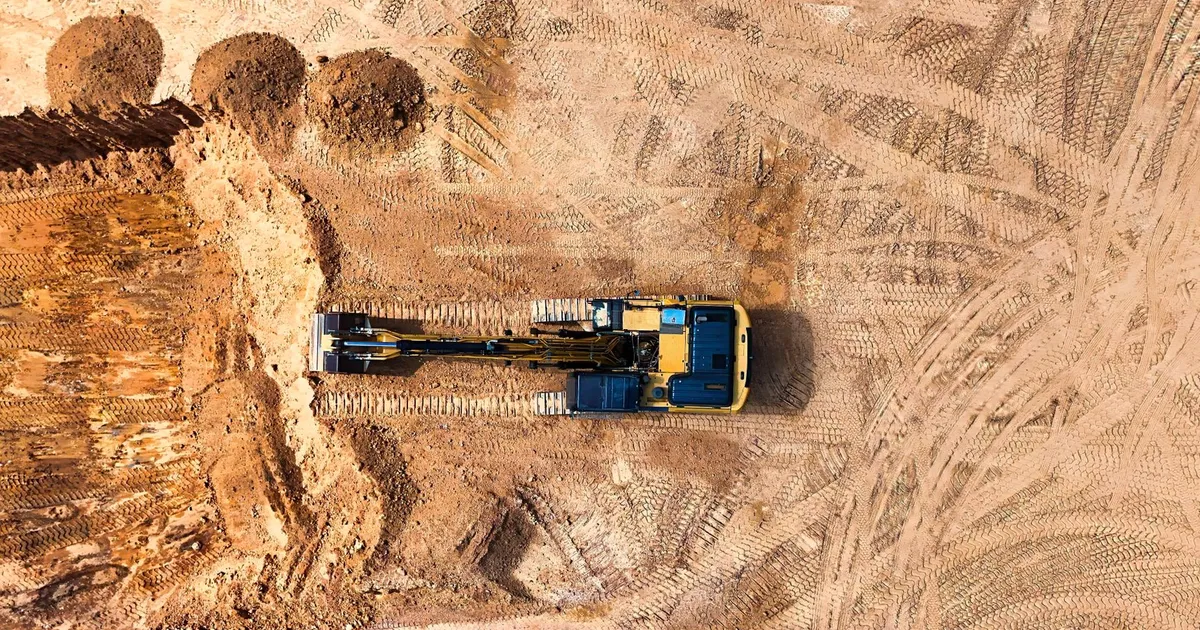
The Eco Earth case shows the gap in sharp relief. In May 2026, the Environment Court ordered Eco Earth and its sole director Gareth Williams to pay $697,359.96, or 75% of a $929,813 urgent remediation bill, for an illegal soil stockpile in East Tamaki that reached at least 15 metres and threatened neighbours including a Mobil service station. Judge Melinda Dickey found Williams was “the company’s mind and hands”. But the company is in liquidation and Williams told the court he had no money and was on legal aid. Financial means are irrelevant to liability. They are entirely relevant to whether anyone ever gets paid.
Then there are repeat offenders. In September, developer David Sax and his company Frankel Consultants were ordered to pay $185,000 for unconsented earthworks on an asbestos-contaminated former landfill near the Māngere Inlet, a site already subject to earlier enforcement and prosecution. Josephine Bartley, chair of Auckland Council’s Regulatory and Safety Committee, put it bluntly: “This is not a case of a developer misunderstanding the rules… formal enforcement notices were issued. Yet the offending continued.”
Nobody can claim this is news
In 2018, RNZ reported that Northland ratepayers lost at least $50,000 prosecuting Waiotira farmers fined $225,000 over dairy effluent in the Mangonui River, because their companies couldn’t pay. Dennis Wright, then the regional council’s farm monitoring manager, said at the time: “There’s certainly no deterrent … if they can be convicted and fined and don’t have to pay the fine.”
A year earlier, Marie Brown’s 2017 evaluation of environmental enforcement found agencies prioritised compliance so differently that they achieved different outcomes, and called for more resourcing and less political influence. Nearly a decade on, the diagnosis holds.
The Crown has been caught too. Taxpayers carried the cost of decommissioning the Tui oil field after its operator went bust in 2019. Parliament responded with trailing liability for previous owners, though Greenpeace claims later changes gave ministers discretion to waive it. That is an advocacy group’s reading, but the lesson stands. Fixes that rely on ministerial goodwill can be unpicked.
Bonds before breaches
The opportunity is the RMA rewrite. In April 2026, Te Uru Kahika noted the government had signalled further compliance and enforcement changes through the Natural Environment and Planning Bills. Officials already know the weak spots. A 2025 regulatory impact statement on waste law found Auckland spends about $2.6 million a year cleaning up illegal dumping and conceded cost-recovery provisions were insufficient.
The business case for fixing it is not a green one. In 2025, BusinessNZ argued that “individuals and companies should bear the full costs of their behaviour”, because shifting costs to third parties distorts markets. It also warned against regulators pursuing minor issues “for the purpose of raising revenue”. Both points are right, and they point to the same answer. Targeted tools, not a blanket crackdown.
That means upfront remediation bonds for high-risk activities like bulk earthworks and contaminated land, personal liability for directors who are demonstrably the controlling mind, and better priority for clean-up costs when a polluter heads into liquidation. None of that burdens compliant operators. It simply stops the phoenix-company model from being the cheapest way to do business.
Judge Hassan has handed the drafters a clear test. If the new regime produces another year of rising enforcement statistics while orders like Eco Earth’s go unpaid, it will have failed the honest businesses just as surely as the environment.
Sources
- Newsroom: Judge criticises law for not always making polluters pay (2026-11-29)
- Otago Regional Council: Compliance Monitoring and Enforcement Metrics 2024/2025 (2025-10)
- The Post: Auckland’s million-dollar soil mountain, court rules on who must pay (2026-05-25)
- RNZ: Auckland property developer fined for unconsented earthworks at former landfill (2026-09-30)
- RNZ: Council fails to recover $50,000 in ‘dirty dairy’ case (2018-05-16)
- Policy Quarterly: Last line of defence, a summary of an evaluation of environmental enforcement in New Zealand (2017-05-01)
- Greenpeace Aotearoa: How oil companies made you pay $300m to clean up their oil field mess
- Te Uru Kahika: From education to enforcement, report shows councils addressing environmental harm (2026-04-02)
- Regulation.govt.nz: Interim Regulatory Impact Statement, Amendment of Waste Legislation 2025 (2025)
- BusinessNZ: Submission on Proposed Amendments to Waste Legislation (2025-05)
Join the discussion
Add useful context, ask a good question, or challenge an idea — keep it specific and respectful.