

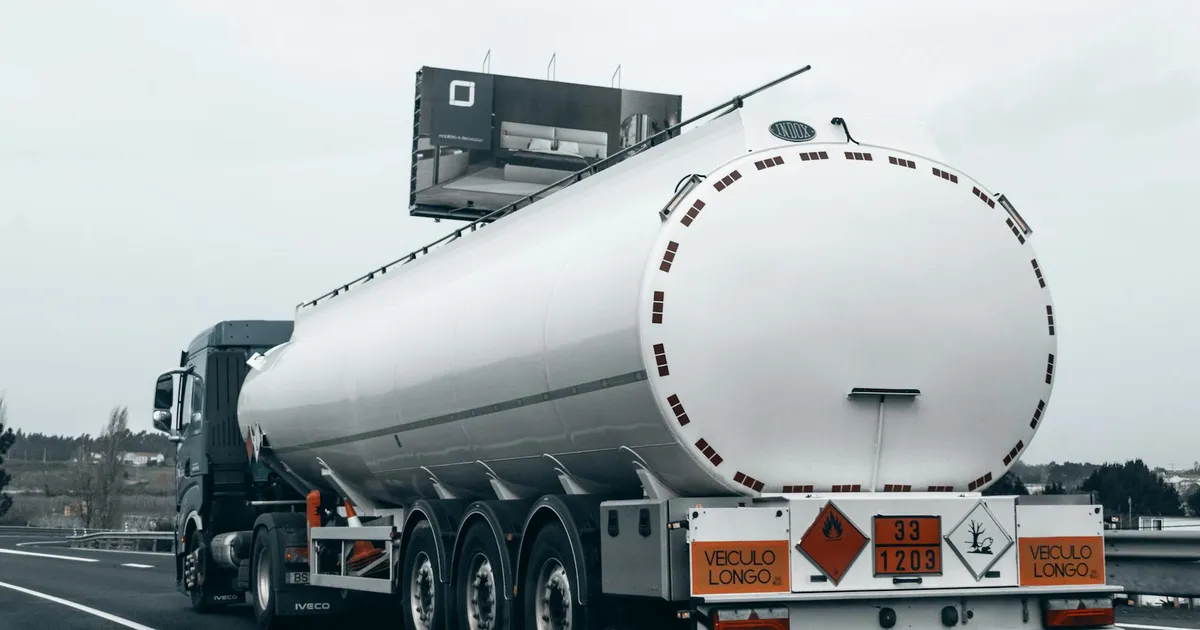
The truck that nobody noticed
While the hydrogen economy has been stuck in perpetual pilot-programme limbo globally, New Zealand has been running an actual experiment. A Hyundai Xcient hydrogen fuel cell truck, operated by NZ Post, has completed close to 200,000km of commercial freight work over roughly two years. In its first 100,000km alone, it saved over 40,000 litres of diesel and cut CO2 emissions by more than 110 tonnes. No technical failures. No range anxiety. No refuelling dramas.
That is not a concept car at a trade show. It is a working truck doing the job diesel does, without diesel.
In March 2025, TR Group launched two new hydrogen trucks, a Hyundai rigid based at Hampton Downs and a Christchurch-built Global Bus Ventures tractor unit, as the first of 20 on order under a government-backed programme with Hiringa Energy. TR Group general manager Brendan King said the NZ Post truck had “performed exceptionally well”.
Why batteries don’t work here
Heavy transport accounts for about 28% of all transport emissions but just 4% of the vehicle fleet. It is the highest-leverage decarbonisation target in the sector. Battery electric trucks work fine for urban delivery runs, but long-haul heavy freight demands range and payload that current battery technology penalises. Hydrogen offers a 15-minute refuel time and diesel-equivalent range, keeping trucks earning rather than charging.
Ryan McDonald, Hiringa Energy’s head of new business, said in March 2025 that “most transport operators we’re talking to have plans to acquire at least one hydrogen truck this year”. Corporate customers are increasingly making procurement decisions based on emissions profiles, he added, meaning operators without a decarbonisation plan risk losing contracts.
The price gap is narrowing from both sides
The honest numbers are not yet flattering. Hydrogen trucks cost up to $900,000 each, and green hydrogen currently carries around a 15% premium over diesel. That premium looks uncomfortable until you factor in what is happening on the diesel side.
Retail diesel fell 19% to 183.70 cents per litre in Q4 2024, temporarily easing pressure. But MBIE’s April 2026 fuel monitoring shows renewed volatility driven by Middle East developments. More importantly, the Emissions Trading Scheme will add a 12 cent per litre diesel surcharge in 2027, with annual increments after that. This is not a forecast. It is legislated.
For operators who want a cheaper entry point, HW Richardson’s dual-fuel conversion offers a $150,000 hydrogen kit plus a $20,000 annual lease, cutting diesel consumption by roughly 30%. A truck running 380km per day can eliminate around 70 tonnes of carbon annually.
Five stations and a chicken-and-egg problem
The refuelling network is real but thin. By mid-2025, five hydrogen stations were operational or opening across Auckland, Hamilton, Palmerston North, Tauranga, and Invercargill. The $25 million network covers 95% of North Island heavy freight routes. The South Island remains largely uncovered, with full infrastructure roughly targeted for 2027.
Government money has been significant but structured carefully. A $16 million loan to Hiringa converts partly to a grant only once all four original stations are built. EECA’s Low Emissions Heavy Vehicle Fund covers up to 25% of purchase price for zero-emissions trucks. But the current government has already eliminated the $100 million Labour-era fund for green hydrogen consumption rebates. Open-ended subsidies are off the table.
The sceptics have a point, but it’s the wrong one
University of Auckland research published in March 2026 argued that green hydrogen will play a limited role in cutting industrial emissions before 2050, with direct electrification doing most of the work. Dr Selena Sheng noted hydrogen only becomes attractive when “carbon prices are higher, renewable electricity is cheaper, and hydrogen technology costs decline.” MBIE’s own 2023 modelling projected the levelised cost of green hydrogen at US$3.06-4.76 per kilogram by 2035.
Fair enough for industrial heat and manufacturing. But heavy freight is the one application where hydrogen’s operational characteristics genuinely outperform batteries. The efficiency losses in production, storage and transport are real, but so is the fact that a battery truck sitting on a charger for hours is not earning revenue.
What freight operators should actually be modelling
The decision for a fleet operator in 2026 is not whether hydrogen is perfect. It is whether the total cost of diesel ownership, including the guaranteed ETS escalation, fuel volatility, and tightening corporate procurement standards, makes the 15% hydrogen premium look less like a penalty and more like an insurance policy. Twenty trucks is not a revolution. But 200,000km of uninterrupted commercial service is the kind of evidence that spreadsheets respond to.
Sources
- Hydrogen truck launch part of efforts to cut heavy transport emissions (2025-03-27)
- Truck drivers get first taste of driving zero emissions hydrogen trucks (2025-03-27)
- Green hydrogen fuelling has arrived in the North Island for heavy transport
- Officials working to get hydrogen trucks on the road ‘as soon as possible’ (2024-07-26)
- Hydrogen haulers: how heavy transport is lowering its emissions
- For transport leaders – NZ Trucking (2025-03)
- When will the price be right for green hydrogen? (2026-03-03)
- Hydrogen Gains Momentum in New Zealand’s Heavy Transport Sector