

Seven months of not saying the obvious
When Gore’s tap water hit 11.4mg/L of nitrate-nitrogen on July 18, 2025, just over the 11.3mg/L drinking water limit, the town’s water was declared undrinkable for four days. A month later, Environment Southland was still describing the investigation as complex and ongoing. By September 2025, Gore District Council’s general manager of critical services Jason Domingan was conceding a definitive answer was unlikely, suggesting the spike reflected ‘a longer lag… by, potentially, changes in land use over a period of time.’
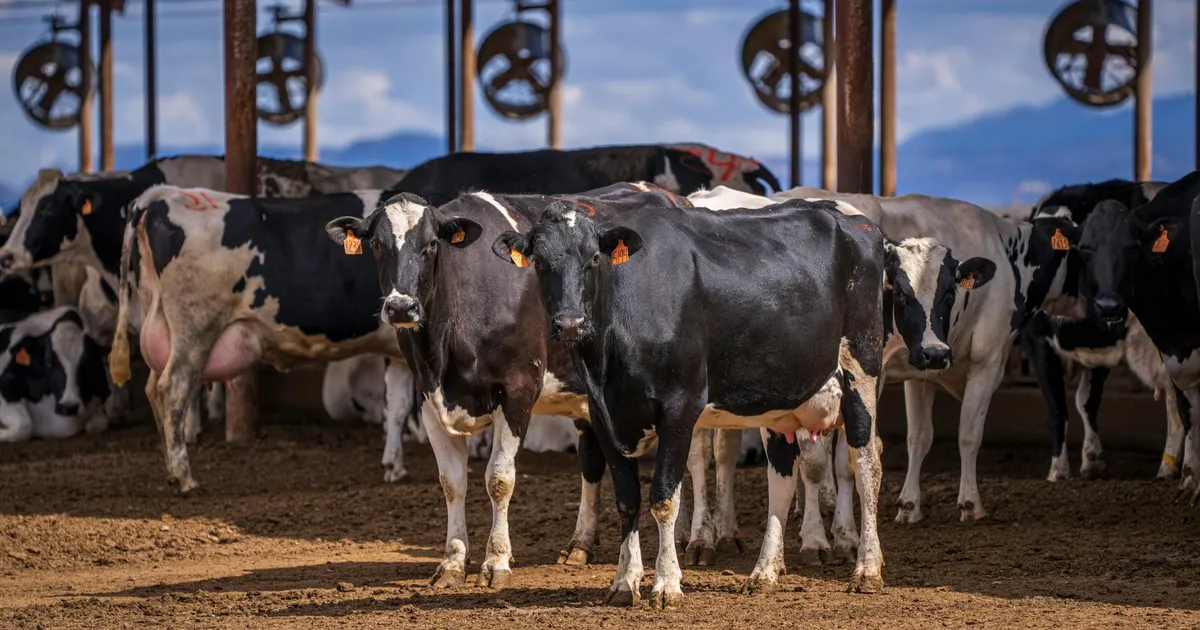
Then in February 2026, Environment Southland’s own commissioned report said something quite specific: intensive agriculture and winter forage crop grazing within the capture zone of Gore’s Coopers Wells was a ‘plausible and avoidable source’ of high nitrogen concentrations. The report included an aerial photograph from 2023 showing dairy cows immediately adjacent to the wells. Grazing there had been a ‘repeated occurrence.’
Seven months of hedged language, followed by a report that pointed directly at dairy farming. That gap between what the council knew and what it was willing to say publicly is where the real story sits.
The numbers behind the contamination
Gore’s spike was not an outlier. Environment Southland’s February 2026 groundwater report paints a picture of systematic, region-wide degradation. Two-thirds of assessed groundwater management zones have mean nitrate-nitrogen concentrations above 3.5mg/L, the level flagged as concerning. Sixty per cent of assessed sites show likely or very likely degrading trends over 10 years, rising to 71% over 20 years. Roughly 15,000 Southlanders are potentially drinking nitrate-polluted water.
The driver is not in dispute at a regional scale. Southland’s dairy herd grew from 38,000 to 668,000 cows between 1990 and 2022, a 1,668% increase. Environment Southland’s report states the expansion of dairy farming ‘coincides with widespread increases in nitrate concentrations.’ Nationally, Stats NZ data showed dairy cattle’s share of nitrogen leaching rose from 39% in 1990 to 65% by 2017, even as total leaching grew modestly.
Greenpeace freshwater campaigner Will Appelbe called the findings alarming, saying nitrate contamination is ‘a real crisis in Southland’ driven by the intensive dairy industry. Federated Farmers Southland president Jason Herrick pushed back, arguing that declaring a nitrate emergency would be an overreaction and that responsibility is shared across society.
Regulatory fog is worse than regulation
Here is what mainstream coverage consistently misses. The damage to Southland’s rural economy is not coming from regulation. It is coming from the absence of clear regulation.
Farmers across the report’s identified hotspots, from Balfour to Edendale to Mabel Bush, now operate in a planning environment where the council recommends ‘strengthened land-use rules or consent conditions’ but cannot say when those rules will materialise or what they will require. The NES-F regulations require dairy farms to report nitrogen data to regional councils, creating a data trail. But translating data into binding land-use restrictions remains at regional council discretion, and Environment Southland is still ‘reviewing’ its planning framework.
That ambiguity is not a neutral condition. It affects capital investment decisions, land transactions, succession planning, and supply chain commitments from processors like Fonterra. A farmer considering a six-figure investment in precision agriculture or effluent management cannot calculate the return when consent conditions might tighten unpredictably. A buyer pricing farmland in the Waimea Plains cannot model regulatory risk that has no defined shape.
Contrast this with Canterbury, which declared a nitrate emergency. That is a harder political and economic shock in the short term. But it provides clarity. Landowners and investors know the regulatory direction and can plan accordingly. Southland’s approach of prolonged review and hedged language may feel more business-friendly, but it sustains uncertainty indefinitely, which is arguably worse for investment confidence.
The worst of both worlds
The MfE ‘Our Freshwater 2026’ report found that individual farmers had made genuine strides in reducing pollution, but gains were swallowed by the sheer scale of dairy intensification. That creates a perverse dynamic: farmers who invest in mitigation may face the same restrictions as those who do not, because the regional trend overrides individual effort in the regulatory calculus.
A regulator that cannot translate its own evidence into clear rules is not protecting farmers from regulation. It is exposing them to both the reputational cost of the contamination story and the investment cost of not knowing what comes next. With 71% of groundwater sites on degrading 20-year trends, the question is not whether tighter rules are coming. It is whether they arrive with enough lead time for farmers to adapt, or as a reactive shock after the next water crisis forces the council’s hand.
Sources
- RNZ: New report exposes potential nitrate pollution in Southland (2026-02-25)
- ODT: Cows probable cause of alarming nitrate spikes (2026-02-25)
- ODT: No quick answer to nitrates (2025-09-24)
- ODT: Nitrate investigation ongoing, long-term (2025-08-20)
- Environment Southland: Summary – Nitrate contamination in groundwater report (2026-02)
- Stats NZ: Nitrate leaching from livestock (2019-04-18)