

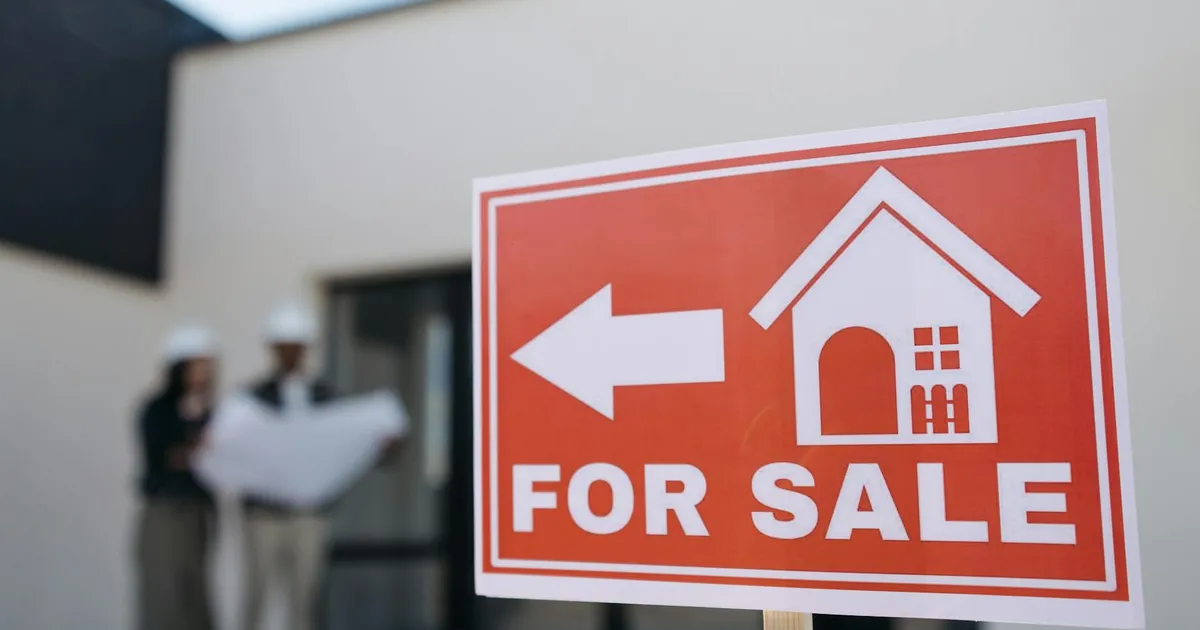
The agent who bought what they were selling
When a Crown entity disposes of half a billion dollars in public assets each year, the integrity of the process is not optional. It is the product. Kāinga Ora has staked its entire sell-off programme on the promise that properties are offered on the open market to ensure the best possible price, with agents appointed through a “robust procurement process” and independent valuations setting expectations.
That promise now has a $1.9 million hole in it. A Harcourts real estate agent who listed a Kāinga Ora property has been referred to the Real Estate Authority after purchasing the same property. The referral raises a question that should have been answered before the first listing went live: does the procurement process explicitly prohibit agents from buying properties they list on behalf of the Crown?
If it does, the prohibition was not enforced. If it doesn’t, the process was never as robust as claimed.
This is not the first time
The Harcourts referral lands on a programme already carrying credibility damage. Wellington’s heritage Dixon Street Flats were sold by Kāinga Ora for $1.04 million, nearly $3 million below the market valuation the agency had obtained. The buyer flipped them weeks later for $3.04 million.
ACT housing spokesman Cameron Luxton did not mince words: “No one would behave like that if it was their own money on the line. It looks like they’ve scammed themselves.” He added that taxpayers would only have confidence when decisions were “transparent and defensible”.
Kāinga Ora defended the Dixon Street price by arguing there was “no guarantee” the open market would deliver more given the building’s challenges. That defence might hold in isolation. It does not hold alongside a separate referral for an agent buying their own listing.
The REA has dealt with this exact scenario before. A former Harcourts agent, Peter Tromp de Haas, bought a North Shore property he had listed for $900,000 and sold it five months later for $1.125 million. The REA found him guilty of misconduct. His penalty: a $3,000 fine on a $225,000 profit. When the regulatory deterrent is that weak, the procurement process has to be airtight. At Kāinga Ora, it clearly was not.
The numbers tell two stories
Kāinga Ora’s own data paints a favourable picture. The agency says Auckland sales across more than 250 properties achieved 5.2% above registered valuer current market valuations. That is the metric it controls and reports.
But an NZ Herald analysis found Auckland’s 34 most valuable state houses collectively sold for $53.9 million, approximately 13% below their combined 2024 council valuations of $62 million. Council RVs and independent CMVs are different instruments, and the discrepancy is not automatically damning. But the public benchmark most people understand is council valuation, and on that measure the premium properties went cheap.
The 2024/25 annual report shows 119 homes divested that year, with plans to divest 1,007 homes in 2025/26, a near-ninefold increase. As of April 2026, 256 properties had been sold in the current financial year. The programme is expected to generate $400 to $500 million in revenue.
Scale demands scrutiny, not trust
The asset recycling rationale is sound. In April 2025, chief executive Matt Crockett said the programme was “a quite explicit part of the reset”, with proceeds redeployed for renewals. Half of Kāinga Ora’s state houses are more than 50 years old, expensive to maintain, and often unsuited to current tenant needs. Selling ageing stock to fund modern replacements is textbook portfolio management.
But portfolio management at this scale, with taxpayer assets, requires process controls that can survive public scrutiny. Right now, Kāinga Ora’s controls have not been independently audited, the conflict-of-interest protections have a documented gap, and the agency’s track record includes at least one sale that tripled in value within weeks.
The political economy here is unforgiving. Asset sales carry historical baggage in New Zealand. Critics already invoke past disposals like New Zealand Rail as cautionary tales. Every process failure hands opponents ammunition to slow or stop a programme that, done properly, makes fiscal sense.
The Harcourts referral is not a scandal. It is a symptom. The question the REA investigation should answer is whether Kāinga Ora’s procurement framework was designed to prevent this, or whether the agency simply assumed good behaviour at scale. At $400 to $500 million a year, assumption is not a governance strategy.
Sources
- Selling Kāinga Ora properties
- ‘Scammed themselves’: Kāinga Ora slammed over Dixon St deal after $3m flip
- Former Harcourts agent made $225,000 profit in five months, bought property he had listed
- Kāinga Ora sell-off: The location and prices paid for Auckland’s most valuable state homes, plus full national list
- Kāinga Ora Annual Report 2024-2025 (2025-06-30)
- Govt embarks on sale of 900 state houses, old and new (2025-04-01)
- Property sales — Kāinga Ora Homes and Communities (2026-04-17)
- Kāinga Ora’s half-billion-dollar state home sell-off excites developers
- Kāinga Ora to sell its most valuable state house
- To sell or not to sell – fresh look needed over state asset sales