

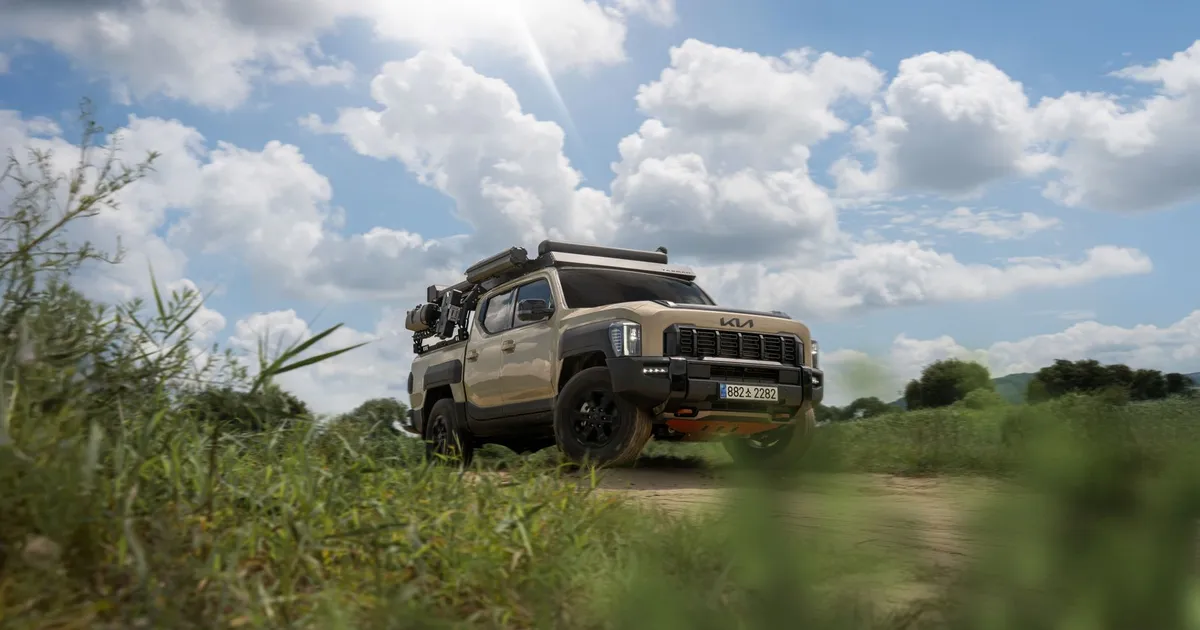
Chinese-backed cars stopped being a fringe story in New Zealand some time ago. The confirmation that the Freelander 8 will lead a jointly branded Chery-JLR range into New Zealand in 2027 changes what kind of story it is. This time the Chinese scale arrives wearing a British name that Kiwi buyers already trust.
For dealers, premium SUV brands and fleet buyers, that matters more than another value-priced badge joining the queue.
A revived name with a Chinese engine room
Freelander is being relaunched as a standalone “British premium intelligent all-terrain brand” through Chery Jaguar Land Rover, a 50:50 joint venture between Chery Automobile and JLR, which licensed the Freelander name to the venture in 2024. The pitch is JLR design and all-terrain heritage combined with Chery’s electrified technology, engineering and manufacturing.
The hardware underneath is pure Chery. The China-spec Freelander 8 is a range-extended EV using a 1.5-litre turbo petrol engine purely as a generator, paired with a 60.3kWh CATL battery and a claimed 310km electric range. Its 800-volt architecture claims a 20-80% charge in 12 minutes. Battery-electric and plug-in hybrid versions are also planned, and the SUV is over 5 metres long with five- and six-seat layouts.
Demand at home looks real. The brand launched in China on 3 September and the Freelander 8 drew more than 10,000 pre-orders within 48 hours. Australia and New Zealand have been named priority right-hand-drive markets.
The market it lands in is already crowded
Freelander is not arriving into a vacuum. MTA data shows the number of brands selling new light vehicles rose from 55 in September 2024 to 69 in September 2026, 20 of them Chinese. China’s share of vehicles sold has climbed from 5% to 23% over two years, while Japan still leads at roughly 49%. Chinese brands held 56% of the EV market and 57% of the PHEV market between April and September.
Stats NZ import data tells the same story in dollars. In the year to June, China supplied 73% of New Zealand’s fully electric vehicle imports by value, and EV imports overall rose 105% to $810 million. That is precisely the segment Freelander’s EREV, BEV and PHEV line-up targets.
Incumbents are feeling it. Colonial Motor Company chief executive Alex Gibbons, whose group sells Ford, Mazda, Kia and BYD among others, said the added competition has “taken the market to an unsustainable level that will result in brand consolidation for a small market like New Zealand”. When a company that distributes a Chinese brand says there are too many Chinese brands, it is worth listening.
Fleet buyers are already voting
The customers that matter most here are businesses. Company and rental buyers made up 68% of all new vehicle registrations in September, the same month Chinese manufacturers hit 22.6% of registrations and BYD became the first Chinese brand to pass 1,000 in a month, helped by Shark 6 sales to fleets.
Fleet managers buy on total cost of ownership, uptime and resale. They have already shown they will back Chinese engineering when the numbers add up. A large, fast-charging range extender with a familiar British name removes one of the last objections, the awkward conversation with a senior executive about what badge sits in the company car park.
Premium on the outside, lean underneath
The go-to-market plan is telling. No New Zealand dealers have been named, but the company says it will use existing local dealerships supported by dedicated premium showrooms and aftersales training. Autoevolution reports Freelander will most likely lean on Chery Australia’s dealer network rather than JLR’s.
That is cost discipline dressed in tweed. Traditional premium SUV makers carry expensive standalone networks and amortise R&D over smaller volumes. A joint venture riding Chery’s platform, battery supply chain and dealer footprint can price aggressively and still call itself premium. Rivals that have relied on brand prestige to defend margin will find that argument harder to make.
The risk sits with execution. An unconfirmed network, a brand-new nameplate and Gibbons’ consolidation warning all point to a shakeout in which some dealers end up holding franchises that do not survive. Dealers weighing a Freelander franchise should ask hard questions about volume commitments and parts support before signing.
Good news for buyers, a reckoning for incumbents
From a buyer’s seat this is straightforwardly positive. New Zealand imposes no protectionist tariffs on Chinese EVs, so fleets and households get access to 12-minute charging and serious range at prices that will pressure Japanese and European rivals. Total new light vehicle registrations grew 29.6% to 72,609 in the April-September comparison, but brand count grew faster, and per-brand volumes are the squeeze point.
Watch for the dealer appointments and New Zealand pricing over the next 12 months. If Freelander lands anywhere near Toyota and Mazda large-SUV money with a premium badge, the international rollout that began in Abu Dhabi will reach Kiwi fleet tenders fast, and some incumbent brands will not make it to 2030.
Sources
- Stuff: Freelander 8 confirmed for NZ in 2027 to launch joint Chery-JLR brand (2026-10-04)
- CarExpert NZ: Freelander 8 confirmed for NZ in 2027 to launch joint Chery-JLR brand (2026-10-03)
- Auto Trader NZ: Freelander confirmed for New Zealand launch in 2027 (2026-10-01)
- MTA vstat: New Zealand’s changing car market, by the numbers (2026-10-01)
- Stats NZ: Reduced-emission vehicle annual imports up in June 2026 (2026-07-20)
- Autotalk: Colonial warns crowded vehicle market is ‘unsustainable’ (2026-09-21)
- MTA: Rentals China drive bumper September sales (2026-10-01)
Join the discussion
Add useful context, ask a good question, or challenge an idea — keep it specific and respectful.