

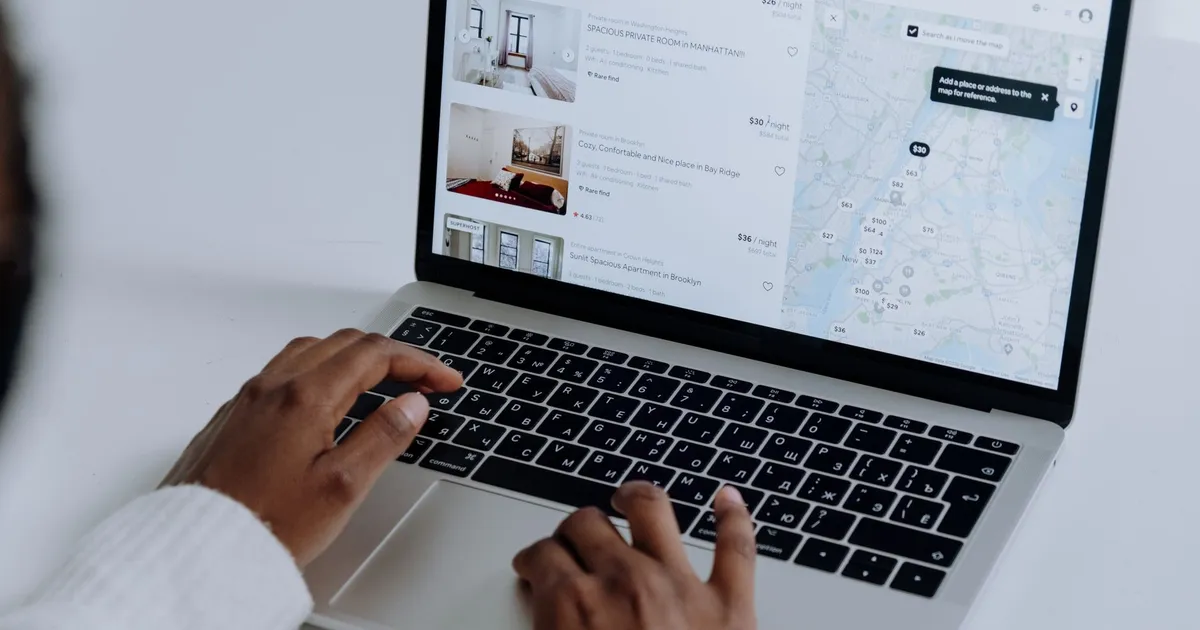
A UK consumer group listed a £55-a-night rental at 10 Downing Street on Booking.com to test its fraud controls. The listing stayed up for about two months. It was closed to genuine bookings for most of that time, but it was never removed. That is funny until the fake listing is your lodge, your bach or your boutique hotel. Booking.com says its AI catches most fraudulent listings within 24 hours. The evidence keeps suggesting otherwise, and the cost falls on the legitimate operators whose reputations get borrowed.
Kiwi hosts have already seen this play out
This is not a London curiosity. In 2024, an elderly woman lost nearly $10,000 booking a Mt Maunganui holiday home through a Booking.com listing the real owner had never created. Owners said at the time that the platform asked for no verifiable proof of ownership for new listings, only a self-certifying checkbox.
The same month, Orewa owner Kellie Walker found her six-bedroom home listed without her consent. She said she had contacted Booking.com “weeks and weeks ago, several times“, got generic replies, and saw the listing come down only after the Herald called. Her property was fully booked with real guests through to April. Somebody was always going to arrive at the wrong door.
The pattern in both cases was identical. Acknowledge, stall, act only when a journalist rings.
The scam bill is now a macroeconomic number
TAANZ, which represents 90% of the country’s travel agents, says New Zealanders lost close to $3 billion to scams in the past year, nearly 0.75% of GDP, with shopping scams including travel bookings making up about half of reported cases.
Netsafe chief online safety officer Sean Lyons says the problem hits domestic and overseas bookings alike. “We’re certainly not insulated from this kind of problem,” he says. The playbook is familiar: a claimed payment failure, a push to an alternative platform, then a wire transfer or crypto payment that cannot be reversed. AI has made the fake photos and invented reviews cheaper and more convincing.
AI is also creating a second, more innocent kind of false listing. A travel article generated by AI sent people hunting for hot springs in rural Tasmania that do not exist. House of Travel Group IT director Mark Leadbetter says consumer AI tools are “just scraping things off the internet” and sometimes hallucinate to please the user. One AI itinerary priced a Vietnam hotel at $5000 a night that a consultant booked for $350.
Why operators end up paying
Tourism is not a niche to be protected for sentiment’s sake. Total tourism expenditure hit $46.6 billion in the March 2025 year, with international spending of $18.1 billion making up 17% of exports. The sector employs 327,888 people. Overseas arrivals reached 3.67 million in the June 2026 year, up 9%.
More visitors booking online means more targets. Every traveller burned by a phantom listing becomes warier of the next real one, demands more upfront proof, and spreads the story. That friction lands on genuine motels, lodges and tour operators who did nothing wrong and cannot outspend a scammer on fake reviews. Trust is the product, and it is being counterfeited.
Put the onus where the data sits
Lyons makes the sharpest point in the debate. “It’s the industry that has the ability to see the patterns,” he says. Platforms see duplicate photos, recycled descriptions and suspicious payment requests across millions of listings. A grandmother in Tauranga does not.
TAANZ wants a clearer trust signal instead: government-backed promotion of its accreditation “Travel Tick”, preference for accredited advisors in government procurement, and referral pathways from Netsafe and CERT NZ. Chief executive Julie White says there are “a few simple things” that could make booking easier. In 2025 TAANZ was already warning of travellers arriving at non-existent accommodation. The industry has a commercial interest here, but the ask is modest and market-based.
Skip the sledgehammer
The temptation will be a broad new compliance regime for anyone who touches a booking. That would be the wrong call. BusinessNZ’s submission on the Fair Trading Amendment Bill argues penalties should separate deliberate misconduct from inadvertent system errors, with a safe harbour for businesses that fix problems fast. The same logic applies here. Small operators should not carry liability for fraud they did not commit and cannot see.
The targeted fix is obvious. Require verifiable proof of ownership or authority before a new accommodation listing goes live, and require platforms to act on owner fraud reports within a set timeframe rather than waiting for the Herald to call. Pair that with a credible accreditation signal consumers recognise.
That is cheap, specific and aimed at the companies holding the data. Whoever forms the next government should start there. A self-certifying checkbox is not a fraud control, and New Zealand’s $46.6 billion tourism industry deserves better than one.
Sources
- Stuff: A fake palace market and the travel listings you can’t trust (2026-10-03)
- Inside Tourism: TAANZ wants safer, clearer travel booking for Kiwis (2026-09-17)
- 1News: Bogus bookings: Holidaymakers urged to check listings exist (2026-09-29)
- NZ Herald: Fake Booking.com listing scams Kiwi family out of $10,000 (2024-12-22)
- RNZ: Fake holiday home listing remains online for weeks (2024-12-18)
- Scoop: TAANZ urges New Zealanders to book with trusted, TAANZ-accredited travel experts (2025-11-19)
- Stats NZ: Tourism satellite account: Year ended March 2025 (2026-03-03)
- Stats NZ: Tourism topic page (2026-10-02)
- BusinessNZ: Fair Trading Amendment Bill submission (2026-07-16)
Join the discussion
Add useful context, ask a good question, or challenge an idea — keep it specific and respectful.