

National wants Kiwis and Australians to cross the Tasman without pulling out a passport, and the idea deserves a fair hearing. It will not transform the economy. It does target the busiest, most valuable travel corridor New Zealand has with a fix that is relatively cheap and easy to reverse. Governments should chase more reforms like it.
The pledge, announced ahead of the election, is for a trial of a fully digitised airport experience before the 2028 ICC Men’s T20 World Cup. “We want a fully digital trans-Tasman experience, where eligible travellers can rely on a smartphone, their digital credentials and biometric technology through more of the airport journey,” leader Christopher Luxon said.
Still a passport, just not in your hand
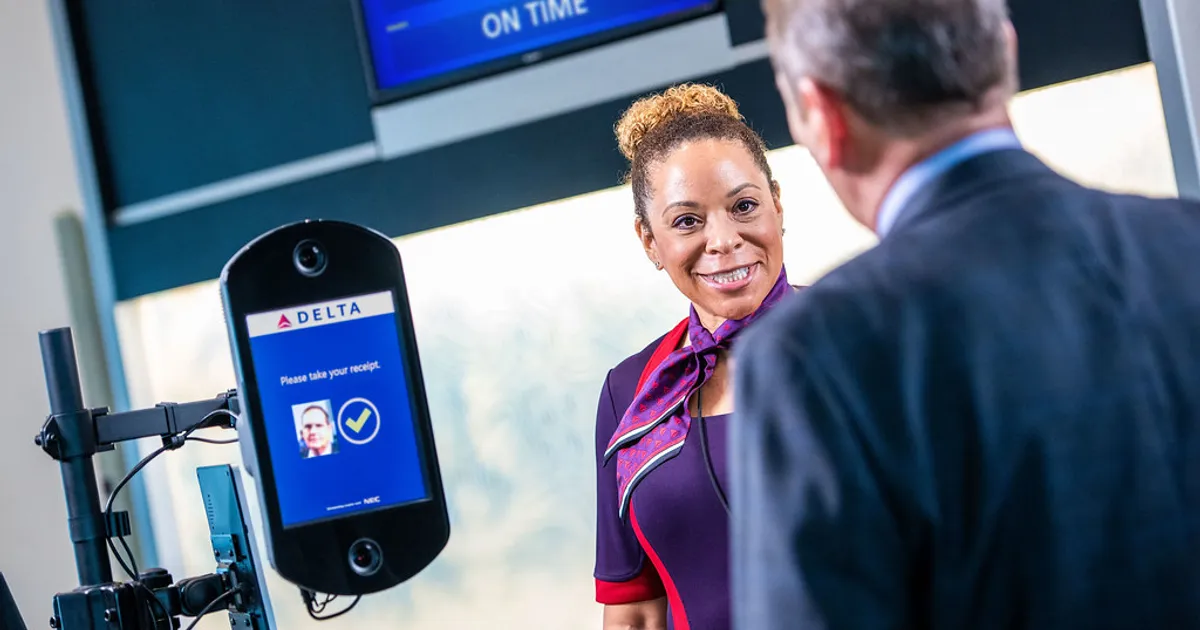
The mechanics are less radical than the headline. Eligible citizens would submit passport and travel details before departure, complete the NZ Traveller Declaration, and then use dedicated trans-Tasman lanes at Auckland, Wellington, Christchurch and Queenstown, verified by smartphone credentials and facial recognition. Travellers still need to hold a passport and pre-register, and biosecurity and baggage screening stay as they are.
National tourism spokesperson Louise Upston calls it “the next logical step” for two of the most integrated economies in the world, and frames it as a successor to SmartGate. “In 2009, when National was last in office, we got the SmartGate technology, and so this is really the next step,” she told Newstalk ZB.
Much of the groundwork exists already. Digital arrival declarations began rolling out from mid-2023, and about seven in 10 arrivals were completing the NZTD digitally by May 2026. The public has already adopted the behaviour. The remaining step is to link that data to the gate.
The corridor that matters most
The case rests on scale. July 2026 brought 134,900 Australian visitors, 53% of all overseas arrivals, a record for the month. Over the July year, Australian arrivals hit a record 1.59 million.
Those visitors fill hotel rooms in Queenstown, seats at conferences in Auckland and tables at restaurants in Christchurch. A large share are visiting friends and family, which is why Tourism Industry Aotearoa chief executive Rebecca Ingram says the idea “makes a lot of sense”. Business travellers on the Tasman shuttle benefit too. Every minute saved at the border is a minute available for clients.
Less friction, more visitors
New Zealand already has evidence that removing paperwork brings people in. A 12-month trial from November 2025 lets eligible Chinese and Pacific passport holders arriving via Australia use an NZeTA instead of a full visitor visa. In its first six months Immigration NZ estimates it delivered a $215 million boost and a 40%-plus lift in Chinese visitor numbers. By the end of August, 105,731 visitors had arrived under it.
The trans-Tasman change is more incremental, because Australians already face very light requirements. The principle still holds. Friction costs money, and removing it pays.
The industry has been asking for this for years. In 2023, Ingram described almost exactly this model: “You fill something out online before you go… you walk into the airport, it’s recognised you, you have your bag scanned, you then easily walk through to the gate,” while cautioning that security needs had to be balanced. That year, House of Travel’s then-chief operating officer Brent Thomas argued that simpler borders could lower costs on both sides and push fares down.
Where the pitch gets thin
The pledge has gaps. Nobody has said what it costs, which agency builds it, or what data-sharing deal Canberra would sign. Australia has to agree, and the Trans-Tasman Seamless Travel Group, set up in 2023 and endorsed by Luxon and Albanese in 2024, has so far produced more talk than gates. Privacy questions about facial recognition at four airports have not been addressed either.
The timing also looks political. In June, Luxon said he did not expect passport-free travel to happen while he was in office. A cricket tournament deadline set during an election campaign should make voters wary.
These are reasons to set the trial up properly, not reasons to drop it. A trial is the right format because it can be measured, adjusted, and scrapped if facial matching or data links fail.
What operators should do now
For airlines, airports and tourism businesses, 2028 is a useful planning horizon but not a guarantee. Treat it as an aspiration until there is a bilateral agreement and an election result. Travel agents are already fielding questions from customers.
Whoever forms the next government, the logic holds. New Zealand’s largest visitor market sits three hours away and is growing. Making that trip easier is the kind of quiet, compounding reform that rarely gets attention. National now has to cost it, negotiate it and deliver it.
Sources
- Newstalk ZB: “Makes a lot of sense”: Tourism industry keen on passport-free trans-Tasman travel (2026-10-02)
- 1News: No passport to show: Luxon promises NZ-Australia border trial (2026-10-01)
- RNZ: What National’s new paperless travel policy means for Kiwis (2026-10-01)
- The Post: National promises to trial passport-free trans-Tasman travel (2026-09-30)
- Stuff: National promises no physical passports needed for trans-Tasman flights (2026-10-01)
- Newstalk ZB: Louise Upston explains how National’s trans-Tasman travel reform will impact Kiwis (2026-10-01)
- Stats NZ: International travel: July 2026 (2026-09-14)
- Immigration New Zealand: Background on the NZeTA (2026-09-10)
- Stats NZ: International travel: May 2026 (2026-07-14)
- RNZ: Trans-Tasman travel could be cheaper with simplified border – industry (2023-07-27)
Join the discussion
Add useful context, ask a good question, or challenge an idea — keep it specific and respectful.