

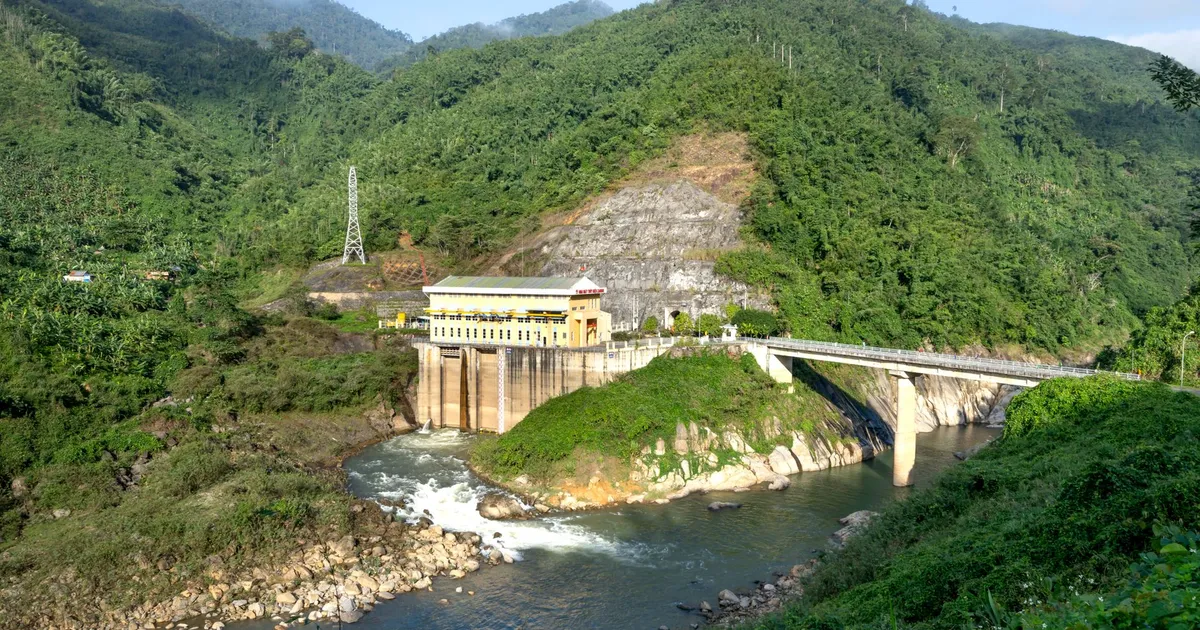
While politicians keep arguing about power prices, market structure and who to blame for the last dry winter, Meridian Energy has quietly committed to adding generation. It will spend between $440 million and $510 million over the next decade rebuilding its 92-year-old Waitaki Power Station, lifting available capacity from 105MW to 120MW by 2036.
Fifteen megawatts will not make headlines the way a new wind farm or a gas import terminal does. That is the point. This is low-drama, high-certainty capacity, bolted onto infrastructure that already has its dam, its water rights and its grid connection. It is exactly the sort of investment the country needs more of.
Everything but the concrete gets replaced
The scope is close to a full rebuild. Meridian will replace virtually everything except the dam, powerhouse and penstocks, working through the station’s seven generating units one at a time while the rest keep running. All seven turbines and generators go, along with balance-of-plant systems and the station’s 21 headgates.
German hydro specialist Voith Hydro will supply the turbines and generators, while New Zealand-owned Gentec Solutions handles the headgates, giving local engineering a slice of a long-dated contract. The Otago Daily Times has framed the project as a boost for the Waitaki district, and a decade of skilled work in a provincial town is no small thing.
Chief executive Mike Roan leaned into the heritage, saying the project will “breathe new life into this iconic asset”. Built as a Depression-era make-work scheme and generating since 1935, Waitaki is the oldest station on the river. Rebuilding it for another 50 years is a better use of capital than letting it slowly decay.
The numbers stack up for shareholders
The financial detail is what business readers should note. Meridian projects a 15%-20% internal rate of return, a figure few greenfield generation projects could credibly promise right now. The spend splits 15% growth capex and 85% “repowering” capex, a new category Meridian has created for asset-life extension.
That accounting choice matters. Under Meridian’s dividend policy, repowering capex is excluded from operating free cash flow, then added back proportionately over the refreshed asset’s expected 50-year life. In plain terms, Meridian can fund a decade-long rebuild without gutting dividends to the Crown and private shareholders. Total capex guidance for 2027 stays at $370-410 million, with just $40 million of that tagged as repowering. The project is being absorbed, not bolted on with a fresh capital raise.
Why repowering beats building from scratch
Analysts at Kalkine Media make the case most local coverage skipped. Repowering existing hydro offers “predictable engineering, established grid connections and existing water rights”, making returns easier to underwrite than new projects exposed to rising construction costs. Modern turbines squeeze more electricity from the same water, so releases from storage lakes such as Pukaki earn more without any new consent fight.
Greenfield generation, by contrast, means years of consenting, community objections and cost blowouts. Repowering shrinks the risk to equipment supply and fixed-scope installation inside a footprint with decades of flow data behind it. For a country that has struggled to build anything quickly, that predictability is worth a lot.
A pattern, not a one-off
Waitaki is the largest in a run of incremental gains. In July, Meridian lifted the rated capacity of Benmore, Ohau B and Ohau C by a combined 30MW purely through engineering reviews, testing and changed operating conditions. No construction at all. GM Generation Tania Palmer said at the time that “the country has more power available than previously thought.”
Across two years, Meridian has added 75MW of operating capacity to its existing hydro fleet. That is a mid-sized wind farm’s worth of output, delivered without a single new dam.
Resilience is the real product
The system context explains why this matters beyond Meridian’s books. Renewables supplied a record 88.5% of electricity generation in 2025, but that figure rests heavily on hydro, and hydro is volatile. MBIE data shows the March 2025 quarter delivered the lowest March-quarter hydro output since 1987, after record low inflows in January and February. When the lakes run short, fossil fuels fill the gap and prices spike for every business on a variable contract.
More efficient turbines on existing schemes do not fix dry years, but they extract more value from every cubic metre that does flow, and refreshed equipment reduces the risk of unplanned outages at the worst possible moment.
What happens next
The lesson for policymakers is simple. The fastest, cheapest megawatts are often hiding in assets the country already owns. Rather than another round of market redesign, the government and regulators should be asking why every generator is not running the same audit of its fleet, and clearing any consenting or regulatory friction that slows repowering. Meridian has shown the playbook. The next ten years at Waitaki will test whether it delivers on time and on budget, and whether the rest of the sector follows.
Sources
- Meridian Energy: Meridian to upgrade Waitaki Power Station (2026-09-30)
- BusinessDesk: Meridian’s $510m rebuild of Waitaki Power Station, one of NZ’s oldest hydro stations (2026-09-30)
- Otago Daily Times: Waitaki Power Station upgrade boost for district (2026-10-03)
- BusinessDesk: Meridian to upgrade Waitaki Power Station (PDF release) (2026-09-30)
- NZX: Meridian to upgrade Waitaki Power Station (2026-09-29)
- Kalkine Media: Why is Meridian Energy (ASX:MEZ) rebuilding its Waitaki hydro station? (2026-10-01)
- Meridian Energy: Increased generation capacity at Waitaki hydro stations (2026-07-30)
Join the discussion
Add useful context, ask a good question, or challenge an idea — keep it specific and respectful.