


The European Union and South America’s Mercosur countries—Argentina, Brazil, Paraguay, and Uruguay—finalised a landmark free trade agreement on Saturday after 25 years of negotiations.
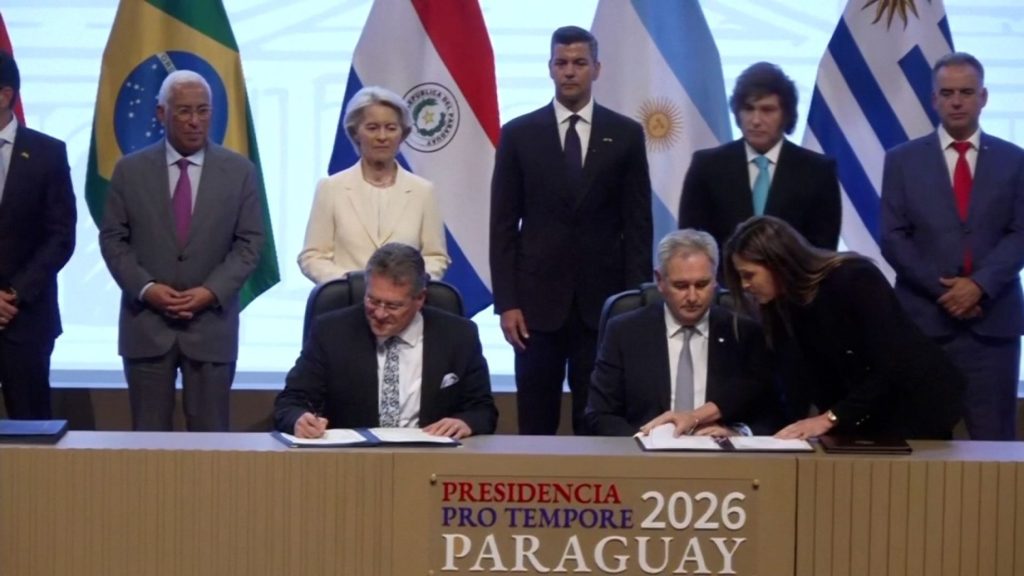
The signing took place in Asunción, Paraguay, uniting markets of over 780 million consumers that represent nearly 30 per cent of global GDP.
European Commission President Ursula von der Leyen hailed its strategic value amid global trade tensions. “The geopolitical importance of this agreement cannot be overstated,” she said. Presidents from Argentina, Uruguay, and Paraguay joined Brazil’s foreign minister at the ceremony.
“We choose fair trade over tariffs. We choose a productive long-term partnership over isolation,” von der Leyen added. “We will join forces like never before, because we believe that this is the best way to make our people and our countries prosper.”
The deal removes over 90 per cent of tariffs on goods and services. EU exporters of cars, chemicals, machinery, wine, and cheese save €4 billion yearly. Mercosur gains access for beef (capped at 99,000 tonnes, or 1.5 per cent of EU output), poultry, sugar, and soybeans, with phased reductions over 10-18 years.
Industrial sectors benefit from tariff cuts on cars and parts alongside EU market access for Mercosur manufactures and gradual phase-outs. Agriculture opens 82 per cent of EU farm lines to Mercosur under import quotas, bolstered by EU subsidies.
Services expand procurement opportunities and mutual access with tariff standstill provisions.
Ratification by the European Parliament and Mercosur bodies remains pending, facing opposition from France and others over cheap imports’ impact on farmers. Italy recently endorsed it with added protections.